Thousands of people in Tel Aviv put together over 500,000 plastic building blocks to create the tallest LEGO structure in the world. The project was created in memory of 8-year-old Omer Sayag, who loved the toy blocks before he was taken by cancer in 2014.
The old adage "writing about music is like dancing about architecture" (it's stupid etc.), loses some of its impact when architecture becomes the backdrop for both music, and dancing. Ever since video killed the radio star, famous houses, quirky spaces, and history's great buildings have provided beautiful, unique and dramatic settings for music videos of all types. So which of 2017s music videos have capitalized on the wonderful world of architecture?
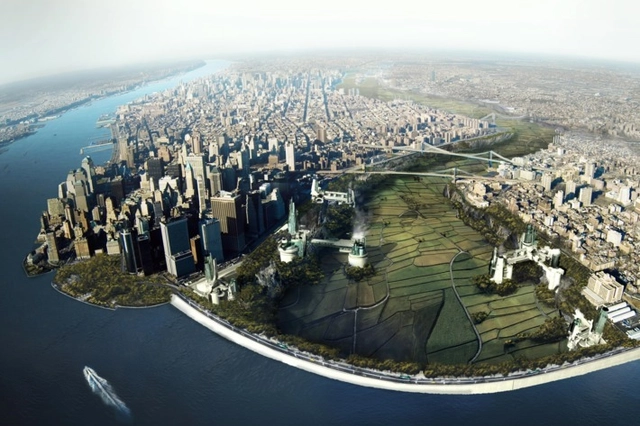
New York Magazine asked some of New York City’s distinguished architects how they would improve the city and save it from climate change. NY Mag reported on their findings.
Ever wished you had superpowers and could fly through cities like Superman? Now is your chance! Well, kind of. The new XLine Dubai Marina lets you zipline at speeds up to 80 km/hr through the “City of Gold.” An upgrade from its first XLine on the Dubai Fountain, its new sequel is twice the distance, twice the time and, of course, twice the thrill, excitement, and adventure.
Metro and subway maps can tell us a lot about cities. For example, by comparing metro maps from different cities, you might be able to understand those cities' relative size or level of development. Or, by comparing a metro map to an earlier version from the same city, you can learn about the pace of development being experienced in that city. What these "maps" rarely tell you with any reliability, though, is the actual geography of the city itself.
In a fascinating series of posts over at /r/dataisbeautiful earlier this year, Reddit users created GIFs comparing the official metro maps of cities around the world with the real geography those maps correspond to. The results show the incredible changes that cities are subjected to in the name of visual clarity: in cities such as London, Tokyo, and Berlin, transit maps expand the urban core, masking the density at these regions' centers; in other cities such as Washington DC, shortened lines hide the extent of the city's suburbs; while in some cities, entire neighborhoods are moved to the other side of the city to make the map layout more attractive (we're looking at you, Prague). Read on to see 11 of the best creations by Reddit users.
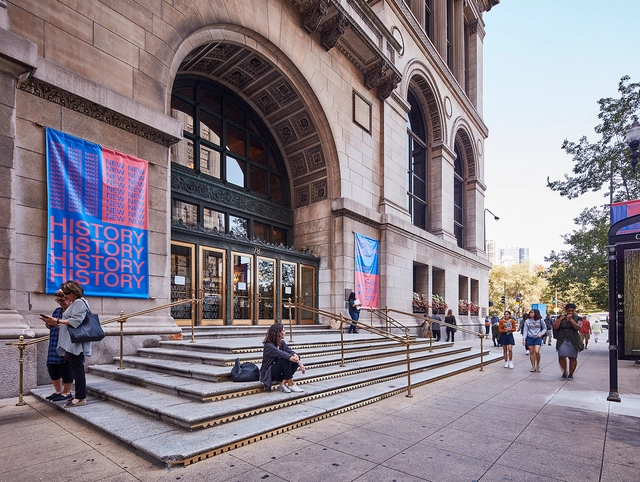
The 2017 Chicago Architecture Biennial is drawing to a close next week after almost 4 months of exhibitions, discussions, tours, film screenings, and other events. The second edition of the event, which opened on September 16th and is based upon the theme of "Make New History," will round out with two final events before the exhibition finally closes on Sunday, January 7th. Read on for more about the remaining events.
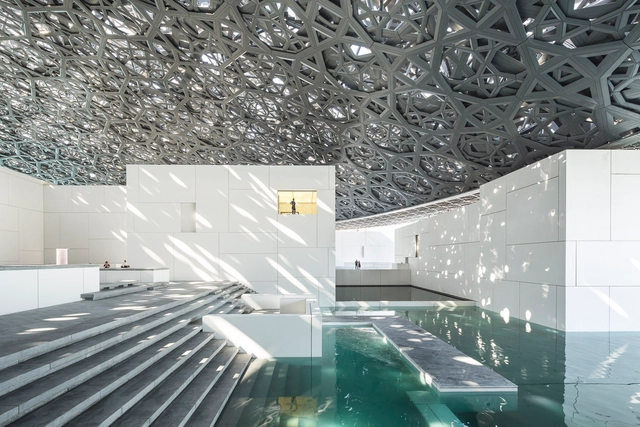
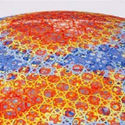
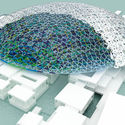
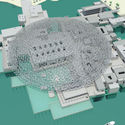
Walking into Abu Dhabi’s new Louvre Museum, one is immediately greeted by a flood of dappled light created by the stunning, multi-layered lattice covering the interweaving interior spaces of the building. The intricate geometric dome is both reminiscent of traditional Arabic architecture screens and crucial in achieving Architect’s Jean Nouvel’s vision for a “rain of light.” But what went into the design and construction of the building’s most striking element, and how does it function structurally? Ateliers Jean Nouvel worked for over one year in close collaboration with BuroHappold Engineering to develop a design which is both an architectural and structural masterpiece. We spoke with Andy Pottinger, Associate Director at BuroHappold, to understand the dome in more depth.
Is your knowledge of the world's most notable architects the best of the best? Can it stand the test of cryptic emoji-based clues? In lieu of their usual daily building identification quiz, online architecture quiz What Building?has created a fun knowledge test, converting the names of 20 famous architects into strings of emoji. Covering architects both past and present, the quiz is a great test of both architecture knowledge and lateral thinking. How many can you get?
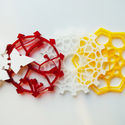
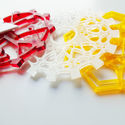
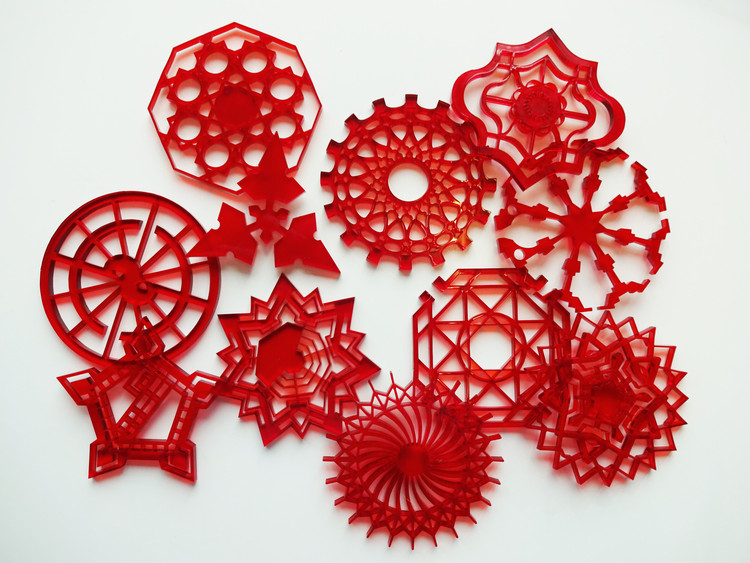
In the foyer of their London offices, architecture firm Allies and Morrison is displaying "Archiflakes," a series of snowflake designs inspired by the floorplans of famous structures from around the world. Developed by staff member Maria Spada, the series was a response to an internal competition to design the office's seasonal decorations.
Ranking cities is a risky endeavor. How can one be objective and fair when this great earth and its 7.6 billion inhabitants would never come to anything close to a consensus? And yet global consulting firm Resonance Consultancy has taken on the challenge based on the opinions of the people they claim matter most: "a city's visitors and its residents."
Surveying the inhabitants and tourists about 23 different factors (that are then grouped into six key categories—Place, Product, Programming, People, Prosperity and Promotion), the methodology aims to be comprehensive in the ranking of quality of place and reputation. In the people category, for example, the surveyors looked at things like the immigration rate and diversity of a city, including number of Foreign-born Residents. Also taken into consideration was the amount of "stories" or "mentions" a city generates on web platforms like Facebook, Google and even TripAdvisor. And, most relevant to us architects, cities were scored on their quality of neighborhoods, landmarks and parks.
https://www.archdaily.com/886150/the-worlds-best-cities-2018AD Editorial Team
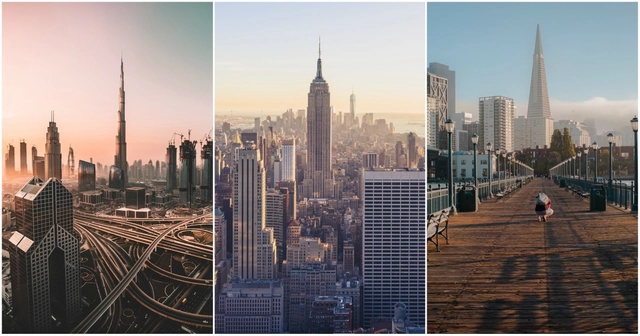
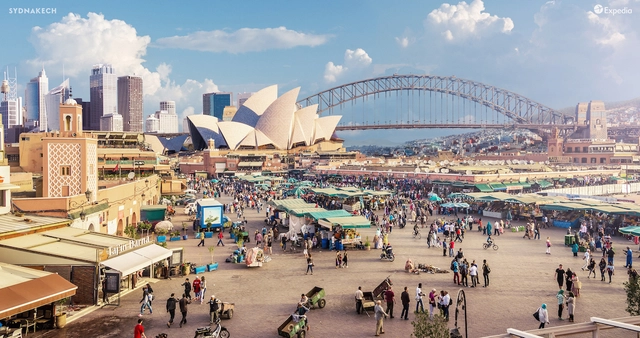
From New York to Rome, London to Cape Town and beyond, these city mash-ups blend distinct architecture and attractions to create truly unique imagined destinations. Expedia recently launched a series of campaigns that would inspire travelers by showcasing destinations from different perspectives and unique angles. They took 14 famous cities and combined their architectural DNA into 7 unique hybrid, mash-up cities.
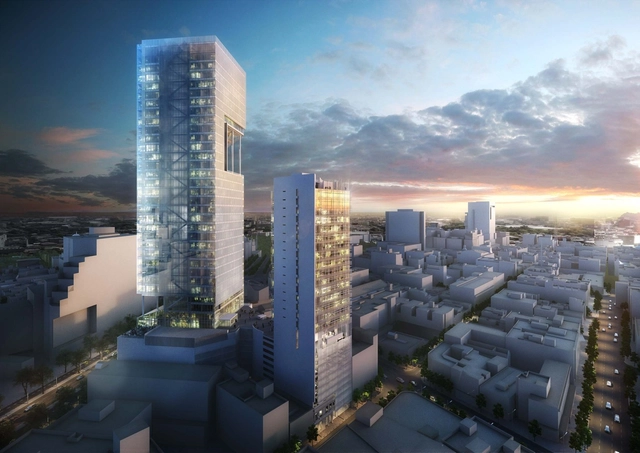
The new year is almost here, and Richard Meier & Partners has four international projects that will be coming to fruition. These new multi-use building designs play with light, transparency, and volume as well as respond to their varying urban context.
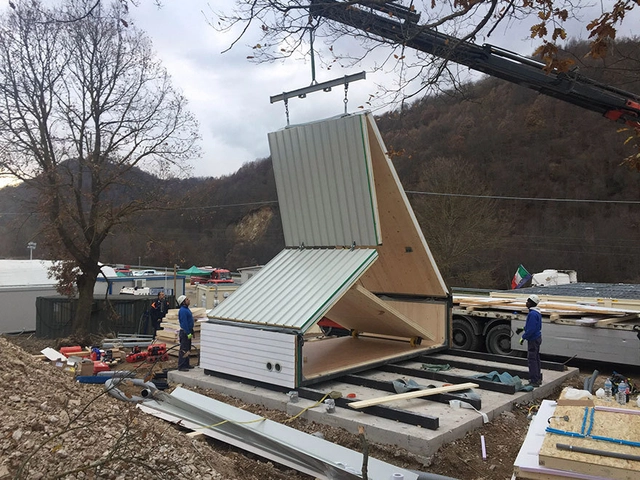
An Italian architect is proposing a new model of housing that, unlike the traditional residences, does not consist of a settled building, but in a folding and transportable house. It can be assembled in just six hours with the help of three people.
As we approach the end of the year, we would once again like to thank you all for making 2017 our best year yet. With your continued support, we are now reaching more architects around the globe than ever, and inspiring them in the creation of better urban environments for all.
On behalf of the entire ArchDaily team, we are excited to share this collection of 2017's most visited projects, products, and articles. Together with our curated selection of the year's most relevant and noteworthy articles and events, these represent the best content created and shared by ArchDaily over the past 12 months.
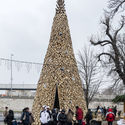
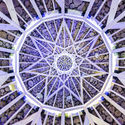
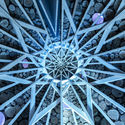
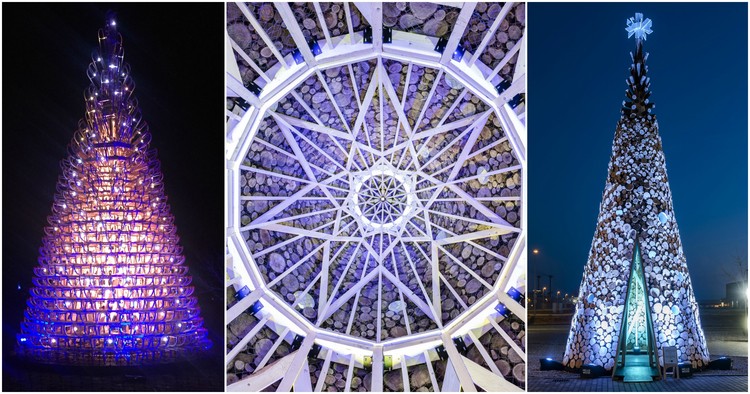
Budapest-based architectural firm Hello Wood has continued its annual tradition of constructing wooden Christmas trees, this year expanding the program with a total of 5 trees throughout Europe. In London and Vienna, trees made of sleds recall a design concept first used by Hello Wood in 2013; meanwhile, two locations in Budapest and in the Hungarian city of Kecskemét are witnessing the return of the firm's "charity trees," installations made of firewood which are later dismantled and distributed to families in need for the winter season.
For 10 years this December, Zaha Hadid’s Hungerburgbahn have graced the built environment of Innsbruck, Austria. Since its conception, over 4.5 million passengers have visited one of the four train stations connecting them from downtown Innsbruck to the Norkette Mountain to Hungerburg.
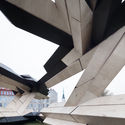
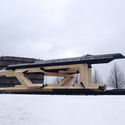
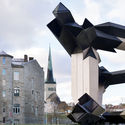
Out of 200 applicants, London-based Gilles Retsin Architecture won the Tallinn Architecture Biennale 2017 competition with their temporary outdoor installation. Participants were challenged to use the fabrication abilities of Estonianwoodenhouse manufacturers in a new and creative way. Jury member Martin Tamke said the Retsin proposal is, “characterized by outstanding aesthetic and intellectually challenging, as it questions current beliefs and trends in architecture."
Last week marked the opening of Canada’s first ever funicular in downtown Edmonton, a cable-mechanized incline elevator aimed at making the city’s largest green space more accessible.
Publically funded, the $24million project features the 100 Street Funicular to transport mobility aids, strollers, and bikes, as well as a generous staircase for walking, running and lounging. Concrete sitting blocks are dispersed up the 170 steps from a promenade at the bottom. Visitors can walk along the promenade to a lookout point or ascend the stairs or funicular to the raised lookout for extensive views of the river valley.
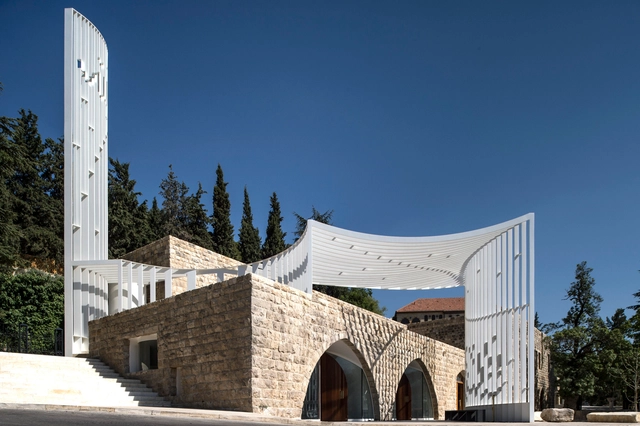
How does contemporary religious architecture adapt to the needs of the modern world? Each year, Faith & Form magazine and the Interfaith Forum on Religion, Art and Architecture (IFRAA) award acknowledges the best in religious art and architecture. This year’s winners included 27 projects spanning in religious denomination, size, and location. Beyonds this, the award recognizes three common trends present in religious architecture today: re-adaptation of existing facilities, community-based sacred spaces, and simplicity in design. Read on to see all 27 winners.
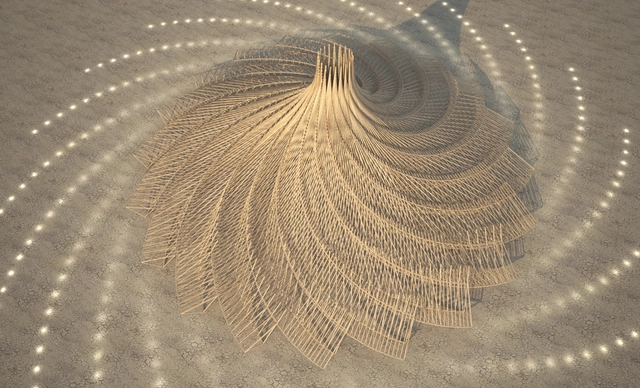
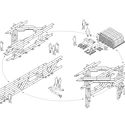
Designed using 3D parametric software, the pavilion is formed from 20 timber trusses that spiral in toward a central point the reaches toward the sky. Starting on the ground, the triangular trusses span large enough distances to create a series of spiraling paths toward the center of the structure, where a giant 3D-printed mandala will be displayed. The spaces in between the truss members will also be large enough to serve as alcoves.
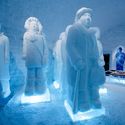
Located in the small village of Jukkasjärvi 200 kilometers north of the Arctic Circle, Sweden’s ICEHOTEL is the world’s largest ice structure, constructed each year from over 4000 tonnes of ice and snow.
With winter now officially underway in the Northern Hemisphere, the 2017-2018 version of the ICEHOTEL is now open. In addition to a new permanent section of the hotel kept cool year round by solar energy, for this year’s iteration, the hotel invited 36 artists from 17 countries to design the structure’s main spaces and guest rooms, including new surreal “art suites” that truly transport visitors into a otherworldly winter wonderland.
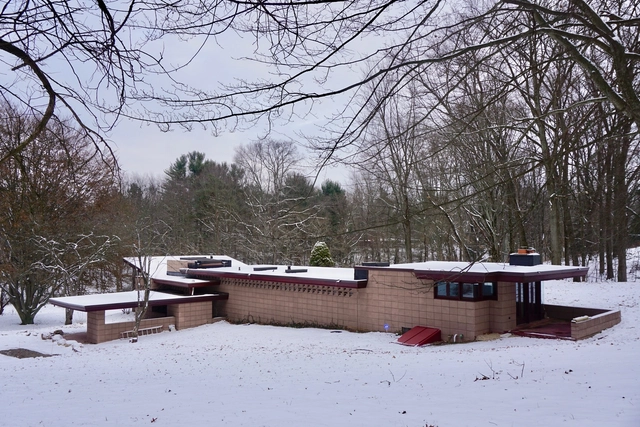
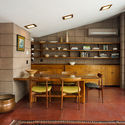
Ever wanted to spend the night in a classic Frank Lloyd Wright house? Here’s your chance.
The Eppstein House, one of Wright’s Usonian designs built in 1953, has been restored to its original beauty by owners Marika Broere and Tony Hillebrandt and is now accepting visitors for a limited time through Airbnb. Located in Galesburg, Michigan, the house was originally designed as part of a planned Usonian community intended to contain 21 homes, though just four ended up being built.
When they aren't designing buildings or making sure their models and plans are neat and tidy, many architects channel creative energy into sketches (both hand-done and digital) that become small tokens of holiday cheer. This annual challenge, now in its third year, is our unashamed way of celebrating the inventiveness, originality, and artistry of ArchDaily readers from around the world. May you all enjoy the humblest and most thoughtful gift of all: an expression of holiday cheer.
Featured gif by Joanne Hanson
https://www.archdaily.com/885934/best-submissions-to-the-2017-architecture-holiday-card-challengeAD Editorial Team






.jpg?1514402280)






.jpg?1513747529&format=webp&width=640&height=580)
.jpg?1513747674 "© Brock Kryton")
.jpg?1513747342 "© Brock Kryton")
.jpg?1513747611 "© Brock Kryton")
.jpg?1513747258 "© Brock Kryton")
.jpg?1513747529)