Walt Disney Concert Hall. Image Courtesy of Gehry Partners, LLP
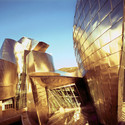
Internationally acclaimed architect Frank Gehry (born 28 February 1929) has been headlining architectural news platforms since he established his Los Angeles practice in 1962 and remodeled his home in Santa Monica. Notorious for his expressive use of form (and its-sometimes inflationary effect on project budgets), Gehry is best known for the Guggenheim Museum in Bilbao, which fellow architect Philip Johnson once dubbed “the greatest building of our time.”
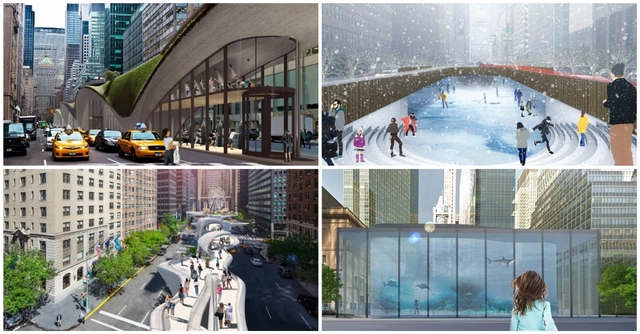
Seventeen entries have been selected as finalists in the “Beyond the Centerline” competition, which is seeking ideas for how to “re-envision and enliven the traditional traffic medians of the Park Avenue commercial district between 46th and 57th Streets."
Organized by development company Fisher Brothers, the ideas competition asked architects to submit their “most ambitious and creative visions unencumbered by zoning code, cost, weight limit, or other restrictions.”
Despite being heralded as services that will reduce congestion on our streets, ride-hailing companies like Uber and Lyft actually are making traffic problems worse, a new study from Boston’s Northeastern University has revealed.
Seattle’s historic KeyArena is set to receive a $600 million renovation that will transform the venue into the region’s “premier sports and entertainment destination” as part of plans to launch the city’s first-ever NHL team.
Designed by Populous, the renovation will open up the arena to its surroundings, specifically the 72-acre Seattle Center, site of the 1962 World’s Fair and home to the currently under-renovation Seattle Space Needle. As part of the project, the sports venue will be rebranded as “The Arena at Seattle Center.”
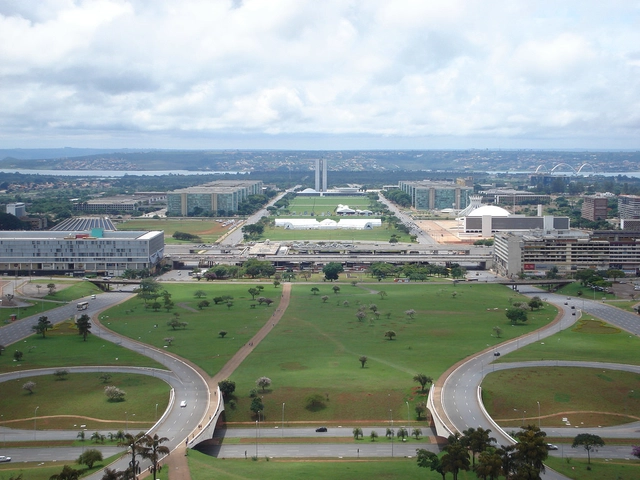
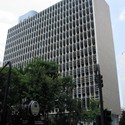
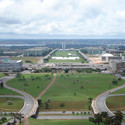
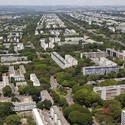
Brazilian planner, preservationist and modernist thinker Lúcio Costa (27 Feburary 1902 – 13 June 1998) is best known for his 1957 plan of Brasília that shaped the Brazilian capital into a monument to utopian modernism. A resolute and often controversial figure in the Brazilian establishment, Costa’s contributions to Brazilian architecture helped to shape the distinctive modernism that was practically Brazil’s official style until the 1980s.
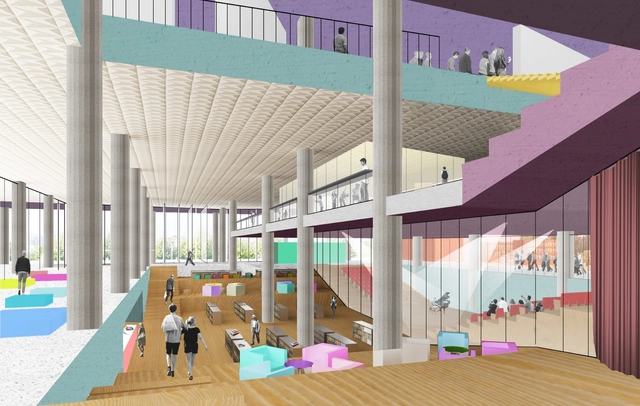
Last week, Boise City Council unanimously approved world-renowned Safdie Architects to lead the local design team for the new cultural and civic center in downtown Boise. The center will expand the main library and bring it into the 21st century as well as becoming the new home for Boise Department of Arts & History that will house a performing arts venue for 400 capacity, gallery, and retail space.
Videos
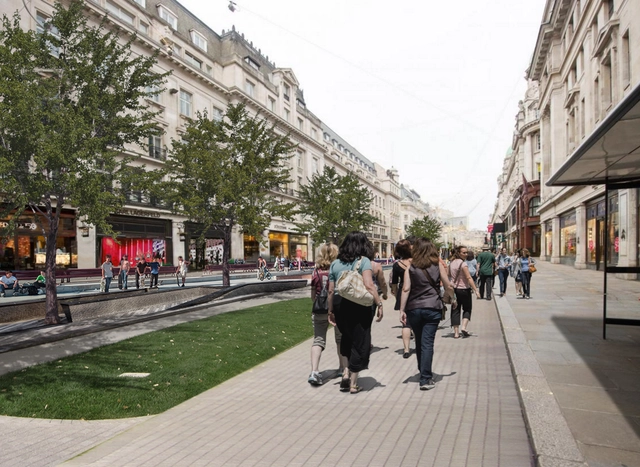
A vision of the future Regent Street. Image via Walkable London
Zaha Hadid Architects has revealed a proposal for the pedestrianization of their home city, London, that would gradually transform the city into an interconnected system of walkable roads.
Named Walkable London, the research proposal has identified the arteries and areas of the city that would most benefit from pedestrianization. The transformation would be implemented over three phases: primary avenues, secondary avenues, and finally, entire districts. Notable avenues marked for alteration include Upper Street, Oxford Street and Regent Street.
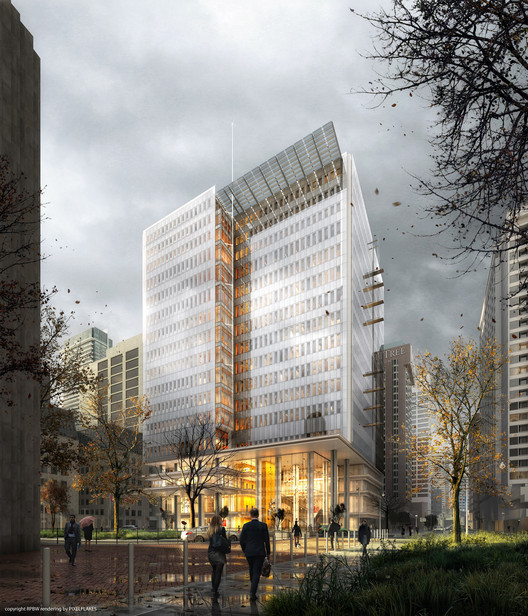
Renzo Piano Building Workshop, in partnership with NORR Architects & Engineers, has been selected to design the new TorontoCourthouse, to be located adjacent to Nathan Phillips Square and Toronto City Hall in the city’s downtown civic core. When finished, it will be Piano’s first competed project in Canada.
Henning Larsen Architects has revealed plans for a £400 million development that will transform the waterfront of Belfast. At 16 acres, the master plan constitutes the Northern Irish capital’s largest single ground-up development in recent history.
2017 is in the past. Nevertheless, the year has left us a series of lessons, new wisdom and better tools to help us face the challenges of 2018. What surprises will this year bring us?
We asked our editors at Plataforma Arquitectura (ArchDaily's Spanish arm) to make predictions based on what they've learnt in 2017, and to share with readers the topics they expect to be in the limelight in 2018.
https://www.archdaily.com/889638/the-9-architecture-topics-you-need-to-know-about-in-2018ArchDaily Team
Everyone knows that becoming an architect translates to a lot of time in front of a computer screen, or on-site or in the model shop—or waiting for renders to finish. But we also know that being a good architect is about much more; truly savvy architects and really thoughtful projects often spring from strong theoretical, philosophical or practical trains of thought (and they are not always directly inspired by architecture itself!).
To avoid hyperrealistic renderings we have witnessed the emergence of other options for architectural representation which seduce the viewer, not for their overwhelming resemblance to reality but rather the opposite, its resemblance to everyday life's textures presented through unpretentious drawings inspired by collage, watercolor, and painting. Digital collage and other similar representation tools have gained more popularity when discussing how architecture can be communicated.
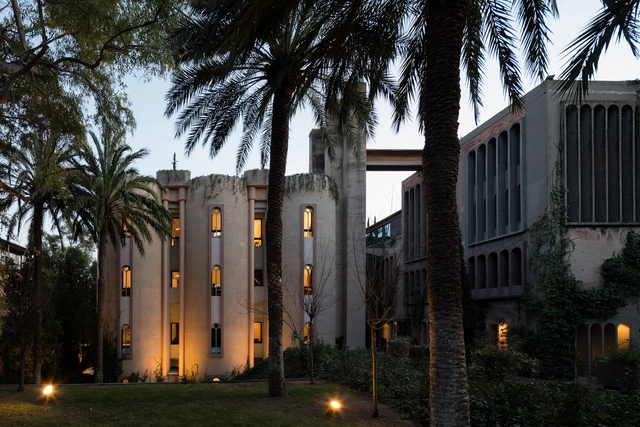
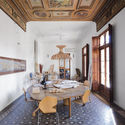
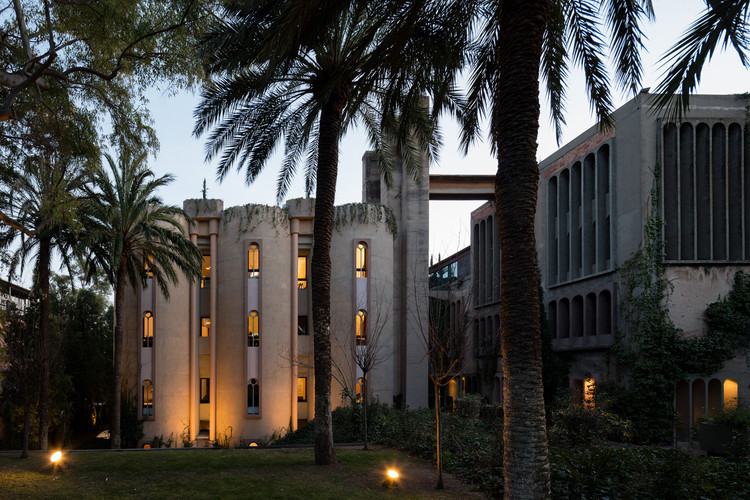
Architectural photographer Marc Goodwin captures the unique workspaces of architects around the world. So far, Goodwin’s photography has helped us imagine what office life might be like as an architect in London, Paris, Beijing, Shanghai, Seoul, the Nordic countries, and now, Barcelona. Read on to see the spaces where architects from Ricardo Bofill to Fermin Vazquez design solutions that impact our world.
Earlier this month, the Winter Olympics was officially opened in South Korea. Laurian Ghinitiou visited PyeongChang to capture the celebrations and the festivities of the Winter Olympic Games. At the Olympic Park, he turned his lens towards the now-famous Vantablack VBx2 building designed by Hyundai and Asif Khan. The pavilion was conceived of as a "narrative" and everything from the facade to the five rooms within -- water, solar, electrolysis, hydrogen fuel stack and recreation of water -- were part of the story.
The unique experience starts from the initial encounter of the pitch-black building at the Olympic Park to the final room where water droplets ripple off the walls. The alluring black facade, for example, embodies the dearth of light in space, as well as the infinite possibilities of the universe. The universe is also the birth place of Hydrogen during the Big Bang and is where the narrative begins.
Hyundai chose to build the complex in the Olympic Park in order to reveal to visitors how Hydrogen energy is conceived, but the designers made sure this was not going to be purely a science experiment. Laurian Ghinitoiu captures how the pavilion is all about novelty, delight, and the visitor experience.
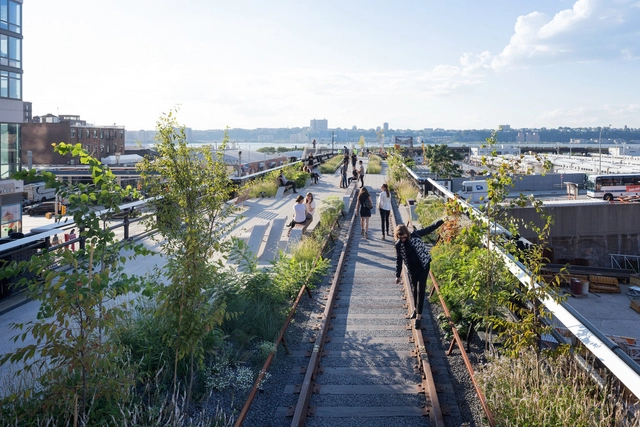
Eight long and prosperous years have passed since the first part of the New York High Line opened in 2009. As a prominent piece New York's architectural and urban identity, it is no wonder that it has been awarded the Harvard GSDVeronica Rudge Green Prize in Urban Design, recognising the ongoing efforts of the Friends of the High Line for their adaptivity to the changing context of the park and their support from the beginning for design excellence.
The jury was particularly inspired by the multidisciplinary project between James Corner Field Operations, Diller Scofidio + Renfro, and Piet Oudolf, spanning the public and private domains as a model of collaborative design. It was also commented on the social and political relevance of the High Line in saving a piece of American history from ruin and interacting through community outreach programs and a wider dissemination program for cities across the US.
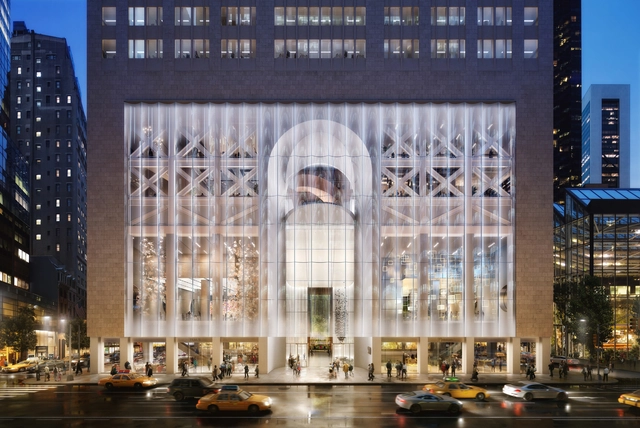
The designs by Snøhetta for the renovation of the building at 550 Madison Avenue have launched the building to the forefront of the debate about the preservation of Postmodern heritage. The plans include replacing the stone facade with undulating glass in order to transform the building's street presence. Should plans progress, the once prominent arched entry will sit behind fritted glass and stone covered columns will be unwrapped to create a hovering datum.
The American Institute of Architects (AIA) has announced the names of the 152 member-architects who have been elevated to its prestigious College of Fellows for 2018. Limited to members who have made “a significant contribution to architecture and society and who have achieved a standard of excellence in the profession,” approximately 3 percent of the AIA’s total membership of 90,000 are recognized as fellows.
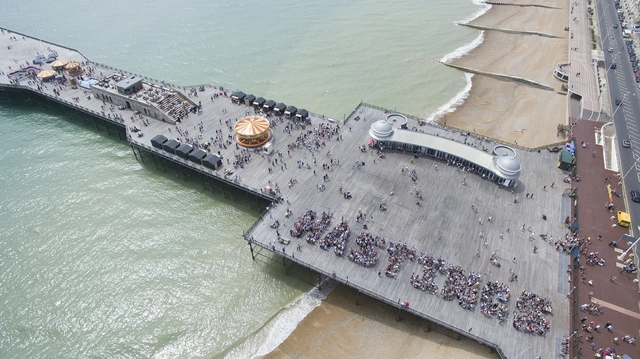
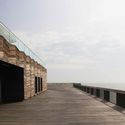
Just four months after winning the 2017 Stirling Prize, the UK’s top honor for architecture, dRMM’s Hastings Pier is now up for sale, as the charity that owned and operated the structure was declared insolvent for failing to reach self-funding status.
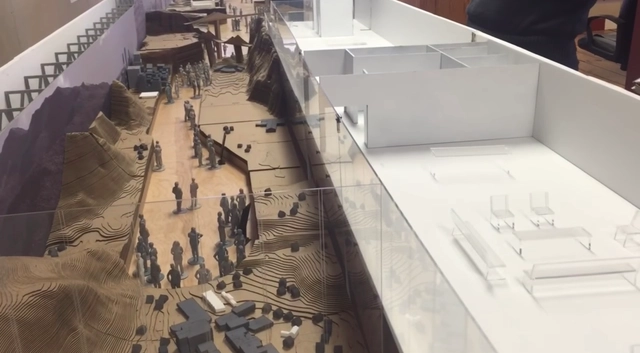
Frank Gehry’s designs for the Extreme Model Railroad and Contemporary Architecture Museum have been revealed, and as its name implies, the museum is about to take miniature trains to the maximum.
Located on an 83,000 square foot site in North Adams, Massachusetts, just a few blocks away from contemporary art museum and artist residence Mass MoCA, the Extreme Model Railroad and Contemporary Architecture Museum looks set to become the preeminent playground for architects and model train enthusiasts alike.
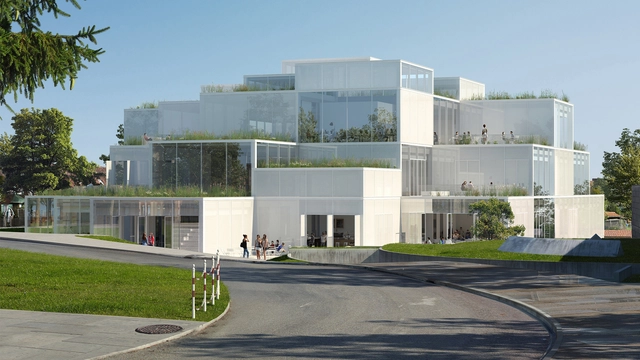
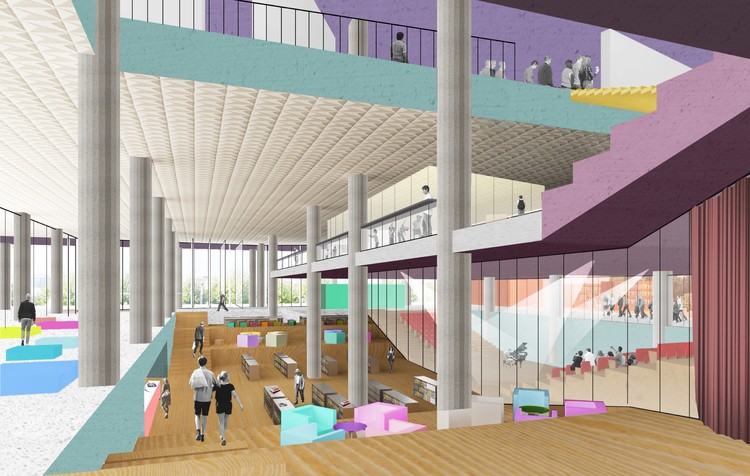
Sou Fujimoto Architects has been selected as the winner of a competition to design the new HSG Learning Center at the University of St. Gallen in Switzerland.
Chosen from a shortlist of 8 teams, Sou Fujimoto Architects’ proposal “Open Grid – Choices of Tomorrow” received the highest marks across the following criteria: architecture and urban planning, innovation in concept execution, functionality, sustainability and economic efficiency. According to the competition jury, the project was notable for its “highly developed didactic concept, compatibility with the district, architectural ambition and affordability.”
Designed by Natalie de Blois and Gordon Bunshaft of SOM and completed in 1961, 270 Park Avenue (formerly known as the Union Carbide Building) is considered a key example of the International Style in New York City that extended and even improved upon the precedent set by Mies van der Rohe’s Seagram Building.
But after new zoning legislation for the neighborhood was passed last year, the building’s current owner, JPMorgan Chase, has announced plans to raze the 707-foot-tall building in favor of a new, hi-tech supertall replacement. If plans go through, it would be the world’s largest and tallest building ever to be intentionally demolished.
Gilles Saucier, FIRAC, and André Perrotte, FIRAC, founding partners of Saucier + Perrotte Architectes, have been awarded the 2018 RAIC Gold Medal, the highest honor bestowed by the Royal Architectural Institute of Canada to an individual or team of individuals in recognition of “a significant and lasting contribution to Canadian architecture.”
Founded in Montreal in 1988, Saucier + Perrotte Architectes have worked at the highest levels over their 30 year career, completing a range of project types both within Canada and internationally. The firm was lauded by the jury for pushing boundaries of innovation while maintaining a sense of elegance and refinement.
OMA has revealed plans for the renovation of the New Tretyakov Gallery on Krymsky Val in Moscow that will increase the accessibility and visibility of the gallery’s four sectors. Led by Rem Koolhaas, the scheme will use color and material to create a new visual identity and to establish a new link to the Moscow River.







.jpg?1519749758&format=webp&width=640&height=580)
.jpg?1519749538 "Courtesy of Populous")
.jpg?1519749770 "Courtesy of Populous")
.jpg?1519749555 "Courtesy of Populous")
.jpg?1519749669 "Courtesy of Populous")
.jpg?1519749758)







.jpg?1519243816)
.jpg?1519243570 "© Laurian Ghinitoiu")
.jpg?1519243673 "© Laurian Ghinitoiu")
.jpg?1519243732 "© Laurian Ghinitoiu")
.jpg?1519243744 "© Laurian Ghinitoiu")
.jpg?1519243816)