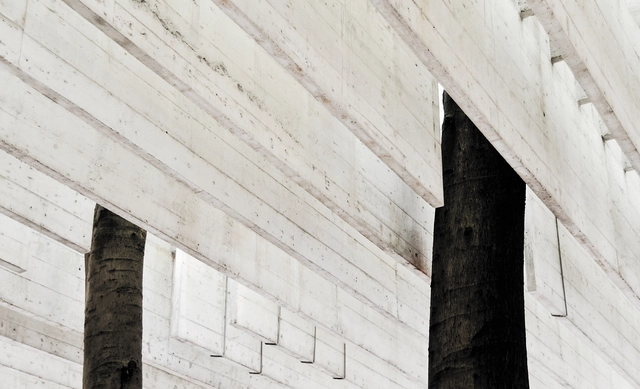
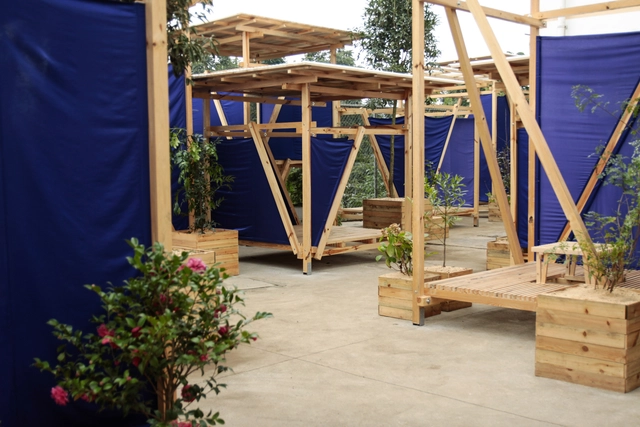
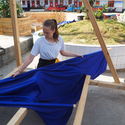
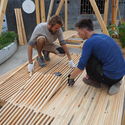
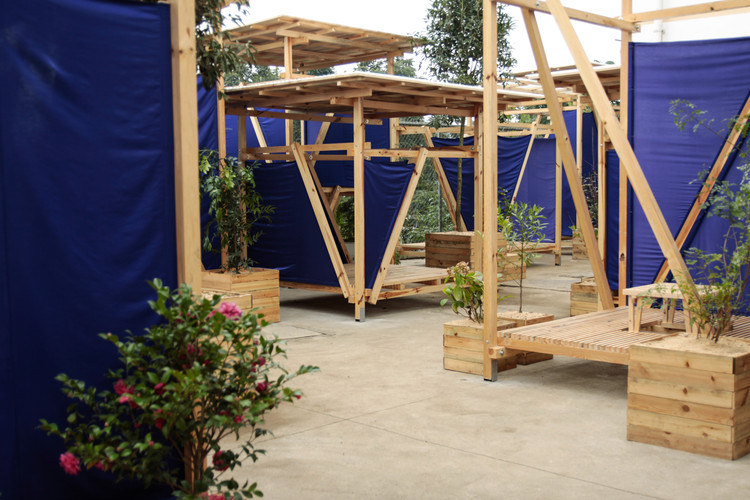
Building and growing are two actions that should be considered more often than not at the same time. This is how the 2017 "Build to Grow" social housing competition, looked to establish bases that sustain a flexible way of living. The event took place in the Belén district in the city of Iquitos, on 3.7 hectares plot of land. The project that received first place proposed to locate 120 incremental homes, that alternatively allowed users to modify and expand it according to their needs and economic means. In short, a home with a solid nucleus formed by a structure that supports changing activities.
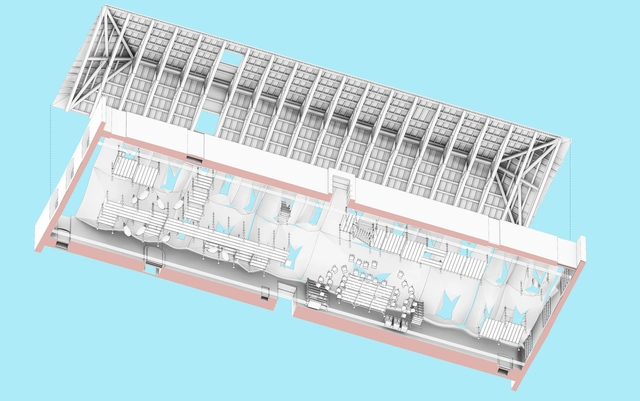
The Harvard Graduate School of Design has announced the appointment of Mark Lee as Chair of the university’s Department of Architecture. Having taught at Harvard GSD since 2013, Lee is also a principal and founding partner at Johnston Marklee Architects. He will succeed K. Michael Hays, who has taught at Harvard GSD since 1998.
Lee has previously held the position of Frank Gehry Chair at the Daniels Faculty of Architecture, Landscape, and Design at the University of Toronto, as well as Cullinan Guest Professor at Rice University School of Architecture. He has also been a design critic at Harvard GSD since 2013, where he himself earned a Masters in Architecture in 1995.
https://www.archdaily.com/891227/harvard-gsd-appoints-mark-lee-as-chair-of-department-of-architectureNiall Patrick Walsh
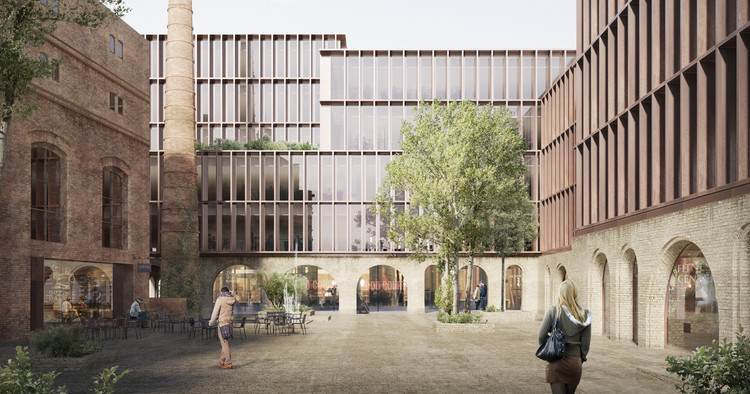
The proposal for the 120,000-square-foot (11,500-square-meter) district manifests as a vibrant, public-orientated program, including a gym, child care center, café, food court, and spa. A series of courtyards and plazas are laced throughout the scheme, connecting old and new in a “timeless, classic appearance that is also uniquely contemporary.” The design took 2nd place in a competition in which no first place winner was selected, as the jury felt that no entry fully met the competition criteria. As the highest-placing entry, the competition organizers have committed to begin negotiations with Schmidt Hammer Lassen to refine the design.
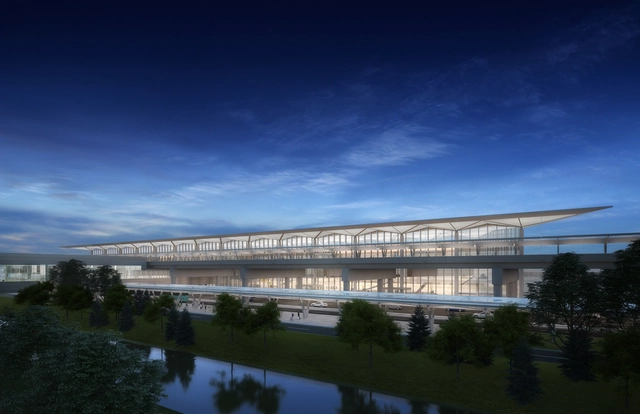
London-based Grimshaw Architects has been selected to serve as Lead Architect for the design of Newark Liberty International Airport’s new Terminal One building in New Jersey. Grimshaw will work in partnership with STV to design the $1.41 billion terminal, featuring 1 million square feet (93,000 square meters) of space and 33 gates spread across a two-level T-shaped building. The scheme represents the largest transportationinfrastructure design-build project in New Jersey’s state history.
https://www.archdaily.com/891218/grimshaw-to-lead-design-of-newark-liberty-international-airport-terminalNiall Patrick Walsh
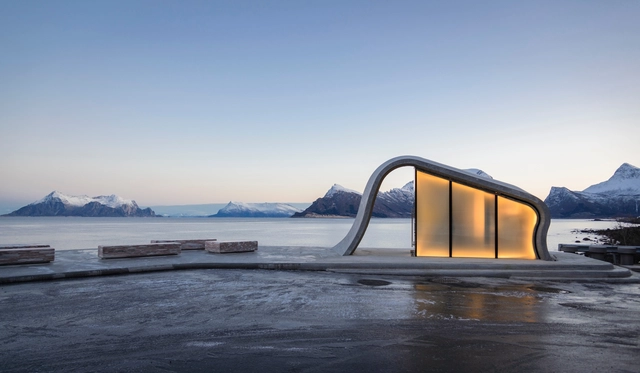
The Norwegian Public Roads Administration is opening a new landmark, Ureddplassen, along the Norwegian Scenic Route Helgelandskysten. Consisting of seating benches, a toilet facility and viewing terrace facing the open sea, Ureddplassen evokes a sense of poetic solitude as it complements the natural landscape of Norway.
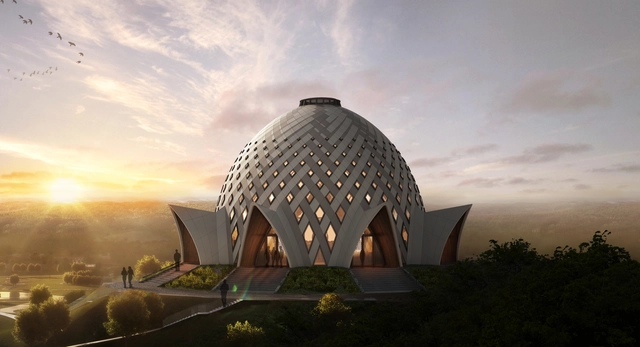
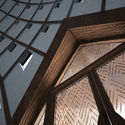
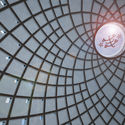
The Bahá'í International Community has unveiled a proposal for the national Bahá'í House of Worship of Papua New Guinea. In the capital city of Port Moresby, a celebration was held at the temple’s future site to showcase the scheme, coinciding with the Bahá'í New Year. Inspired by the art of weaving, the architects’ vision was for a temple where the people of Papa New Guinea could unite to worship and find inspiration.
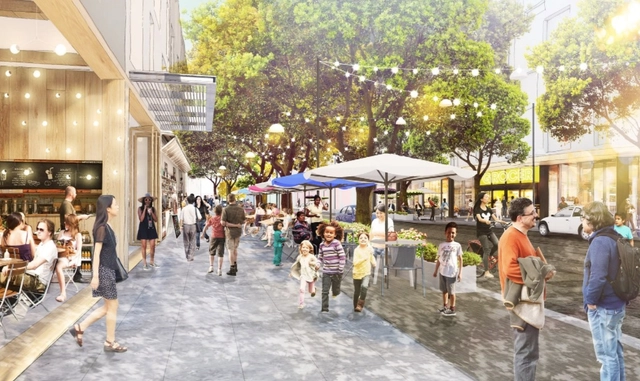
Willow Village will form part of Facebook's OMA-designed Willow Campus. Image Courtesy of OMA
“Do people love tech companies so much that they would live inside them?” This is the question posed by The New York Times in an article reflecting on Facebook’s plans for Willow Village, a 59-acre urban district located at the company’s Menlo Park headquarters in San Francisco, California.
https://www.archdaily.com/891145/zucktown-usa-will-facebook-design-your-future-cityNiall Patrick Walsh
Videos
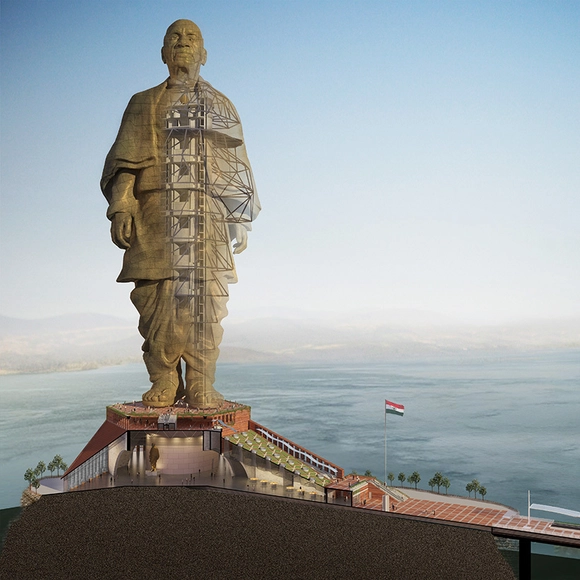
Section of the Statue and Surrounds. Courtesy of Michael Graves Architecture & Design
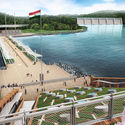
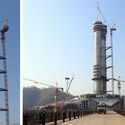
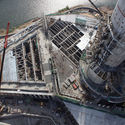
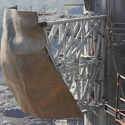
The Statue of Unity, to be the world’s tallest statue when completed, has made significant headway with its construction. Designed by Michael Graves Architecture & Design, the Statue of Unity will be 182-meters tall and depict Vallabhbhai “Sardar” Patel, the first deputy Prime Minister of India. Standing at almost twice the height of the Statue of Liberty, the Statue of Unity project will also consist of a hotel, memorial garden, visitor’s center and miles of roadways and bridges to connect the statue to the town of Kevadia, India.
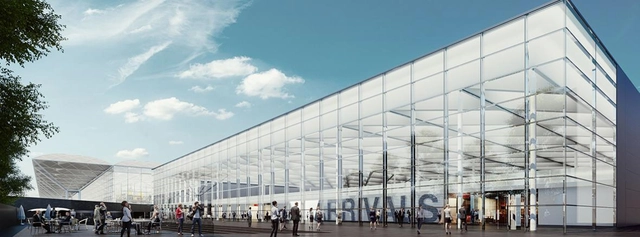
After Pascall+Watson’s success with their concept design for the £130m Arrivals Terminal at Stansted Airport, the firm have been selected for the £600m transformation programme by MAG (Manchester Airports Group owners of Stansted Airport). As demand for air travel continues to increase, Pascall+Watson’s plans aim to provide a greater choice of airlines and destinations by making use of the airport’s spare runway capacity and supporting the future growth.
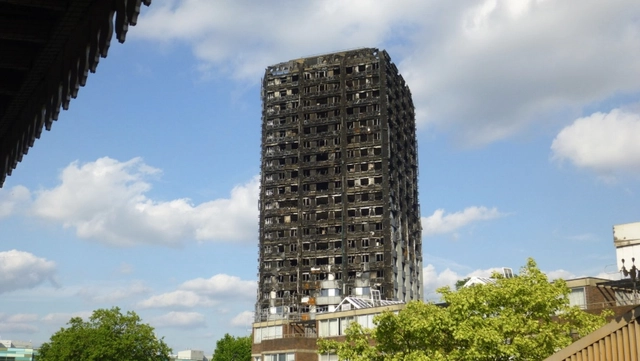
Adjaye Associates is among a team of high-profile architects tasked with generating ideas for the overhaul of Lancaster West Estate, an area of London containing the ruined Grenfell Tower, tragically destroyed by fire in 2017.
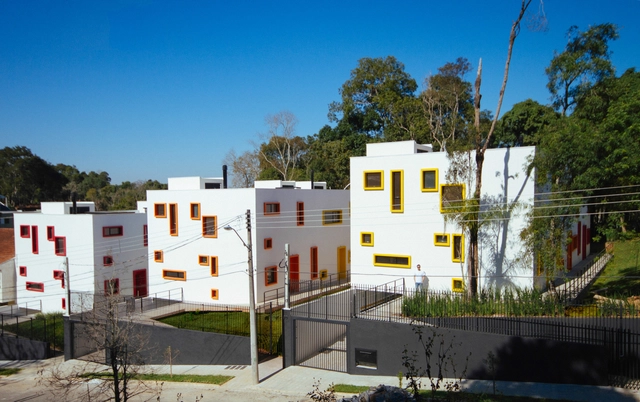
Harvard University Graduate School of Design (Harvard GSD) has announced the four finalists for the 2018 Wheelwright Prize, a $100,000 travel research-based grant available to early-career architects worldwide.
Selected from over 125 applications from nearly 40 countries worldwide, the four finalists are from Belgium, Mexico, Brazil, and the United States. This year’s jury includes 2014 Wheelwright Prize Winner Jose Ahedo, Edward Eigen, Frida Escobedo, K. Michael Hays, Mark Lee, Mohsen Mostafavi, and Michelle Wilkinson. A winner will be named in April.
Since the concept of driverless cars first became a serious prospect, a lot of attention has been given to the possibility of their malfunction—if an autonomous vehicle damages property or even harms a human, who is at fault? And, given a worst-case scenario, how should a vehicle's software choose between whose lives it prioritizes, the passenger or the pedestrian? This last question even became the basis for the Moral Machine, an online platform created by the MIT Media Lab that essentially crowdsources public opinion on different variations of the classic trolley problem thought experiment.
However, all of these questions had been considered largely theoretical until last night when, as The New York Times reports, a woman was struck and killed by an autonomous vehicle in Tempe, Arizona. As a major component of many predictions of futuristic "smart cities," the development and testing of autonomous vehicles hold huge implications for urbanism (ArchDaily has previously covered predictions of major change by car manufacturers and researchers) meaning that this fatal event could have a ripple effect on the development of cities.
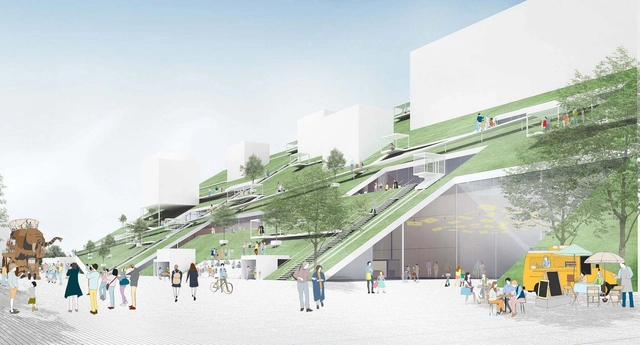
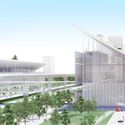
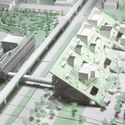
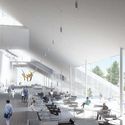
Riken Yamamoto & Field Shop has released images of the proposed TaoyuanMuseum of Art in Taiwan, having won an international competition for the scheme’s design in 2018. Acting as a symbolic gateway to the heart of the city, the architect’s vision was for a hub where every visit leads to new discoveries and experiences.
Named “The Hill,” the competition-winning scheme is defined by a sloping green roof, hosting artwork, pavilions, trees, and an outdoor theater. Beneath the roof, a structure named “The Cube” contains permanent exhibitions and collections, and establishes a link between the museum and Blue Pond Park beyond.
Beginning a multi-division examination with pass rates in the 50-60% range is a seriously daunting task. That’s without even mentioning the overwhelming amount of study materials and opinions floating around in cyberspace. Never fear, ArchDaily is here to help you navigate the tools and techniques available to you when cracking open the books and (hopefully) passing your first exam.
Last week, ArchDaily covered a story about the gender pay gap at Foster + Partners. We thought such a story was "unsurprising" given that the gender pay gap is something that is widely reported on, and present in almost every industry, and we wanted to share a case of it happening in an architectural firm many of us are familiar with. What we did not expect was that readers would think it is a non-issue, or that such reporting was sensational. Is it possible for us to talk about gender in the workplace without being up in arms? Why does the gender pay gap issue make people uncomfortable?
Some of our editors discussed how gender plays into their workplace experiences as well as some hopeful recent signs that we are on a path to change.
As part of our 2018 Venice Architecture Biennale coverage we present the proposal for the Greek Pavilion. Below, the participants describe their contribution in their own words.
Xristina Argyros and Ryan Neiheiser have been selected to curate the exhibition of the Greek Pavilion in the 16th International Architecture Exhibition – La Biennale di Venezia - under the general theme “Freespace,” commissioned by Yvonne Farrell and Shelley McNamara. Entitled “The School of Athens,” the project will examine the architecture of the academic commons - from Plato’s Academy to contemporary university designs. The selection was made by The Greek Ministry of Environment and Energy and the Secretary-General of Spatial Planning and Urban Design, Eirini Klampatsea.
https://www.archdaily.com/890480/greek-pavilion-at-the-2018-venice-biennale-to-explore-utopian-visions-of-learningAD Editorial Team
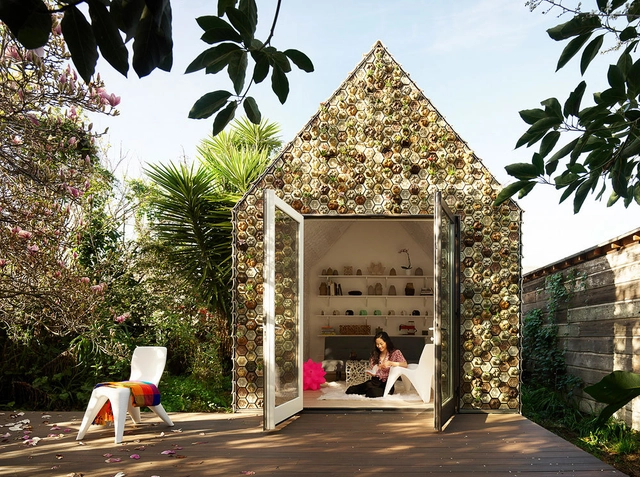
The 3D-printed Cabin of Curiosities is a research endeavor and “proof of concept” investigation into the architectural possibilities of upcycling and custom 3D-printed claddings as a response to 21st-century housing needs.
This exploratory project is an output of Bay Area-based additive manufacturing startup Emerging Objects, founded by Ronald Rael and Virginia San Fratello, who are professors at the University of California Berkeley and San Jose State University, respectively. They also co-founded the architecture studio Rael San Fratello, whose work primarily focuses on architecture as a cultural endeavor.
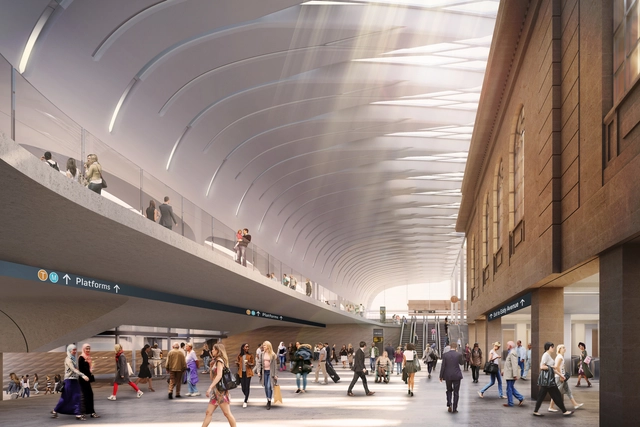
John McAslan + Partners and Woods Bagot are the architectural partners delivering the Sydney Metro upgrade to Central Station, a key component of Australia’s largest public transport project. The multi-disciplinary, international design team have revealed a design that will preserve heritage qualities of the 112-year-old station while adding contemporary and innovative touches to create wider civic and commercial renewal within the space.
As part of our 2018 Venice Architecture Biennale coverage we present the proposal for the Turkish Pavilion. Below, the participants describe their contribution in their own words.
Curated by Kerem Piker and coordinated by Istanbul Foundation for Culture and Arts (İKSV), the Pavilion of Turkey will present Vardiya (the Shift) at the 16th International Architecture Exhibition of la Biennale di Venezia, taking place from May 26th to November 25th, 2018. Co-sponsored by Schüco Turkey and VitrA, the Pavilion of Turkey is located at Sale d’Armi, Arsenale, one of the main venues of the Biennale.
Conceived in response to the theme of Freespace, the title of the Biennale Architettura 2018, Vardiya offers a programme of public events with the Pavilion of Turkey, providing an open space for encounter, exhibition and production.
https://www.archdaily.com/890479/turkeys-entry-to-the-2018-venice-biennale-to-offer-space-for-creative-encounterAD Editorial Team
Amorepacific, Korea's largest beauty company, occupies a site in the centre of Seoul, Korea. Their headquarters was designed by David Chipperfield Architects as a single clear volume, with large urban openings and a central void. In the middle of a bustling downtown landscape, the building strikes a bright, open figure.
The Amorepacific HQ took three years to complete and opened in 2017. The firm described the building as "abstract and gestural," with hanging gardens that provide dramatic views over the city and the mountains in the distance. The design echoes aspirations of mediating between local and global, private and public, collective and individual, formal and informal. Laurian Ghinitoiu captures the identity of this dynamic headquarters.
The history of Mexican photography has contributed to highlighting Mexico's presence in the world. Photographers like Elsa Medina, Lola Álvarez Bravo, Graciela Iturbide, Maya Goded, and Juan Rulfo have masterfully portrayed the life of the buildings, houses and the streets of a rapidly built, nineteenth-century Mexico.
As a consequence, the contemporary scene of Mexican photography has become a fundamental tool for architecture and has contributed to a better visual understanding of the works that are erected every day.
Photography and architecture are two disciplines that go hand in hand and whose relationship has been reinforced thanks to the digital tools that we currently have. For that reason, we have compiled the work of contemporary Mexican photographers who record our walk through the world we live in and contribute to constructing the image of contemporary Mexico.
As part of our 2018 Venice Architecture Biennale coverage we present the proposal for the Nordic Pavilion. Below, the participants describe their contribution in their own words.
Finnish architect Lundén Architecture Company has been chosen to design the Nordic contribution to the 2018 International Architecture Exhibition in Venice. Eero Lundén’s proposal, entitled Another Generosity, explores the relationship between nature and the built environment.
The goal is to explore new ways of making buildings that emphasise the delicate but often invisible interactions between the built and natural worlds.
https://www.archdaily.com/890813/nordic-pavilion-at-the-2018-venice-biennale-to-explore-natures-relationship-to-the-built-environmentAD Editorial Team
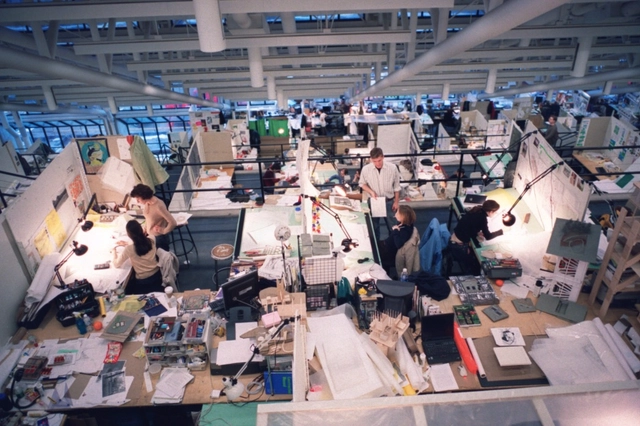
For students of architecture, few things are as thrilling as seeing one of their designs physically built. For a group of Polish and Norwegian-based students, this dream has become a reality.





.jpg?1521650494 "Courtesy of Bahá'í International Community")





_(1).jpg?1521456027)





.jpg?1521224014)
.jpg?1521223950 "© Laurian Ghinitoiu")
.jpg?1521223961 "© Laurian Ghinitoiu")
.jpg?1521224085 "© Laurian Ghinitoiu")
.jpg?1521224100 "© Laurian Ghinitoiu")
.jpg?1521224014)