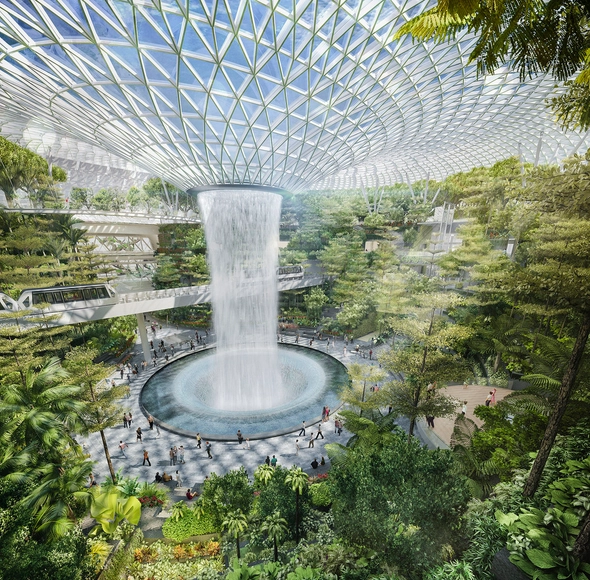
The Terminal 5 building will accommodate 50 million passengers per year, giving Changi Airport a total capacity of 135 million by the late 2020s. The scheme is being developed within the context of a $1.2 billion expansion programme, which has seen the completion of a Terminal 4 building by Benoy, and a mixed-use “Jewel” biodome by Safdie Architects, pictured above, set to contain the world’s largest indoor waterfall.
https://www.archdaily.com/892371/heatherwick-reportedly-prevails-in-competition-for-airport-super-terminal-in-singaporeNiall Patrick Walsh
Kaunas City Municipality has announced SMAR Architecture Studio as the winners of the Science Island International Design Contest for Lithuania's new National Science and Innovation Center. SMAR's design was the highest ranked of three winners in the Design Contest, which was the most popular in Lithuania's history attracting 144 teams from 44 countries.
On a hillside forest outside of Moscow, amongst 65-foot-high (20-meter-high) pine and birch trees, sits the only private house to be designed and built by Zaha Hadid in her lifetime. With a form defined by its natural surroundings, the Capital Hill Residence is divided into two components, one merging with the sloping hillside, and another “floating” 72 feet (22 meters) above ground to unlock spectacular views across the Russian forested landscape.
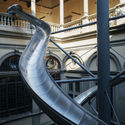
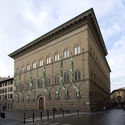
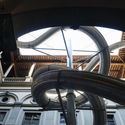
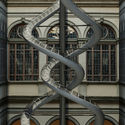
Throughout the spring and summer of 2018, the Palazzo Strozzi in Florence, Italy will host a new site-specific project seeking to further our understanding of ecology, and the relationship between humans and the natural world. “The Florence Experiment” will connect internal and external spaces of the famed Renaissance palace through two separate experiences: an intertwined set of 65-foot-high (20-meter-high) slides, and a “live analysis” of the impact of human emotion on plant growth.
The Florence Experiment has been devised by German artist Carsten Höller and plant neurobiologist Stefano Mancuso, with the vision of turning the Palazzo Strozzi’s façade and courtyard into engaging areas of scientific and artistic experiment. Inspired by the Renaissance alliance between art and science, the project aims to create a new awareness of the way we see, understand, and interact with plant life.
The city of Rome attracts millions of visitors each year to explore its ancient ruins and to learn about how the culture and architecture has transformed over thousands of years. Now, after many years of tedious construction, visitors will be able to see the city as it has never been seen before, through a 1:250 model of imperial Rome, known as the Plastico di Roma Imperiale. The plaster model, which was commissioned by Mussolini in 1933 and completed in 1971, depicts Rome as it stood in the 4th century under the reign of Constantine I.
MADWORKSHOP Fellows Jeremy Carman and Jayson Champlain have designed a unique approach to emergency post-disaster shelters. The 2017 Fellows of the MADWORKSHOP Foundation created "Shelter Squared" as a response to "the current scarcity of design-oriented solutions to emergencies."
Overall, the design utilizes cost-effective, recyclable materials to provide a meaningful alternative to the current standard of post-disaster shelters, described the architects.
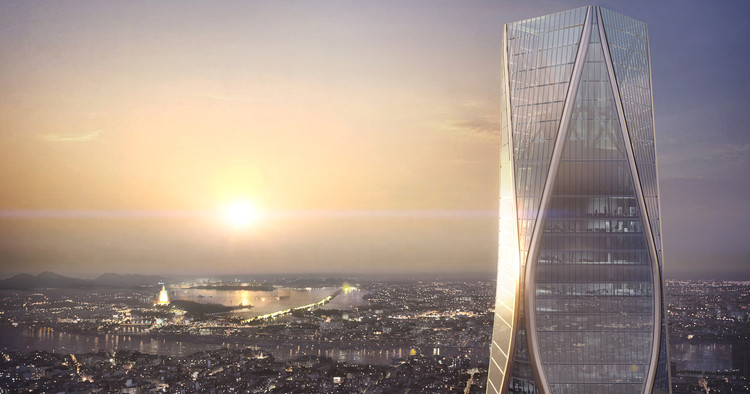
Skidmore, Owings & Merrill (SOM) has unveiled images of its proposed 54-story mixed-usetower in Hangzhou, China. Standing at a height of 945 feet (288 meters), the "Hangzhou Wangchao Center" seeks to act as a gateway to the eastern Chinese city’s newly-planned Qianjang Century Town district. With 1.3 million square feet (125,000 square meters) of office, hotel, and retail space, the scheme represents the ambitions of Hangzhou to become a global destination, spurred by its hosting of the Asian Games in 2022.
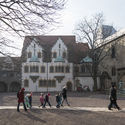
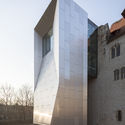
The Moritzburg castle in the city of Halle is exemplary of the Gothic military architecture in 15th century Germany. Despite the partial destruction of the north and west wings during the Thirty Years War, the site has managed to retain most of its original features: a surrounding wall, three of the four round towers at the corners, and a central courtyard.
But more importantly, the castle has been home to an art museum since 1904. The challenge arose when this exhibition space needed to be expanded, without modifying or adding onto the original columns. With some genius and creativity, Nieto Sobejano Arquitectos created a new exhibition space based on a single, clear architectural idea: a new roof.
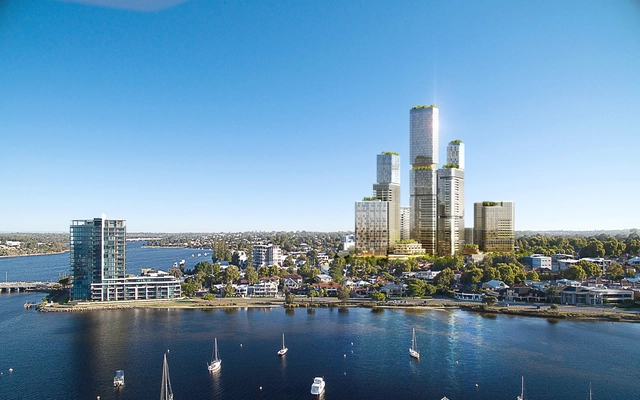
International design studio Woods Bagot has generated a masterplan for what they are calling, “the next generation of mixed-use developments for Perth.” The 17,469-square-meter island development, named Applecross Central, boasts three sides of storefront in the heart of the Canning Bridge Precinct, overlooking the Swan and Canning Rivers.
London-based AIM STUDIO’s entry for the Małopolska Science Center in Krakow, Poland, was recently awarded second place. Responding to the competition's call for an iconic design for the center, the team proposed a structure that creates a new landmark which blurs the boundaries between landscape and building, while also taking into consideration the important historical context of the site.
Museum Narbonne. Image Courtesy of Nigel Young / Foster + Partners
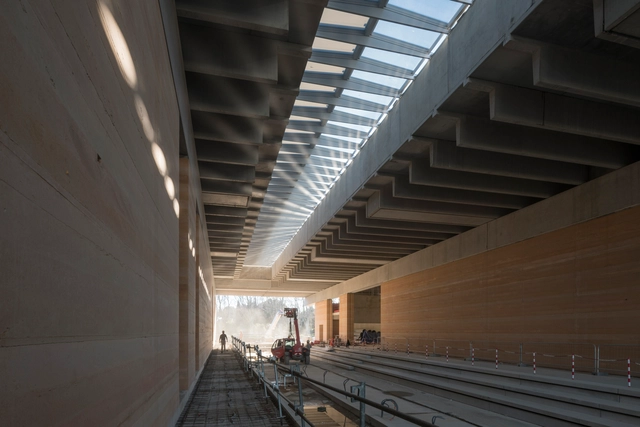
Foster + Partner’s Musée de la Romanité Narbonne (Roman Museum of Narbonne) has moved closer to completion, with the scheme's building envelope now fully constructed. The museum seeks to become one of the most significant cultural attractions in the Southern French region, hosting more than 1000 Roman artifacts. The scheme’s progress was celebrated at a topping out ceremony on 30th January 2018, with the installation of VELUX Modular Skylights marking the completion of the building envelope.
Once a major Roman port, the city of Narbonne has amassed an abundance of ancient buildings, relics, and archaeological sites. The Foster + Partners scheme, designed in collaboration with museum specialist Studio Adrien Gardere, centers on the prime exhibit for the museum: a collection of over 1000 Roman funerary stones recovered from the city’s medieval walls in the 19th century. The stones are to be placed at the heart of a simple rectilinear structure, separating the public galleries from private research spaces.
The Bank of Canada has recently unveiled a new $10 banknote featuring Viola Desmond, a black Nova-Scotian businesswoman who challenged racial segregation in 1946 by refusing to vacate a "whites-only" area of a theater. To reinforce this pro-human rights message, the reverse side of the bill will feature an image of the Canadian Museum for Human Rights, designed by Antoine Predock and completed in 2014.
Heinle, Wischer und Partner's design for a triangular shaped building has been awarded first place in a competition to design the Małopolska Science Center in Krakow, Poland. The competition brief, which called for a design which would be both iconic and innovative, was responded with a proposal by the team that creates a new landmark for the Malopolska region of Poland.
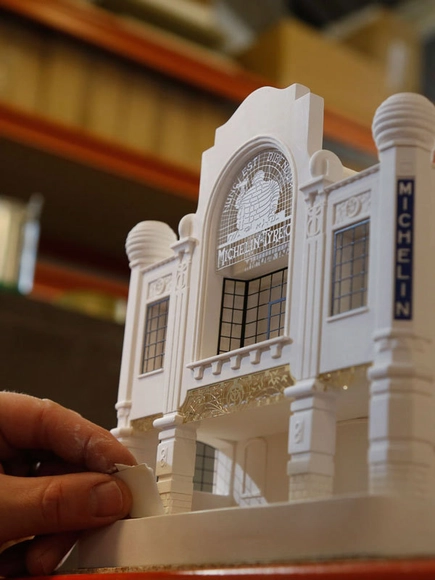
Have you ever wanted a miniature model of the Flatiron Building, Burnham and Root’s famous Monadnock building, or even a 3D map of Amsterdam? Would you want to have your home transformed into a dollhouse-sized replica? UK-based Chisel & Mouse is reconstructing these architectural icons and custom pieces, and bringing them right to your shelf or mantle.
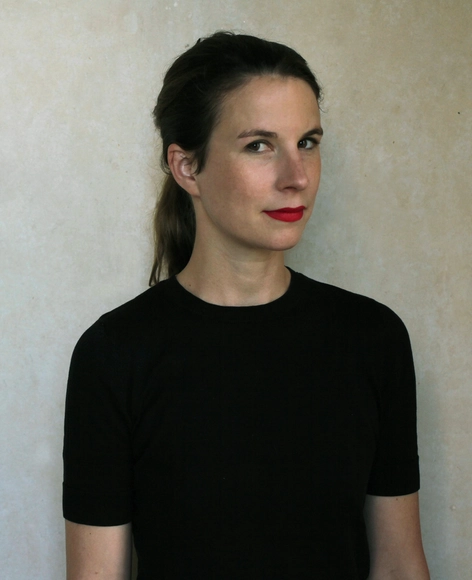
Belgian architect Aude-Line Dulière has been selected as the winner of Harvard University Graduate School of Design’s 2018 Wheelwright Prize. The $100,000 award supports travel-based research and investigative techniques to further explore contemporary design. Dulière’s winning proposal Crafted Images: Material Flows, Techniques, and Uses in Set Design Construction, aims to “examine construction methods and supply systems in the global film industry, engaging the space-making elements of film and set design as well as potential innovations around material use and reuse throughout architecture and construction generally.”
Throughout the spring and summer of 2018, seventeen US cities will host “Hip Hop Architecture Camps,” an initiative founded by the Urban Arts Collective seeking to address the lack of diversity in America’s architectural community. As reported by CNET, the architecture camps will be sponsored by Autodesk, makers of the architectural software AutoCAD.
Hip Hop Architecture Camps are geared towards students between the ages of 10 and 17, introducing students to architecture and urban planning by analyzing the structure and rhythm of rap music. By demonstrating a connection between music and architecture, the organizers hope to ignite a design flair in young students, helping to create a future where local communities have a stronger input into how urban areas are shaped or altered.
https://www.archdaily.com/892088/hip-hop-architecture-camps-use-rap-music-to-inspire-a-diverse-generation-of-future-architectsNiall Patrick Walsh
Videos
Courtesy of Gary di Silvio and Giacomo Mangia
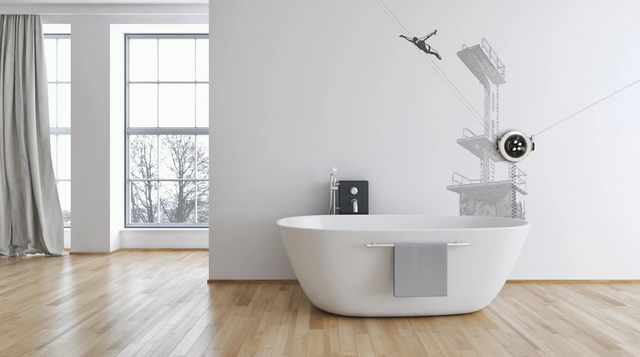
Carlo Ratti Associati (CRA) has unveiled Scribit, a “writing robot” which draws images and text on any wall surface, turning office, living, and bathroom walls into a blank canvas for artistic expression. Using in-built engines, Scribit can draw, cancel, and re-draw new content an infinite number of times, allowing users to print different images, messages, or feeds every day.
Scribit is always connected to the internet, allowing users to download, upload or source any online content. Operating in real time, Scribit immediately reproduces any data sent to it by the user, be it a restaurant posting the day’s menu, a financial firm posting stock market updates in its lobby, or an art enthusiast projecting their own content on the living room wall.
Rotterdam-based Barcode Architects have designed a new 110-meter-tall triangular shaped residential tower to become an icon in the city’s skyline. The tower, which has been named CasaNova, features a large plinth and a building base which tapers down four stories to meet the ground with a sharp angular form.
There's an old, weary tune that people sing to caution against being an architect: the long years of academic training, the studio work that takes away from sleep, and the small job market in which too many people are vying for the same positions. When you finally get going, the work is trying as well. Many spend months or even years working on the computer and doing models before seeing any of the designs become concrete. If you're talking about the grind, architects know this well enough from their training, and this time of ceaseless endeavor in the workplace only adds to that despair.
Which is why more and more architects are branching out. Better hours, more interesting opportunities, and a chance to do more than just build models. Furthermore, the skills you learn as an architect, such as being sensitive to space, and being able to grasp the cultural and societal demands of a place, can be put to use in rather interesting ways. Here, 3 editors at ArchDaily talk about being an architect, why they stopped designing buildings, and what they do in their work now.
Like many European cities, Brussels is moving towards a post-industrial economy, giving new opportunities to old industrial areas such as the Canal Zone. The Henning Larsenredevelopment seeks to remodel the area as an urban center, tying the urban areas west of the canal to central Brussels.
"Sand Castles (part II)" by Markel Redondo. Image Courtesy of Markel Redondo
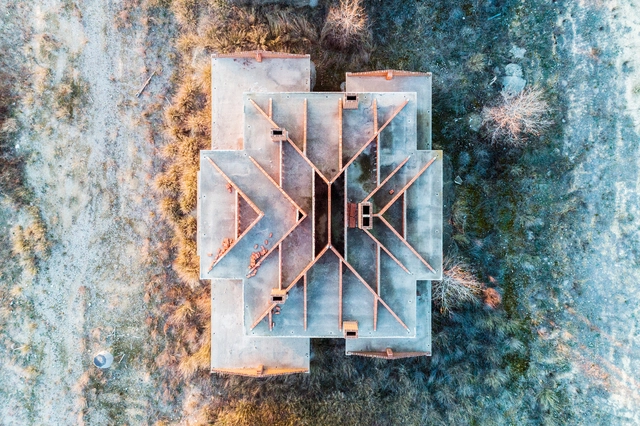
The winners of the DJI Drone Photography Award have been announced, a competition calling for ideas to make creative use of drone photography, and to explore subject matters impossible to experience on foot. This year, the two winning projects consisted of a new perspective on Spain’s 3.4 million abandoned houses, and the documentation of salt production across Europe.
https://www.archdaily.com/892004/beauty-or-tragedy-aerial-imagery-of-spains-abandoned-housing-estates-wins-dji-drone-photography-awardNiall Patrick Walsh
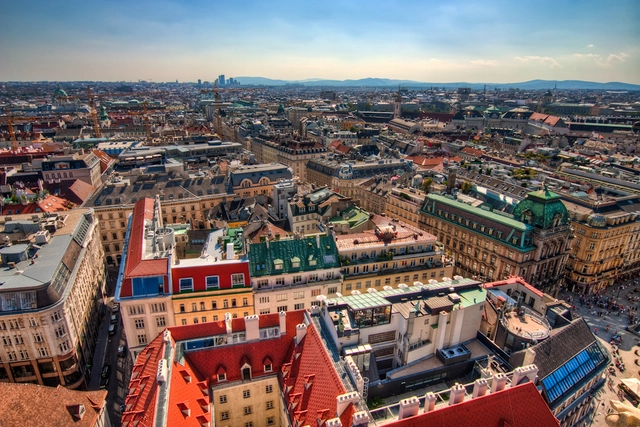
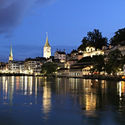
For the ninth consecutive year, Vienna has placed first in Mercer rankings on cities with the best quality of life in the world. Despite the current economic volatility in the European continent, the Austrian capital joins eight other European cities in the top ten.
This is the 20th edition of the Mercer Rankings. The consultancy, which specializes in advising multinational companies in the transfer of employees, evaluated more than 450 cities around the world. Their rankings take into account 39 factors divided into 10 categories, including political and economic environment, socio-cultural status, sanitation, educational and leisure opportunities, housing markets and natural disasters.
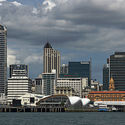
At the regional level, Vancouver (5th), Singapore (25th), Montevideo (77th) and Port Louis (83rd) are the highest ranking cities in North America, Asia, Latin America and Africa respectively. According to Mercer, the twenty cities with the best quality of life in the world are:
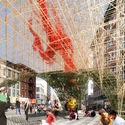
ODA New York has released images of its proposed “Dragon Gate” pavilion for New York’sChinatown, seeking to act as a symbolic gateway to the famous Manhattan neighborhood. Using modern materials and forms to invoke symbols of traditional Chinese culture, the scheme seeks to capture Chinatown’s remarkable duality: a community of tradition resistant to change, yet one regarded as a uniquely contemporary phenomenon showcasing New York’s inclusive diversity.
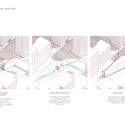
Situated on a triangular traffic island at the intersection of Canal, Baxter, and Walker Streets, ODA’s scheme seeks to activate a currently-underused pedestrian space. The Dragon Gate consists of a triangular form adhering to a three-dimensional, gridded structure formed from interwoven, tubular, bronze steel inspired by bamboo scaffolding. As the structure densifies, selected pieces will be painted red to create the illusion of a dragon in mid-flight.
https://www.archdaily.com/891930/oda-unveils-images-of-bamboo-inspired-dragon-gate-for-new-yorks-chinatownNiall Patrick Walsh
Artist Christo has released images of his proposed temporary sculpture for Hyde Park, London, to become his first major outdoor public sculpture in the United Kingdom. Titled “The Mastaba (Project for London, Hyde Park, Serpentine Lake)," the sculpture will consist of 7,506 horizontally-stacked barrels floating on the Serpentine Lake throughout the summer of 2018.
“The Mastaba” will coincide with an exhibition of Christo and Jeanne-Claude’s work at the Serpentine Galleries, featuring sculptures, drawings, collages and photographs spanning more than 60 years. Supported by Bloomberg Philanthropies, the exhibition will be the artists’ first in a UK public institution since 1979 and will showcase their long-running exploits with barrel forms, chosen initially for their sculptural effect and low cost.



.jpg?1523378770&format=webp&width=640&height=580)
.jpg?1523378338 "Courtesy of OKO Group")

.jpg?1523379487 "Courtesy of OKO Group")
.jpg?1523379556 "Courtesy of OKO Group")
.jpg?1523378770)





















_-_The_Mastaba_(Project_for_London__Hyde_Park__Serpentine_Lake)_(1).jpg?1522847854)
_-_The_Mastaba_(Project_for_London__Hyde_Park__Serpentine_Lake).jpg?1522848242 "Courtesy of Christo")
_-_The_site_of_The_Mastaba_in_Serpentine_Lake.jpg?1522848328 "Courtesy of Christo")
_-_The_Mastaba_(Project_for_London__Hyde_Park__Serpentine_Lake)_(5).jpg?1522848162 "Courtesy of Christo")
_-_The_Mastaba_(Project_for_London__Hyde_Park__Serpentine_Lake)_(4).jpg?1522848063 "Courtesy of Christo")
_-_The_Mastaba_(Project_for_London__Hyde_Park__Serpentine_Lake)_(1).jpg?1522847854)


