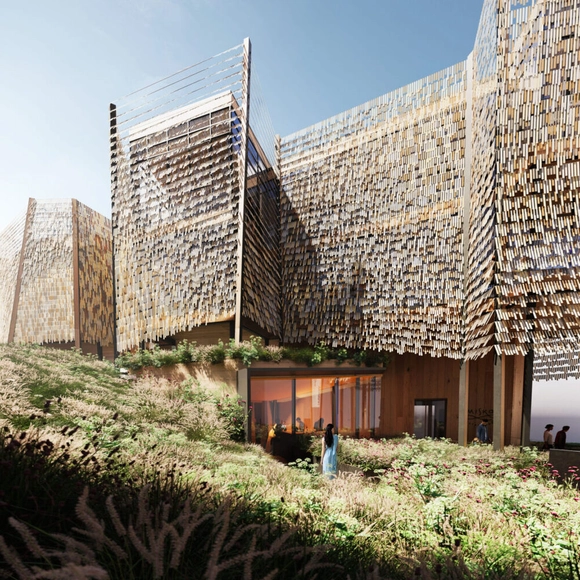
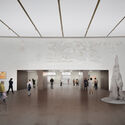
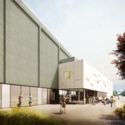
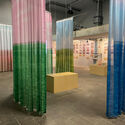
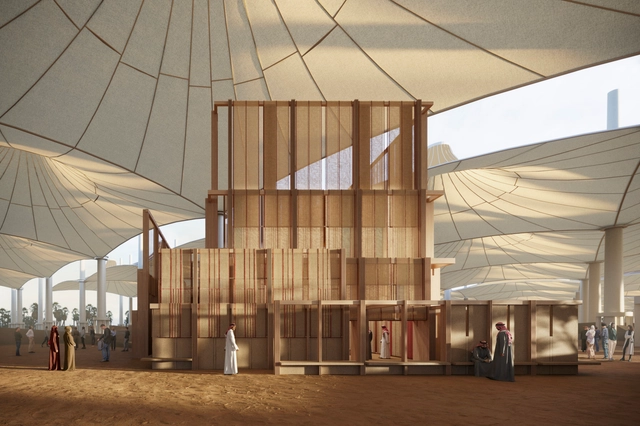
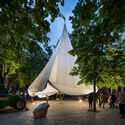
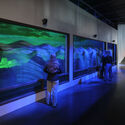
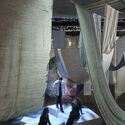
The Hungarian Pavilion at Expo 2025 in Osaka is designed to reflect the event's central theme, "Designing Future Society for Our Lives." It explores the relationship between humans and nature, emphasizing cultural heritage and sustainability through its architecture and exhibition. The pavilion will offer an immersive experience centered around music, heritage, and the connection between people and their environment.
Welcome to the ArchDaily Building of the Year Awards! Now in its 16th edition, this award continues to be the most democratic recognition in architecture, celebrating excellence and innovation across the built environment. With over 4,000 projects participating annually, it has become a global benchmark, powered by the voices of our passionate readers.
Each year, your votes shape the future of architecture, highlighting the most outstanding projects that push boundaries and redefine possibilities. As we embark on this journey once again, we invite you to be part of this collective celebration—honoring diversity, creativity, and ingenuity in architecture and design. Together, let's recognize and elevate the projects that inspire, challenge, and shape our world. Cast your vote and help define the architecture of today and tomorrow!
British architect Asif Khan has just unveiled the transformation of a Soviet-era cinema in Almaty, Kazakhstan, into the Tselinny Center of Contemporary Culture, a multifunctional venue designed to support the growth of Kazakh and Central Asian creatives. The project, which began in 2018, is set to open in April and will feature spaces for art exhibitions, performances, film screenings, workshops, and more. Once complete, the Tselinny Center will mark Kazakhstan's first independent cultural institution.
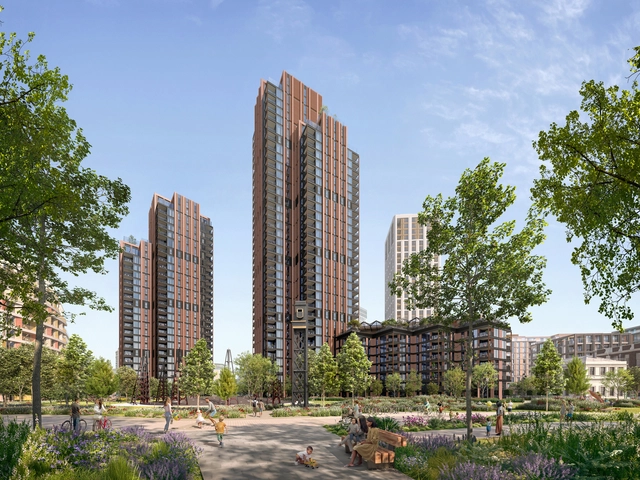
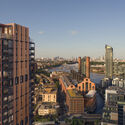
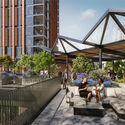
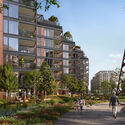
Phase four of the King's Road Park masterplan, designed by Foster + Partners for St William, has received detailed planning permission. The design, located in the London Borough of Hammersmith & Fulham, comprises two residential towers of 28 and 38 stories, a seven-story podium building, and 1.9 acres of new parkland and public open space, totaling 357 new homes. The residential buildings incorporate communal spaces, including a ground-level amenity and a rooftop garden sheltered by a louvered canopy. The towers' slender profiles are intended to complement the existing urban skyline, featuring terracotta paneling in a nod to local architectural styles.
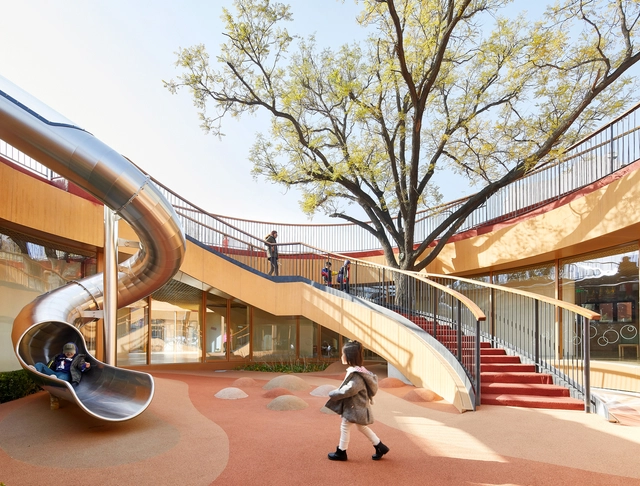
Today, the International Day of Education serves as a reminder of the significant impact that architectural design has on learning environments. From flexible classrooms that adapt to diverse teaching methods to outdoor learning areas that integrate natural elements, the architecture of learning spaces embodies the principles of pedagogy, offering opportunities for exploration, collaboration and creativity, all while maintaining a focus on the safety and comfort of all users. This selection of articles explores the potential of design to enhance learning outcomes through spatial exploration, be it inside the classroom, in outdoor spaces or by encouraging larger communities to part-take in the learning process.
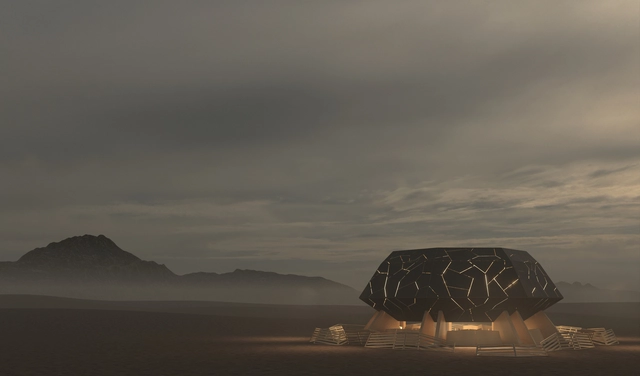
Spanish architect Miguel Arraiz has introduced the design for the 2025 Burning Man Temple, titled Temple of the Deep. Drawing inspiration from the natural landscape of the Black Rock Desert, the Temple aims to provide a space for reflection, healing, and connection. The Temple of the Deep explores the concept of radical acceptance, emphasizing the importance of fully experiencing emotions as part of the healing process.
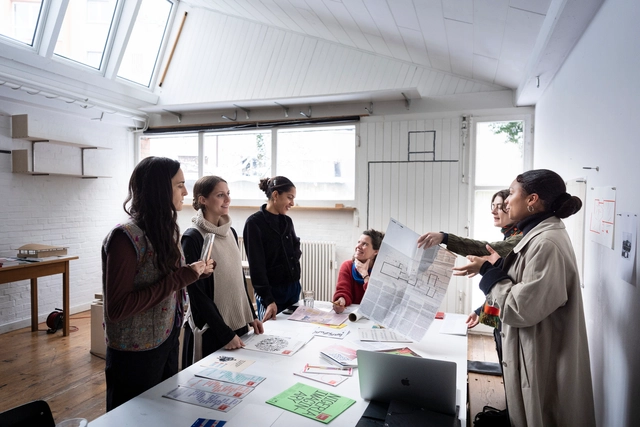
The Swiss Arts Council Pro Helvetia, represented by Sandi Paucic and Rachele Giudici Legittimo, has announced that the Swiss Pavilion at the Venice Architecture Biennale 2025 will host the exhibition "The final form is determined by the architect on site," curated by Elena Chiavi, Kathrin Füglister, Amy Perkins, Axelle Stiefel, and Myriam Uzor. This all-female team poses the question: What if Lisbeth Sachs, rather than Bruno Giacometti, had designed the Swiss Pavilion? The exhibition will explore this question by reviving one of the iconic works of Lisbeth Sachs, one of the first registered female architects in Switzerland and a contemporary of Giacometti.
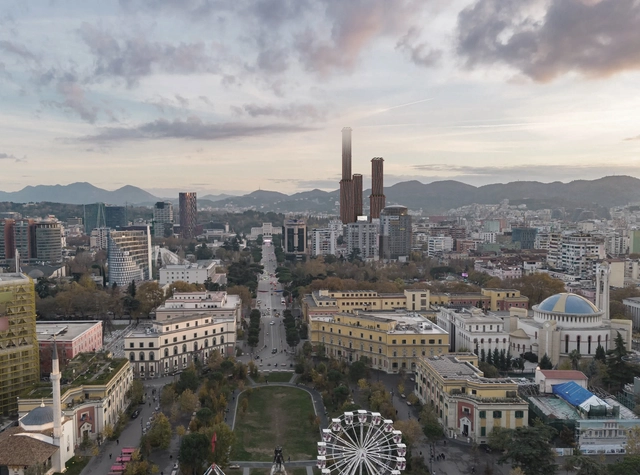
Swiss architect Valerio Olgiati has unveiled plans for Rruga Adem Jashari, a mixed-use development in Tirana, Albania, that seeks to blend urban living with the surrounding natural landscape. Positioned at the boundary between the city grid and an adjacent park, the project features three distinctive red concrete towers and a central white ziggurat. Combining residential, hospitality, and retail spaces, the development aims to create a seamless connection between the built environment and nature.
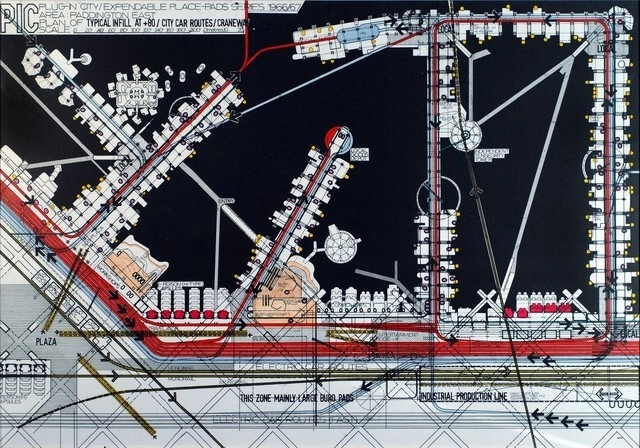
Dennis Crompton, an influential figure in the field of architecture, passed away on January 21, 2025, at the age of 90. Born in Blackpool in 1935, Crompton's remarkable career spanned several decades and left an indelible mark on modern architecture. As a key member of the avant-garde architectural group Archigram, established in London in 1961, Crompton played a pivotal role in revolutionizing architectural practice, together with Warren Chalk, Peter Cook, Ron Herron, David Greene, and Michael Webb.
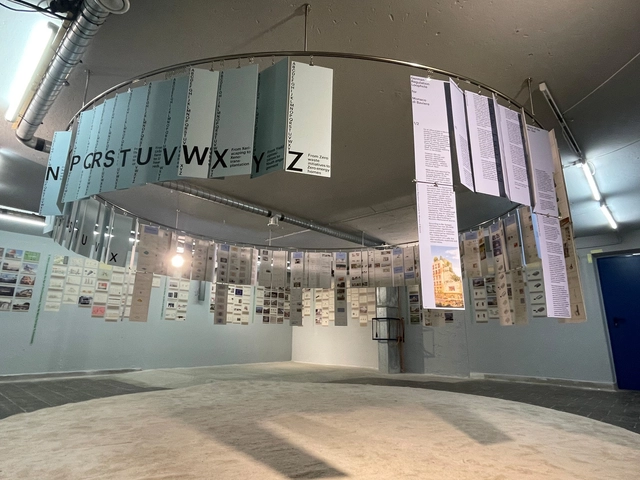
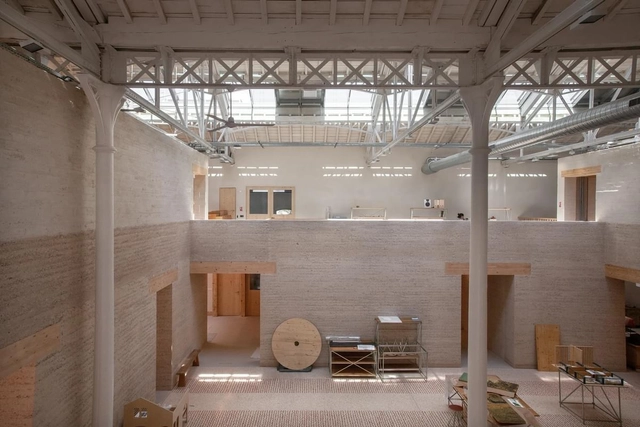
As the global climate crisis intensifies, the construction industry faces increasing pressure to reduce carbon emissions, prompting a fundamental reassessment of building practices. Dutch architecture firm MVRDV, known for its commitment to sustainability, presents an honest exploration of this challenge in "Carbon Confessions," an exhibition at Munich's Architekturgalerie. The exhibition provides insight into the firm's ongoing efforts, highlighting both its achievements and the obstacles encountered in the pursuit of carbon reduction.
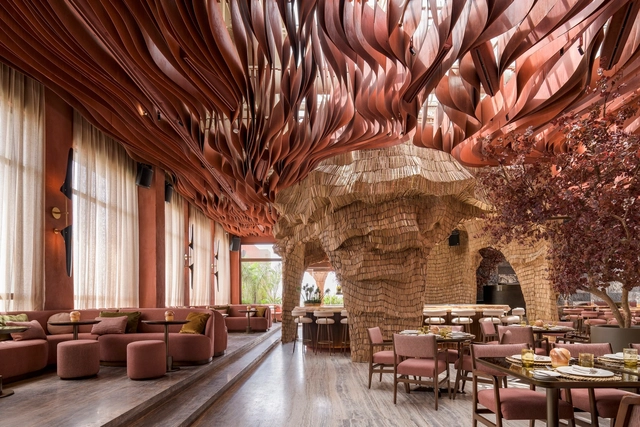
Unlike the 2024 Color of the Year selections, the 2025 picks reveal more commonalities among the colors chosen by major paint industry leaders. Each year, designers and enthusiasts from various fields gather within companies worldwide to reignite the conversation about color and its connection to contemporary culture. For the 2025 forecast, earth tones seem to be the big winners: Pantone's Mousse Chocolate is joined by cinnamon, brown, and burgundy shades from Benjamin Moore, Graham & Brown, Behr, and C2 Paint. Companies like AkzoNobel, Valspar, and Comex opted for more vibrant colors to celebrate optimism and joy, while Sherwin-Williams and Jotun didn't limit themselves to a single color. Instead, they introduced entire palettes centered on tranquility and relaxation. These concepts appear to be the guiding themes for 2025.
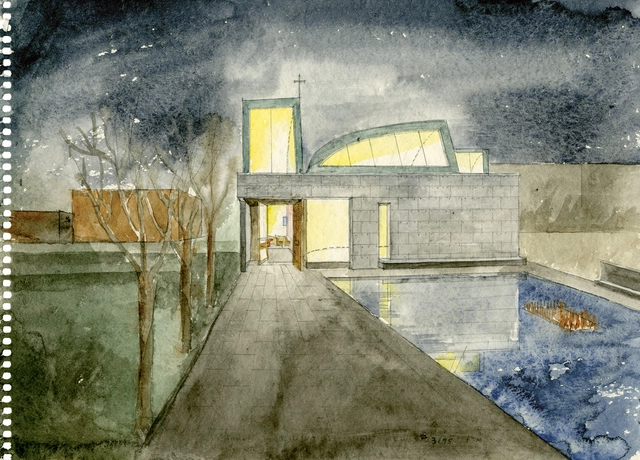
The Museum for Architectural Drawing in Berlin, Germany, will host a new exhibition titled "Steven Holl – Drawing as Thought," curated by Kristin Feireiss. The exhibition explores the creative process of internationally renowned architect Steven Holl with a focus on his use of drawing as a fundamental tool in architectural design. Furthermore, the exhibition highlights Holl's extensive artistic practice, which includes over 50,000 sketches, black-and-white drawings, and watercolors, offering insight into his approach to architecture through visual exploration.
David Lynch - Ph. Dean Hurley. Image Courtesy of Salone del Mobile.Milano
Filmmaker David Lynch, renowned for his surreal and influential works like Blue Velvet and Twin Peaks, passed away at age 78. Lynch's nearly 50-year career was marked by distinctive, stylized films often featuring surreal elements and fragmented narratives. He received numerous accolades, including a Golden Lion for lifetime achievement and an honorary Oscar. His career began with painting and experimental animation before transitioning to filmmaking, culminating in iconic films and the groundbreaking television series Twin Peaks. His impact extended beyond the silver screen; his unique manipulation of space and atmosphere profoundly influenced architectural discourse.
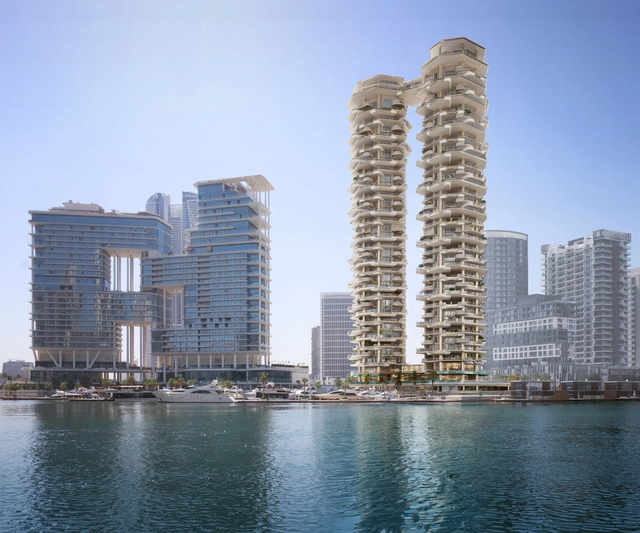
In recent weeks, a series of significant architectural developments have been unveiled, highlighting the work of diverse architecture studios across the globe. These projects, announced between late September 2024 and early 2025, focus on transformative masterplans, housing solutions, and public spaces. Prominent firms such as Foster + Partners, ACPV ARCHITECTS Antonio Citterio Patricia Viel, and fjcstudio are at the forefront of these initiatives. In Dubai, Foster + Partners revealed the Regent Residences, a pair of residential waterfront towers. Meanwhile, ACPV ARCHITECTS announced three projects in Taichung, Taiwan, combining Italian design with Eastern philosophies to create green, community-focused urban spaces. In Sydney, fjcstudio's masterplan for Midtown aims to reshape the city's urban core with two 80-storey mixed-use towers, enhancing connectivity and public engagement. These projects demonstrate the diverse scales and contexts in which architects continue to innovate, shaping cities and communities worldwide.
2025 promises to be a landmark in architecture, heralding a vibrant renaissance of creativity and exploration. As societies confront challenges such as climate change, rapid urbanization, and technological evolution, architecture is both a mirror to these dynamics and a compass pointing toward a sustainable and inclusive future. This year's architectural calendar offers abundant opportunities to celebrate the discipline's transformative power — from boundary-pushing festivals to thought-provoking exhibitions that explore pressing cultural and environmental narratives.
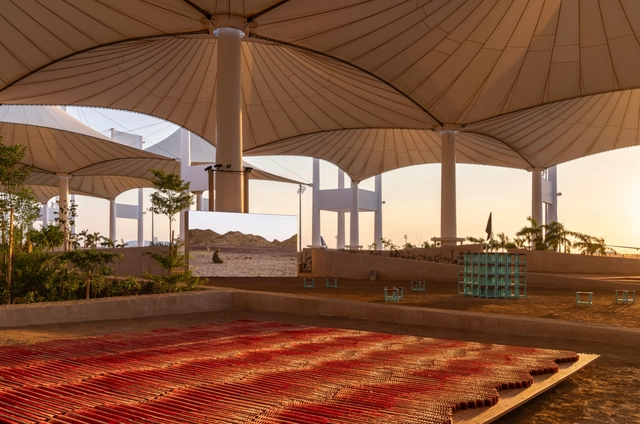
From well-established biennials to inaugural gatherings, including the World Architecture Festival 2025, Desert X Al Ula, and the COP Climate Conference, the 2025 calendar highlights themes such as sustainability, heritage, and community. These events underscore architecture's unique ability to shape a better future, addressing global challenges while honoring cultural diversity and design ingenuity.
The World Monuments Fund (WMF) has announced its 2025 World Monuments Watch, highlighting 25 sites facing significant challenges. This biennial program, launched in 1996, aims to raise awareness and mobilize action for the preservation of cultural heritage worldwide. The 2025 list includes diverse locations across five continents and, notably, the Moon, representing the need to protect artifacts from humanity's first lunar missions. The selection process involved over 200 nominations, revealing regional trends such as climate change impacts in Sub-Saharan Africa and urbanization challenges in Asia and the Pacific.
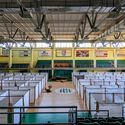
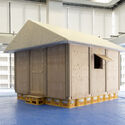
In a recent interview with Louisiana Channel, acclaimed Japanese architect Shigeru Ban shared his perspectives on architecture, his journey in the field, and his dedication to socially responsible design. Known for his innovative use of materials such as paper and timber, Ban has spent much of his career creating solutions for disaster-stricken communities and displaced populations around the world.
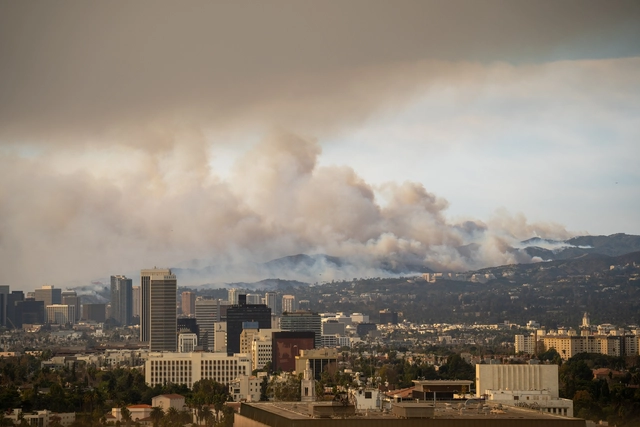
Devastating wildfires across Los Angelesa have resulted in widespread destruction, displacing thousands of residents, and necessitating a rapid and efficient rebuilding process. Two executive orders have been issued to expedite the rebuilding process, one by Los Angeles Mayor Karen Bass and another by California Governor Newsom, both intending to remove significant regulatory hurdles and expedite project approvals.
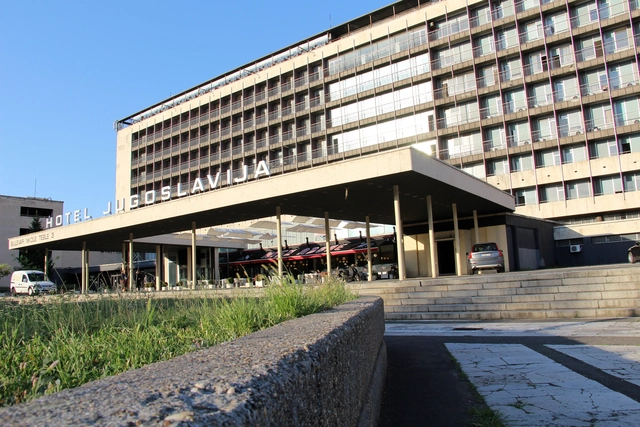
The demolition of Hotel Jugoslavija, a notable example of modernist architecture in Belgrade, has begun, making way for new development in the city's rapidly changing urban landscape. Constructed in 1969 in New Belgrade, the hotel was once among the largest and most prominent in Europe, reflecting the aspirations of the Socialist Federal Republic of Yugoslavia (SFRY) during its peak. Designed by Zagreb architect Lavoslav Horvat, the eight-story hotel was a key project under the leadership of Josip Broz Tito. It showcased the modernist principles of the time, combining functionality with imposing architectural forms. Its interiors featured luxurious details, including a Swarovski chandelier comprised of 40,000 crystals, which underscored the building's significance as a flagship of Yugoslavia's international presence.
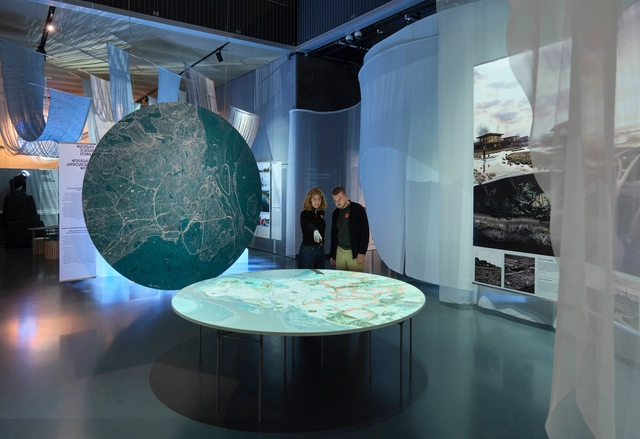
The Danish Architecture Center (DAC) will open its new exhibition, "Water is Coming" in October 2024, remaining open until March 12, 2025. The exhibition addresses the escalating global water crisis, prompted by melting polar ice, rising groundwater levels, and increasingly frequent and intense flooding. It acknowledges the reality of rising sea levels and extreme weather events, shifting the focus from mitigation to adaptation. The exhibition aims to foster a deeper understanding of our complex relationship with water, exploring its vital role as both a life-giving resource and a potential threat to human settlements.
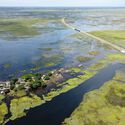
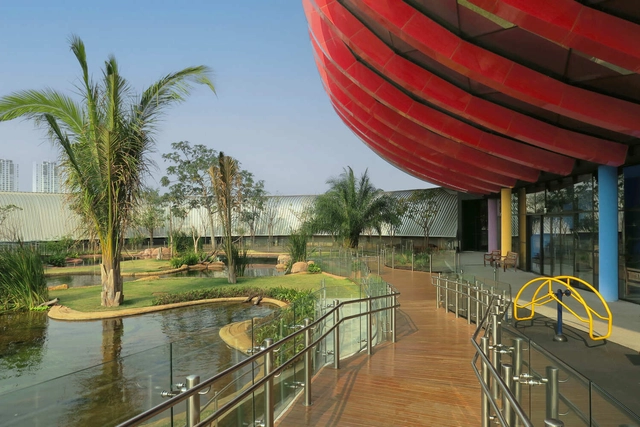
Photographer Paul Clemence captured a striking photo series of the Bioparque Pantanal, also known as the Pantanal Aquarium, a recently completed architectural project in Campo Grande, Brazil, designed by the late architect Ruy Ohtake. Located within the Parque das Nações Indígenas, one of the largest urban parks in the country, the structure serves as a centerpiece for cultural, scientific, and ecological exploration in the state of Mato Grosso do Sul. Clemence's photography highlights the interplay between the aquarium's architectural design and its surrounding environment, providing a visual documentation of the project's form, materials, and spatial organization.
Maria Lisogorskaya and Kaye Song of Assemble: Atelier LUMA 2023 Lot 8 Le Magasin Electrique Photo @ Joseph Halligan. Image Courtesy of Bauhaus Earth
Maria Lisogorskaya and Kaye Song from the London-based collective Assemble, along with Lviv-based architects Anna Pomazanna and Mykhailo Shevchenko, have been announced as the 2025 Experimental Fellows at Bauhaus Earth. Selected from 120 submissions, their projects are set to explore earth as a material in contemporary architecture. The annual Bauhaus Earth Fellowship program was established in 2022 by architect Prof. Regine Leibinger. It aims to support diverse projects that explore new modes of practice across various geographies, that can contribute to ecological and social resilience. Fellows receive financial support, mentorship, and access to a network encouraging collaboration among architects, manufacturers, and local stakeholders.
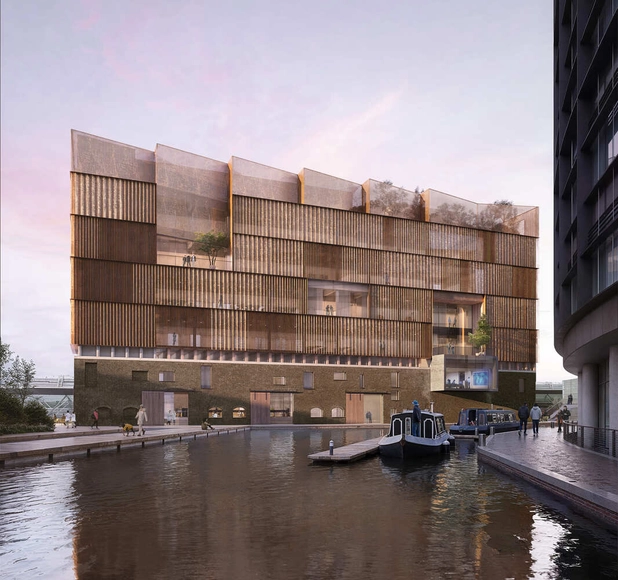
Stanton Williams has been selected to design the Fleming Centre, a state-of-the-art research and public engagement facility to be constructed on the St Mary's Hospital campus in Paddington, London. Announced by the Royal Institute of British Architects (RIBA), the project aims to create a global hub for collaboration and innovation in addressing antimicrobial resistance (AMR), a significant healthcare challenge affecting populations worldwide. The Fleming Centre forms part of the broader Fleming Initiative, a joint venture between Imperial College Healthcare and Imperial College London.