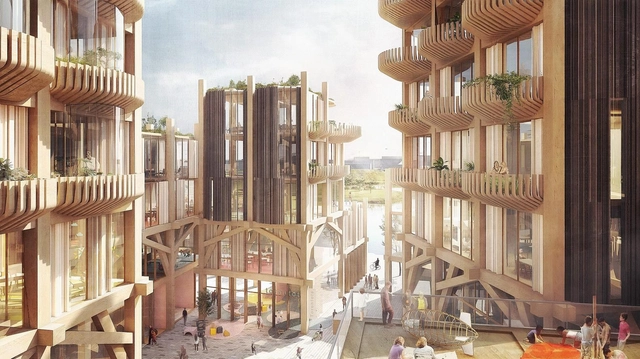
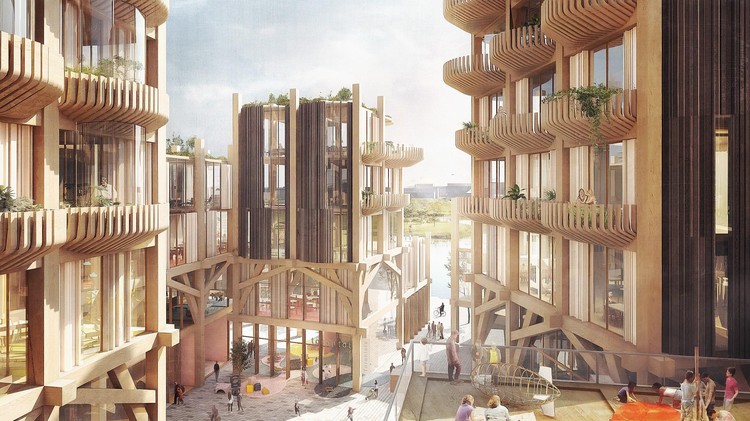
Sidewalk Labs has released new renderings from Snøhetta and Heatherwick Studio of the Quayside neighborhood development in Toronto. After announcing plans to create a model smart city, Sidewalk Labs has been working to pioneer a new approach to future urban developments. Plans for Quayside were first revealed last summer, designed to be interconnected smart neighborhood for the city. The latest renderings were released with further documents outlining how the company plans to pay for the ground-up development.
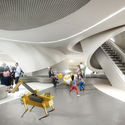
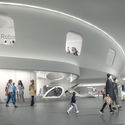
Turkish practice Melike Altınışık Architects (MAA) has won an international competition for the design of a Robot Science Museum in Seoul, South Korea. Hosted by the Seoul Metropolitan Government, the competition called for a “world first” museum to support public education in robotics, and increase public interest in robots.
The principles of robotics, science, technology, and innovation have shaped all aspects of the scheme’s design, from form and structure to material and operation. The main character of the museum is to “create its own universe for robots and their visitors,” manifesting as a non-directional, fluid, spherical structure.
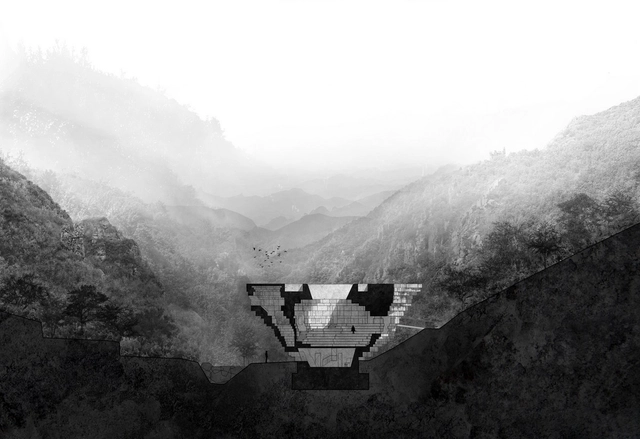
Nestled in a valley north of Beijing, a building will soon be completed that may appear to have always been there, or to have emerged from and grown out of the surrounding stony landscape. OPEN Architecture’s Chapel of Sound in Chengde, China was recently recognized in the 66th annual Progressive Architecture (P/A) Awards, chosen as one of ten projects to receive the commendation. The P/A Awards focus on innovative, ongoing work that promotes new ways of thinking about architecture. The Chapel of Sound was noted for its creation of a new, progressive type of environment and its reimagining of an established typology.
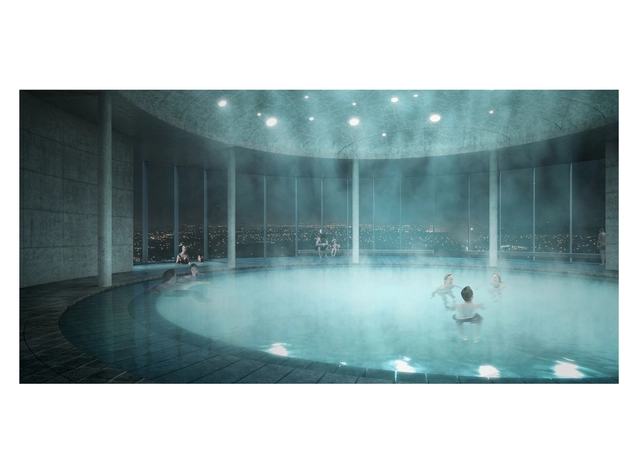
Raise your hand if you’ve ever wanted to go swimming inside a water tower. In reality, it would probably be dark and creepy and not as cool as it sounds, but that’s not the case with Danish firm SquareOne’s design, where the top of an abandoned water tower becomes a public swimming pool and spa. Utilizing the existing structural system of the tower, SquareOne is also proposing adding 40+ student housing units suspended around the tower. This dual-purpose scheme addresses Copenhagen’s desperate housing shortage while also giving new life to an old building.
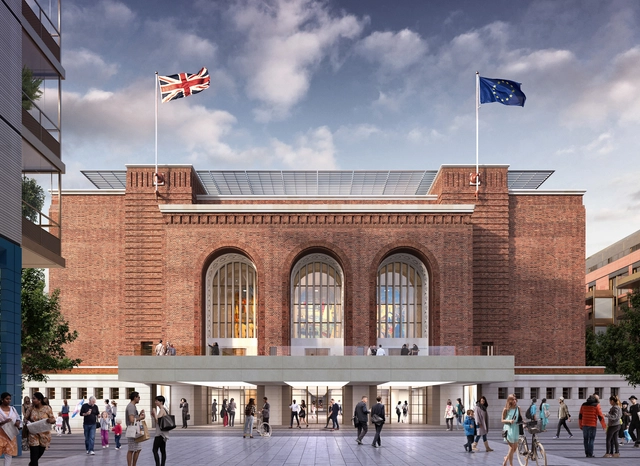
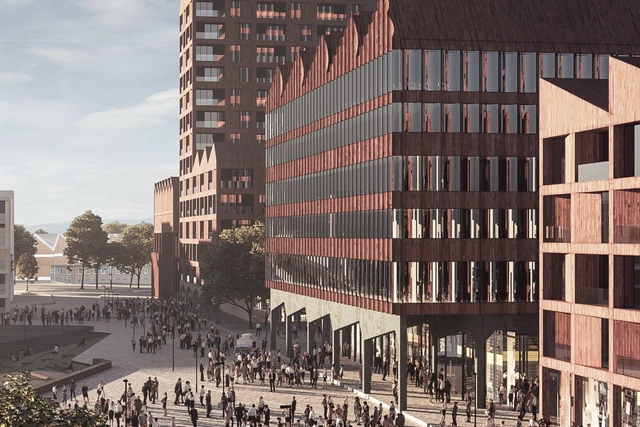
Rogers Stirk Harbour + Partners have gained planning permission for the proposed extension and full refurbishment of the Grade II-listed Hammersmith Town Hall in London. A joint venture with Hammersmith & Fulham Council and commercial partners a2Dominion, the scheme seeks to promote “the creation of a new high quality civic mixed-use development” derived from the historic structure.
Through the demolition of a 1970s extension, the scheme will create a new public square that enhances the setting of the existing protected Town Hall, reinstating its presence on Kings Street. The main alternations seek to enhance the existing building through a glass box rooftop extension containing council office space.
https://www.archdaily.com/911692/rogers-stirk-harbour-plus-partners-gains-approval-for-hammersmith-town-hall-refurbishment-in-londonNiall Patrick Walsh
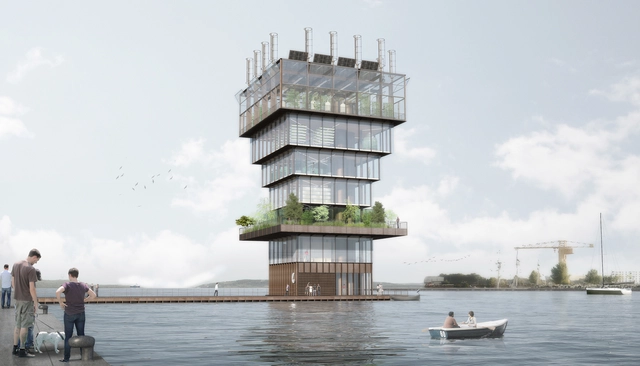
Studio NAB has released details of their proposed Superfarm project, a six-story exercise in indoor urban farming that “focuses its production on the culture of foods with a high nutritional value.” The project is founded on the principles of pragmatic implementation, high-yielding foods, reducing health risks, promoting short circuits, reviving economies, energy self-sufficiency.
The scheme is a response to the projections that by 2050, 80% of the earth’s population will live in urban centers, demanding an area of farmland 20% more than is represented by the country of Brazil. By moving farm systems indoors, Superfarm represents an “ecological transition” that is resilient, human-sensitive, and technologically advanced.
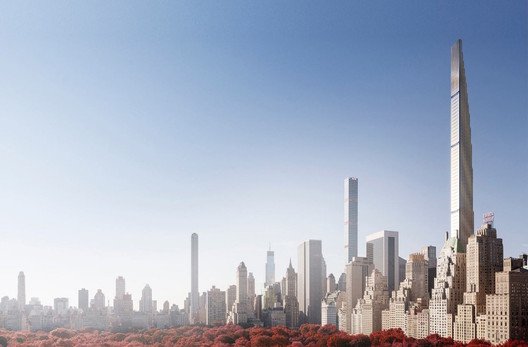
The hyperreal renderings predicting New York City’s skyline in 2018 are coming to life as the city’s wealth physically manifests into the next generation of skyscrapers. Just like millennials and their ability to kill whole industries singlehandedly, we are still fixated on the supertalls: how tall, how expensive, how record-breaking? Obsession with this typology centers around their excessive, bourgeois nature, but – at least among architects – rarely has much regard for the processes which enable the phenomenon.
The Naomi Milgrom Foundation has announced that the sixth edition of the MPavilion will be designed by Australian architect and Pritzker laureate architect Glenn Murcutt AO. Murcutt's announcement comes as the 2018 edition of the MPavilion, designed by Spanish architect Carme Pinos, closed after a record-breaking season that saw more than 133,000 visitors. Murcutt will be the second Australian to design a pavilion for the Melbourne-based program; Sean Godsell designed the inaugural pavilion in 2014.
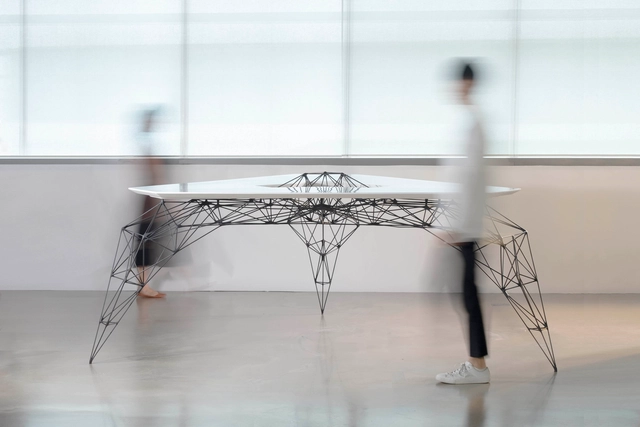
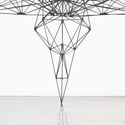
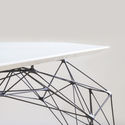
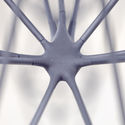
A sturdy featherweight table? Sounds... contrary to reason. But this contradiction was the very impetus for the design. Created for a research center that’s pushing the boundaries of design and manufacturing using technology and science, the designers--AIRLab, in collaboration with DManD-- sought to dematerialise the typical structure of a table, creating a sense of instability with the visual counterpoint of a solid surface.
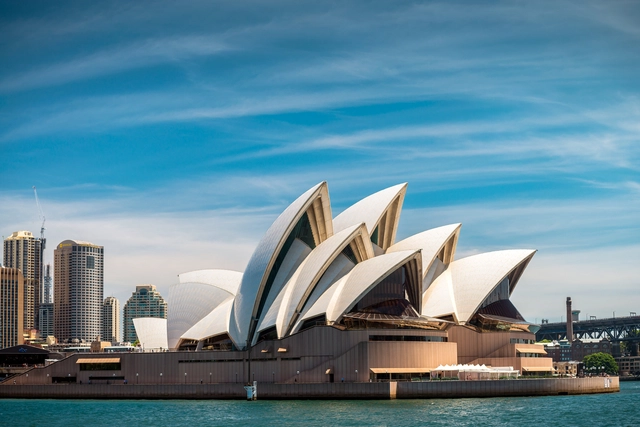
The history behind the Opera House and its creation is as rich as the architecture itself. In 1956 the New South Wales Government called an open competition for the design of two performance halls, for opera and for symphony concerts, hoping to establish Sydney as a major city. Danish architect Jørn Utzon won the competition with an entry that consisted of a few simple sketches that intrigued the jury.
https://www.archdaily.com/911580/7-rejected-proposals-for-sydney-opera-houseNiall Patrick Walsh
“The Flying Photographer” is the name of the documentary that will showcase Sara Nunes (architectural film director from Building Pictures) following the amazing journey of Fernando Guerra during the period of one year of travel to get the best architecture photographs from around the world.
https://www.archdaily.com/910897/new-documentary-on-portuguese-photographer-fernando-guerra-follows-his-journey-through-architecturePedro Vada
Europahafenkopf. Image Courtesy of COBE Architects
Danish practice COBE Architects have broken ground on a new mixed-use development along Bremen Harbor in northwest Germany. Titled Europahafenkopf, the project aims to transform the city's industrial port to a new city quarter. The design includes four buildings housing residences, offices, commercial space, and a car park. Located at the end of the harbor, the project was made to connect the historical city core with Bremen’s new neighborhood.
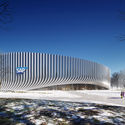
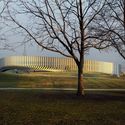
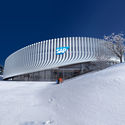
3XN has designed a new multipurpose arena on the site of the former Olympic cycling track stadium in Munich’s Olympic Park. The Copenhagen-based firm was awarded the contract with German landscape and urban planning firm LATZ+PARTNER to design an 11,500-capacity arena that will serve as the home of German ice hockey champions Munich Red Bulls and German basketball champions FC Bayern Munich.
Manifesting as an oval structure, the sports arena “naturally and respectfully melds into the world-famous Olympic Park with its many iconic buildings.” A green roof combines with a façade of vertical lamellas to allow the scheme to blend with its urban context, with breaks in the lamellas forming glass-paneled entrances.
https://www.archdaily.com/911573/3xn-design-a-respectful-stadium-for-munichs-olympic-parkNiall Patrick Walsh
As users of ArchDaily demonstrate certain affinities and greater interest in particular subjects, these topics emerged as trends. Gender Equality is one of the trends that will influence urban and architectural discussion in 2019.
https://www.archdaily.com/915576/trends-report-february-2019-gender-equalityPola Mora
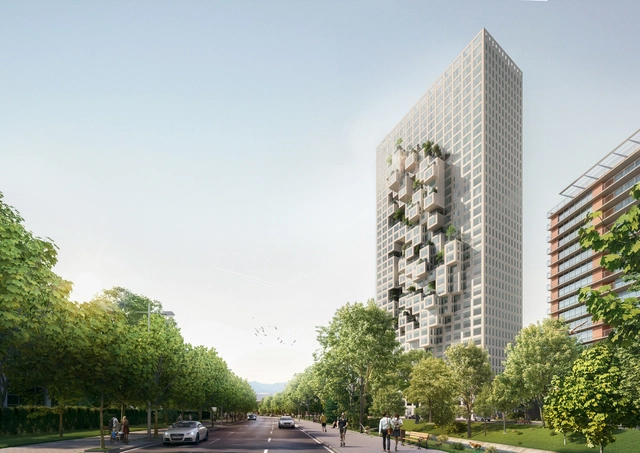
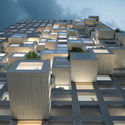
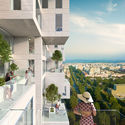
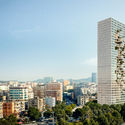
Construction has begun on MVRDV’s “Downtown One,” a 140-meter-tall mixed-use skyscraper for the Albanian capital city of Tirana. Set to become Albania’s tallest building, the 37-story scheme is defined by its “relief of cantilevered houses and offices, which form a pixelated map of Albania, each representing a town or city.”
Situated in the center of the city, on the Bajram Curri Boulevard, the scheme intends to boost the economy of the capital through a mix of apartments, shops, offices, and restaurants. In addition to manifesting as a map of Albania when viewed from afar, the iconic cantilevers also generate spectacular panoramic views of the city and mountains, and create a connection between residents of this “vertical village.”
https://www.archdaily.com/911557/mvrdvs-tirana-tower-forms-a-pixelated-map-of-albaniaNiall Patrick Walsh
With an academic background that includes social sciences, curatorship, and architecture, Michelle Mlati's trajectory is an interesting one; more so for the way her current work dabbles in these areas simultaneously.
Describing herself as an afrofuturist critical spatial designer, Johannesburg-based Mlati’s practice investigates elements of the city, from sustainability through to social dynamics, architecture to aural and visual cultures.
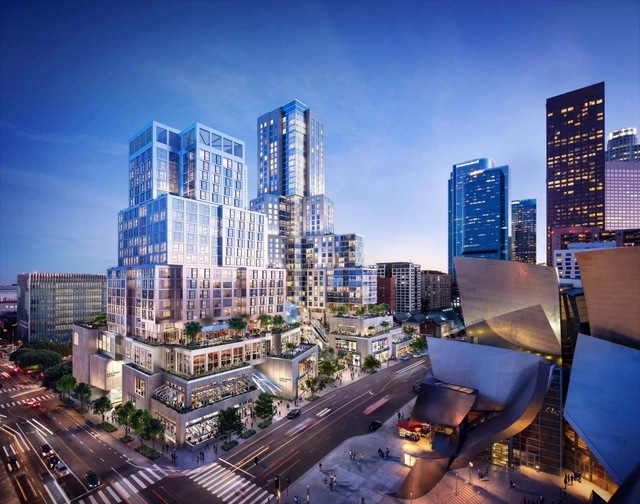
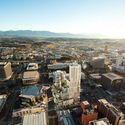
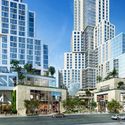
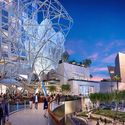
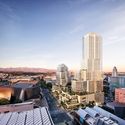
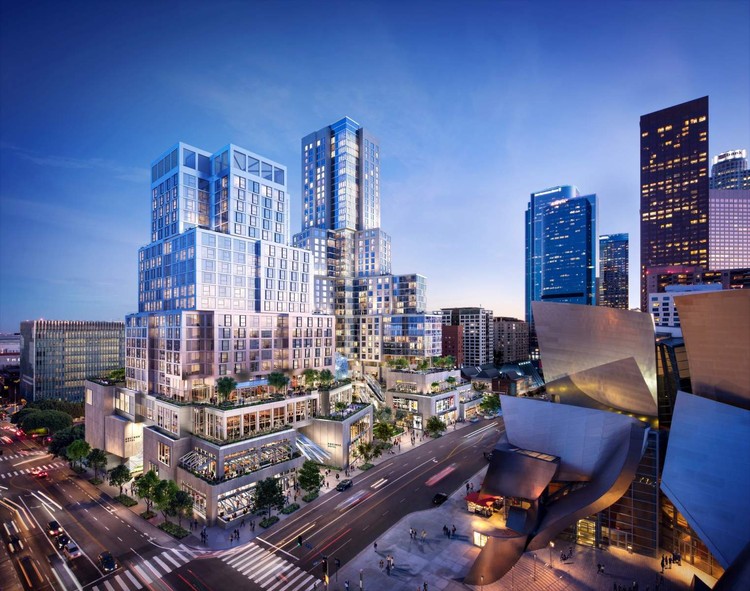
Frank Gehry'sGrand Avenue towers have officially broken ground in downtown Los Angeles. After over a decade in the making, the project was designed from a central retail core into the two terracing towers with a mix of retail, entertainment and residences. The $1 billion complex aims to turn Grand Avenue into a full entertainment district. Conceived as a public-private partnership, the project is considered a capstone for the Grand Avenue Redevelopment initiative to complete the city’s main downtown cultural corridor.
Sir Nicholas Grimshaw has been named the 2019 laureate of the RIBA Royal Gold Medal for Architecture, an award personally approved by Her Majesty The Queen recognizing a lifetime's work in architecture. Grimshaw is known particularly for his modernist public buildings and large-scale infrastructural projects, both in the UK and internationally.
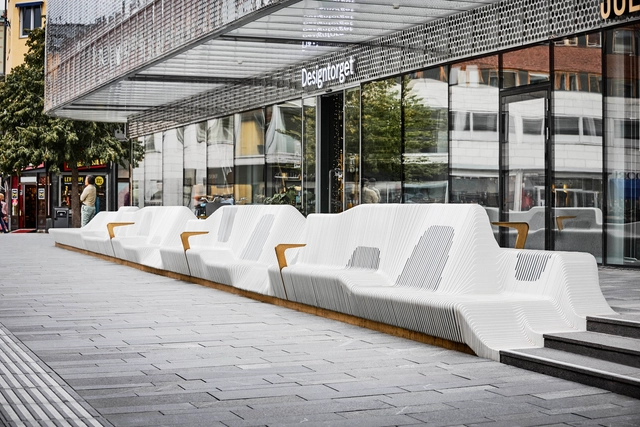
Design practice White Arkitekter has created a 65 meter-long ‘sofa’ for Forumtorget Square in Uppsala, Sweden. Designed to provide space for rest and social interaction, the linear outdoor seating is the centerpiece of wider improvements to the large square. The project aims to attract more visitors to Forumtorget and its surrounding shopping area by building on the area’s character as a gathering place.
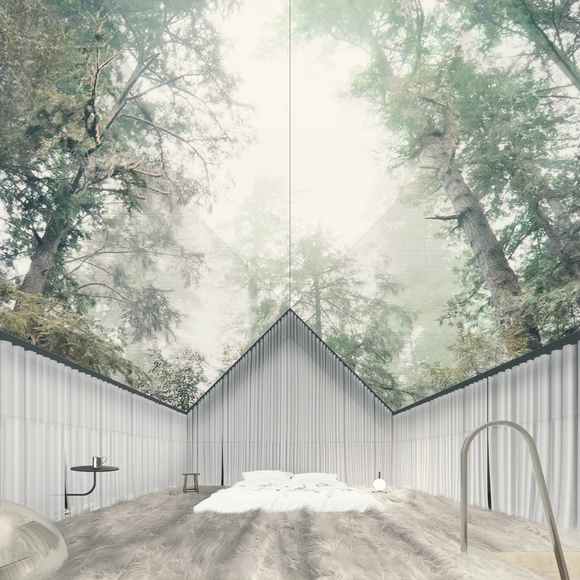
In the design of the “Stump House,” situated in the Santa Cruz Mountains of California, Brooklyn-based PARA Project was faced with unique constraints and unique possibilities. With local regulations imposing a 1,200 square foot footprint limit, 40-foot height limit, and provision for an adjoining 1,000 square foot uninhabitable structure, the design team was challenged to fit an extensive live-work space with little margin for maneuver.
In response, the design team, led by Jon Lott, stacked one structure on top of the other, with an uninhabited art studio at the lower level embedded in the sloping landscape. Combined with the above habitable space, the proposal creates a combined live-work program under a single roof, in-keeping with height and use regulations. Such was the beauty of their response, the Stump House has been awarded an Honorable Mention at the 2019 Architect Magazine Progressive Architecture Awards.
Ohhh Valentine's Day... The international holiday of love. While you're spending your day (and hopefully night) eating chocolate and sipping on fine wine with your loved ones, we'd like to take this opportunity to remind you just how much you love.... architecture ;)
Regardless of your relationship status, one thing that unites us all is our love for making the world a better place through design. At ArchDaily, we realize how important tolerance, acceptance, and love are to the process of building a better world.
With over 450 submissions (including a card called ARCHItinder that shows what Mies' and FLW's tinder would look like today), we present to you the best architecture-themed Valentine's Day cards. From us to you, may you feel a wealth of love on this special day.
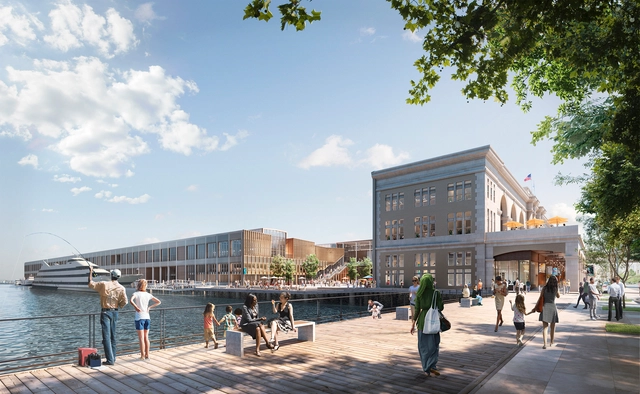
Schmidt Hammer Lassen has announced details of their second U.S. project: the Seaport World Trade Center in Boston, Massachusetts. An adaptive reuse project that will bring new life to Boston’s Commonwealth Pier, the 68,500-square-meter mixed-use project seeks to reactivate a historic maritime hub to create a new waterfront destination.
The largest pier building in the world when completed in 1901, the Commonwealth Pier will be reactivated with the introduction of new materials, increased daylight, and new points of connectivity. The exercise in adaptive reuse will contain flexible office space, dynamic event space, new retail, dining, and public amenities.
https://www.archdaily.com/911496/schmidt-hammer-lassen-revitalizes-bostons-commonwealth-pier-through-adaptive-reuseNiall Patrick Walsh
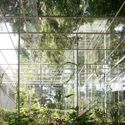
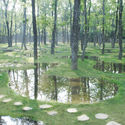
London's Serpentine Gallery has announced Japanese architect Junya Ishigami as the designer of the 2019 Serpentine Pavilion. Ishigami, who at 44 is the second-youngest designer of the pavilion (after 2018 designer Frida Escobedo), is known for his light and ephemeral approach to design.
Ishigami's design for the pavilion takes the form of a slate sheet rising from the landscape of the park, held up by light pilotis that form an interior field reminiscent of a forest. The single-canopy space takes inspiration not just from natural canopies but from roofs - the essential structural element that defines and unites architecture. Within, the darkness of the slate roof will create a serene space for contemplation and relaxation. Ishigami explains that his design for the pavilion exemplifies his 'free space' philosophy in which he "seeks harmony between man-made structures and those that already exist."
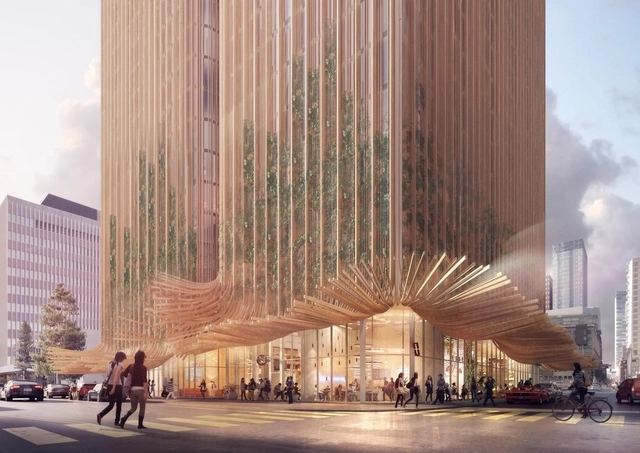
Sky Trees. Image Courtesy of Koichi Takada Architects
A new mixed-use tower by Sydney-based practice Koichi Takada Architects has been designed for downtown Los Angeles. With the potential to rise as high as 63 stories, the project was inspired by California’s redwood trees and Marilyn Monroe’s iconic wind-swept skirt. Dubbed Sky Trees, the project will include clustered towers clad in timber mullions that transformed into free-flowing wooden awnings at the base of the project.























.jpg?1550240196&format=webp&width=640&height=580)
.jpg?1550240196)

.jpg?1550236481 "© MVRDV / REDVERTEX")

_Morley_von_Sternberg.jpg?1550178787)










.jpg?1550150890 "Serpentine Pavilion 2019, Design Render, Interior View, © Junya Ishigami + Associates")