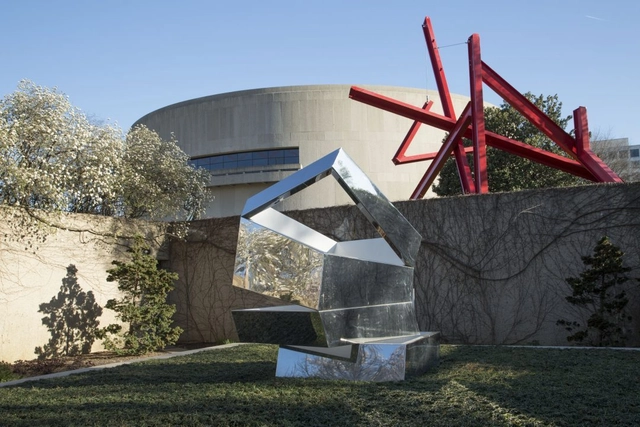
Existing Sculpture Garden. Image Courtesy of Hirshhorn Museum
The Smithsonian's Hirshhorn Museum sculpture garden will be renovated for the first time since the 1980s by Japanese artist and architect Hiroshi Sugimoto. Currently featuring works by Auguste Rodin, Jimmie Durham, and Yoko Ono, the sculpture garden will be opened up to the National Mall and create space for large-scale contemporary works and performances. The new concept aims to raise visibility for the garden and welcome more visitors to the museum.
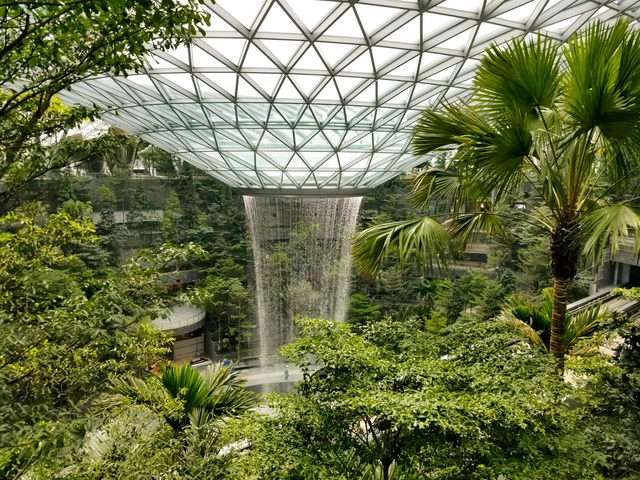
Safdie Architects have published an update of their iconic Jewel Changi Airport, as construction continues in Singapore. Featuring the world’s tallest indoor waterfall, a lush indoor forest, and a green trail of airport amenities, the scheme is set to open on April 17th of this year.
Jewel Changi Airport seeks to reinvent the public concourse not just as an in-between space for travelers, but as a major public attraction. Public transit form the city passes through the city and the large garden and shopping space within the central dome establishes it as a node for public gathering. In the future, an event space on the north side of the park will host public events for up to 1000 people.
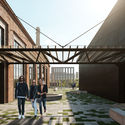
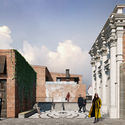
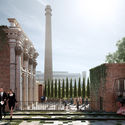
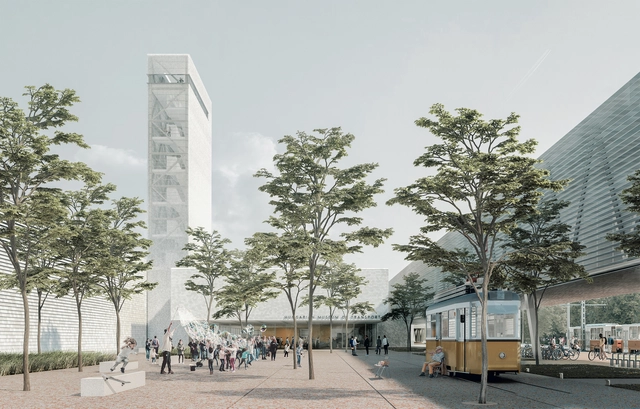
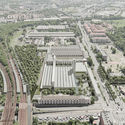
KCAP has released images of their proposed HS Kwartier urban vision for The Hague in the Netherlands. As cities such as The Hague face the challenge of providing more inner-city housing, former industrial and port areas are increasingly being reimagined as attractive areas for living and working. KCAP’s HS Kwartier scheme, situated in the post-industrial Laakhavens region, seeks to “give an impulse to both the environment around Hollands Spoor station and the connections with the center of The Hague."
Under KCAP’s urban vision, the area around the Hollands Spoor station will be characterized by excellent accessibility and a mix of various functions. A mixed-use urban program of 245,000 square meters will include large amounts of housing, offices, education, student housing, hotels, culture, restaurants, and retail.
The Royal Institute of British Architects have announced fourteen buildings shortlisted from 48 entries for this year's RIBA South West Awards. The work includes six projects are by new and established practices based in the South West, as well as a series of new and reconfigured houses. All shortlisted buildings will be assessed by a regional jury with the winning buildings announced at an awards ceremony this May.
Expanded polystyrene (EPS) is a plastic material widely used for thermal insulation (and in some cases, acoustics) in building envelopes.
So is it possible to recycle it and apply it again in other construction processes? Yes, EPS can be crushed and compacted to be used in the manufacture of new plastic products. But it can also be recycled and live again in the construction of architectural and urban projects in the form of paints and coatings.
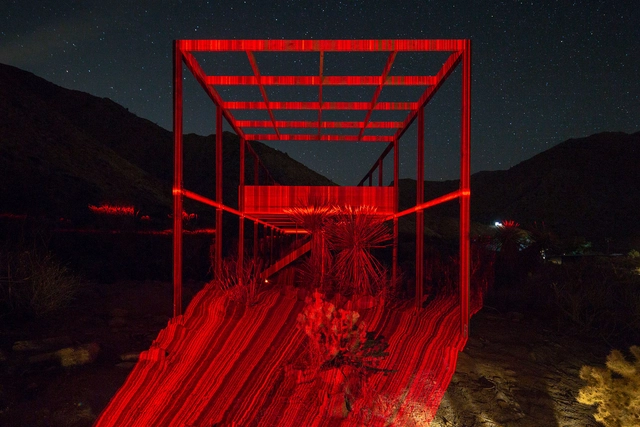
Space Saloon has announced a new week long experimental design-build festival in Southern California. Dubbed FIELDWORKS, the festival aims to rethink design-build and hands-on education. Following the success of the first workshop, LANDING, the group is returning to Southern California and the Morongo Valley. The community-in-residence program brings teams of students and designers together to develop site-specific projects that question notions of context and place.
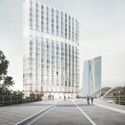
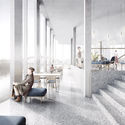
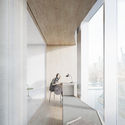
Barkow Leibinger has unveiled details of their competition-winning proposal for the Waterfront Hotel and Boarding House in Molenkopf, Frankfurt am Main, Germany. Located at a prominent site on the city’s Molenspitze, the west-facing triangular point of land sits at the end of an industrial peninsula used for warehouses and container shipping at Frankfurt’s East Bay.
The Barkow Leibinger scheme manifests as a triangular pinwheel with offset corners defined by the depths of hotel rooms. The mass of the 60-meter-tall building is further broken down by a “folded accordion façade” to maximize the panoramic views of the European Central Bank, and Frankfurt skyline attainable from the site.
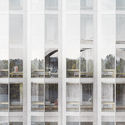
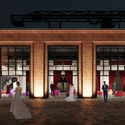
MODUL architectural bureau has released details of their proposed transformation of an old factory building into a modern showroom in Voskresensk, on the outskirts of Moscow. The scheme, dedicated to the exhibition of stone materials, is organized around a wide-ranging series of immersive spaces, serving clients and designers with work and recreational infrastructure.
To address the existing working factory in the complex, the site has been divided into an “intervention” zone and a “production” zone, the logistics of which could not be dislocated during design and construction. Under the proposal, a large warehouse has been designed to accommodate stone slabs, freeing up the historic factory building as a place of exhibition.
https://www.archdaily.com/913141/modul-architectural-bureau-transforms-industrial-factory-into-dramatic-exhibition-hall-outside-moscowNiall Patrick Walsh
11 years ago, ArchDaily set out on a mission: to provide inspiration, knowledge, and tools to the architects tasked with designing for the 3 billion people that will move into cities in the next 40 years. A bold vision for a rapidly changing world.
Since then, the way we consume architecture has changed. Projects on the other side of the world no longer feel quite so far away, and inspiration can come from any project, at any scale, anywhere. The mission we set out with so many years ago has captured the passion of architects and architecture lovers worldwide: nearly half a million people visiting our sites daily in English, Spanish, Portuguese, and Chinese.
We are especially proud of our global reach. With more than 40,000 new articles and 4300 projects added to our site in the last year alone, we are committed to providing the most relevant resources to our readers to better their knowledge and appreciation for the field we all love. We are proud and excited to reach readers in every corner of the world, and we savor the opportunity to continue sharing the inspiration, knowledge, and tools needed to design a positive urbanizing world.
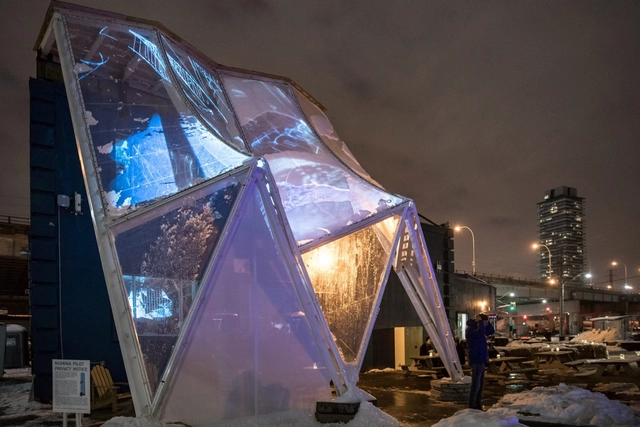
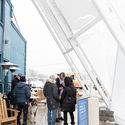
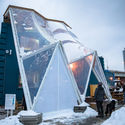
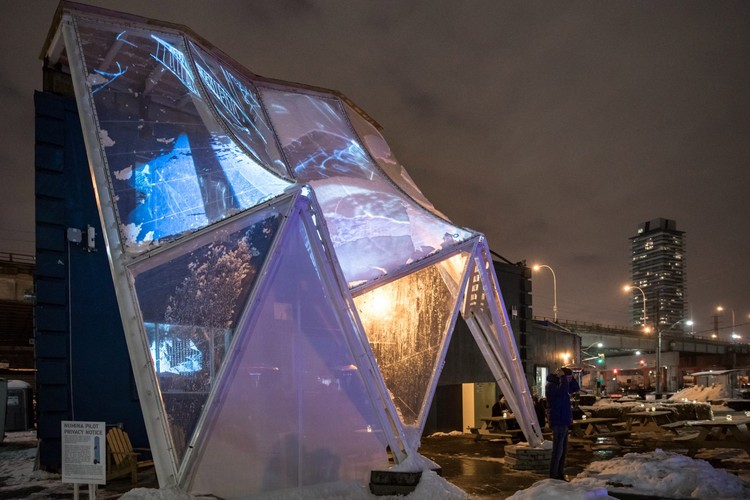
Alphabet-owned Sidewalk Labs is testing a "raincoat" for buildings, a prototype tensile structure that's made to make extreme weather more comfortable. Created as part of the Quayside smart city project in Toronto, the raincoat structure aims to help protect from wind and rain while lowering energy demands on buildings. Designed by Toronto-based RWDI and Partisans, the prototype debuted at Sidewalk's 307 office. Made from a thin plastic membrane, the raincoat will remain up for one year as teams test its performance.
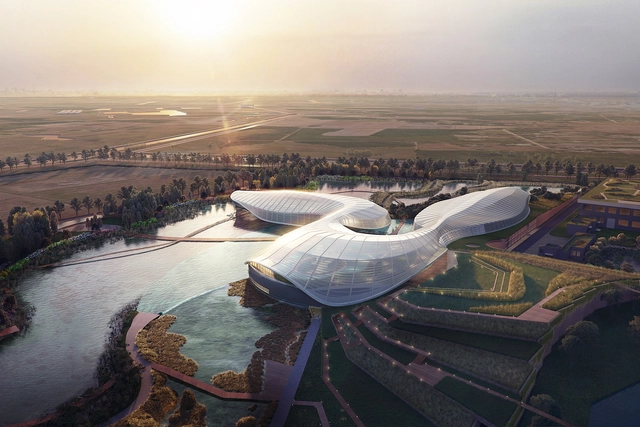
Shanghai Yangtze River Estuary Chinese Sturgeon Nature Preserve. Image Courtesy of Ennead Architects
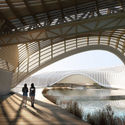
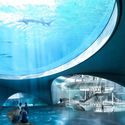
Ennead Architects has won the international design competition to design the new Shanghai Yangtze River Estuary Nature Preserve in China. Located on an island at the mouth of the Yangtze River, the design was made to raise public awareness around the impact of pollution and construction. The nature reserve aims to rescue critically endangered species and restore biodiversity while allowing visitors to immerse themselves in a natural setting outside the dense urban core of Shanghai.
The new series of structures manifest as a virtual continuation of the former head building on the street side, with a band-like entrance canopy linking the old and new units on the railway side. Intersecting the old and new buildings, a “Recreation Bridge” connects to the existing static volume to the dynamic additions.
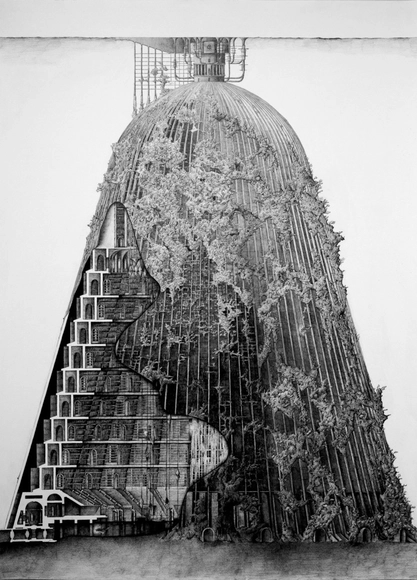
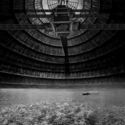
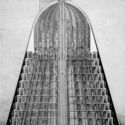
London-based artist and architectural designer Yunil Nam has developed an illustrated project inspired by Jules Verne’s science fiction novel “20,000 Leagues Under the Sea.” The project, titled “The Reef of Silence” explores a “funerary venue and coral cultivation facility within an underwater structure alongside an investigation into cultural and environmental issues in the Indian Ocean.”
The fictional scheme is designed to revitalize endangered vultures preying upon dead human bodies, alongside its religious function. The “Tectonic Vultures” burial process consists of new techniques in body decomposition such as freeze-drying and liquefaction, transforming the human body into nutrients in the form of powder or liquid.
Morpholio has unveiled AR Sketchwalk, a new augmented reality tool geared towards helping architects bridge the gap between model and reality. Released today, AR Sketchwalk allows designers to use augmented reality to dive into their sketches to give both their clients and themselves a truer sense of the space.
https://www.archdaily.com/913039/morpholio-unveils-ar-sketchwalk-an-augmented-reality-tool-to-immerse-users-in-designKatherine Allen
More than 80,000 votes were cast over the last two weeks and, after careful review, the results of the 2019 ArchDaily Building of the Year Awards presented by Unreal are in. Building of the Year, which itself celebrated ten years this year, is the largest peer-based crowdsourced architecture award in the world, showcasing the projects chosen by you, our readers, as the most significant of the year.
This is no mean feat. More than 4000 projects were in contention this year, challenging readers to carefully consider a wide variety of projects across type, scale, and location. 4000 projects were whittled to 75 finalists; 75 have now been reduced to the 15 winners - one for each typological category.
The results are as diverse as the architecture itself. Well-known names are, as in years past, present among the bunch, among them Zaha Hadid Architects, MVRDV, and Heatherwick Studio. For London-based Heatherwick, their win marks the second consecutive year they have taken top honors for a refurbishment-based project. But less-renowned names dominate the ranks of the winners this year. Innocad’s serenely simple office building for a real estate company elevates what corporate architecture can be while the technical and material mastery of Sameep Padora’s Maya Somaiya Library is enough to make any architect look twice. The library is, in fact, one of two Indian projects to take top honors this year - a strong first year showing for the nation whose design talent seems finally to be coming to the fore.
But for all their many beautiful differences, the winners share a crucial element in common: they represent the values of our mission, to bring inspiration, knowledge, and tools to architects everywhere. Building of the Year - indeed, ArchDaily itself - would not be possible without the generosity of firms and readers as invested in our mission as we are. We give our profound thanks to all who participated this year, no matter the form. Congratulations to all the winners!
Learning Center of Université Lumière Lyon II. Image Courtesy of ALA Architects
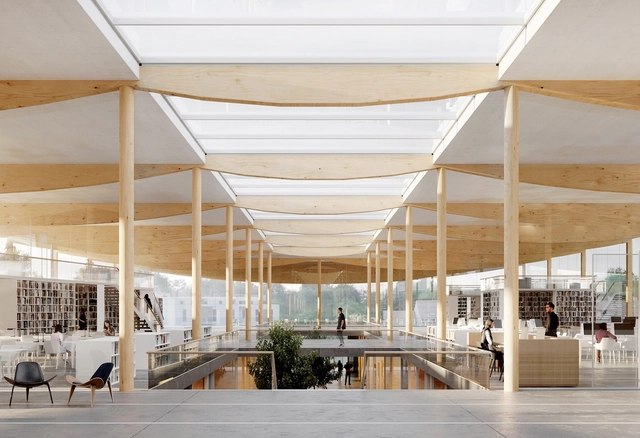
Finnish practice ALA Architects has won the competition to design the new Learning Center of Université Lumière Lyon II in France. The project will be the second major library building by the office behind the recently opened Helsinki Central Library Oodi, and it will be ALA's first French commission. The building will replace the existing library and showcase sustainable construction alongside new teaching and study methods.
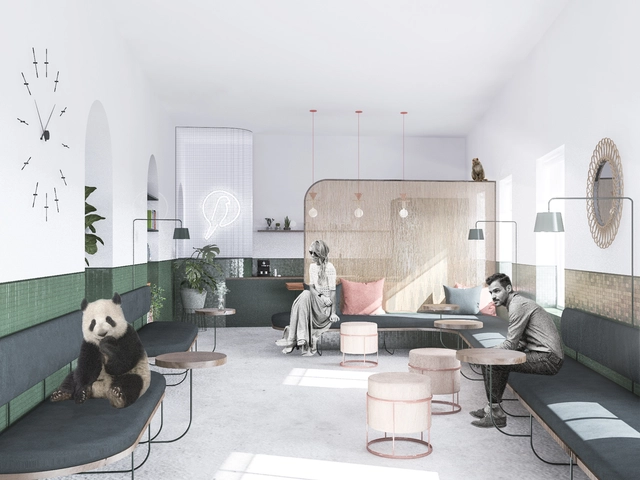
In their most recent design competition, Bee Breeders partnered with Urban Zoo Coworking to seek a signature style for Urban Zoo’s coworking spaces. Viewed as a prototype to be adapted to each new venue, these interior designs needed to be customizable for various users. Common inhabitants of Urban Zoo Coworking’s spaces include freelancers, start-ups, and small businesses who need a workspace to meet their different creative needs.
Micro Home. Image Courtesy of Beatrice Bonzanigo, IB Studio
Italian architect Beatrice Bonzanigo of IB Studio has revealed her design for Casa Ojalá, an off-grid, mobile micro home to be unveiled at Milan Design Week. Designed with over 20 configurations in only 27 square meters, the patented project was made to be easily assembled in any location. Bonzanigo created the design so occupants can better connect with nature while minimizing their environmental impact.
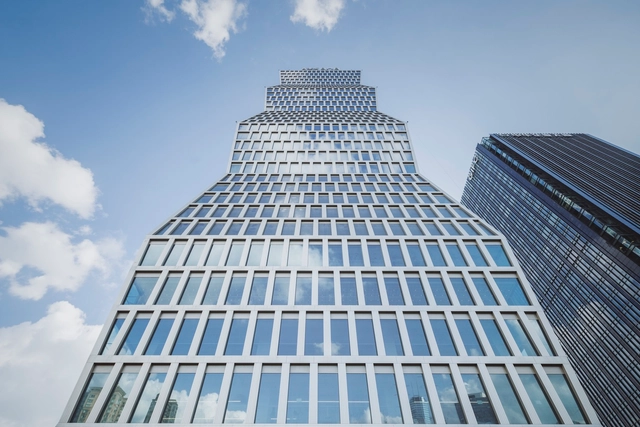
Kohn Pedersen Fox Associates (KPF) has announced the completion of the SOHO Gubei office tower in Shanghai. Inspired by the proportions of Constantin Brâncuși’s “Endless Column” sculpture, the tower manifests as an undulating obelisk with a diagonally canted zig-zag profile.
Each side of the tower’s sculptural form consists of four stacked volumes, with a series of shifted grids creating a density of wall surfaces that offer shade, reduce glare, and create a sense of urban solidity.
Studio Gang has unveiled a design for the University of Chicago Center in Paris. The Center in Paris Project seeks to “create a new hub for scholarship and cultural exchange in Paris’ rapidly-developing 13th arrondissement” with an academic center and a mixed-use residential building.
The scheme is adorned with biodiverse green spaces and an architecture that physically and intellectually weaves the block into the existing urban fabric. To support a lively dialogue between the University and local communities, shared spaces have been carefully arranged to connect to the outdoors and encourage communication.
https://www.archdaily.com/912932/studio-gang-unveils-design-for-university-of-chicago-center-in-parisNiall Patrick Walsh
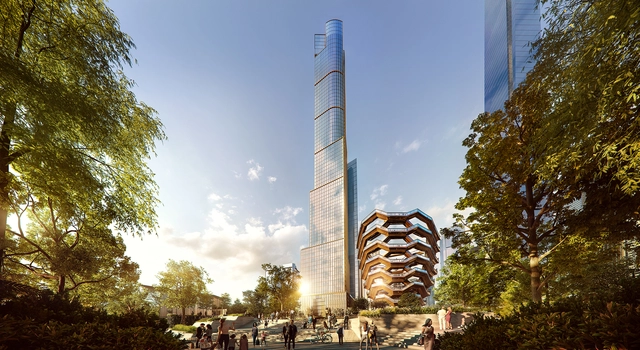
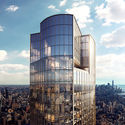
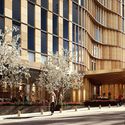
Skidmore, Owings & Merrill have revealed new images of their design for 35 Hudson Yards, a new tower that will be part of the largest private real estate development in the history of the United States. SOM provided architectural design and structural engineering services for the mixed-use tower in New York, which is set to become the tallest residential building in Hudson Yards. Standing 1,000 feet tall, the project will express transitions in program as a series of setbacks twisting around the tower.
Construction has begun on OMA’s pyramid-shaped mixed-use building – Xinhu Hangzhou Prism – which forms the heart of Hangzhou’s Future Tech City in the new Technology Central Business District (CBD). Led by the firm's partner Chris van Duijn, the project is commissioned by Zhejiang Xinhu Haichuang Group.
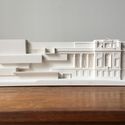
Northern Ireland-based architect John Donnelly has launched a studio dedicated to the production of finely-detailed plaster-cast architectural models exploring the diverse built environment of Belfast, Northern Ireland. “Model Citizen” was founded to promote public understanding and appreciation of the architecture and craftsmanship present in Irish cities, manifesting as an ongoing series of intricate sculptures.
Model Citizen sees its sculptures, available for closer inspection here, as a “mechanism to emphasize the beauty and significance of our built heritage,” translating art deco, brutalist, and internationalist styles into tangible, tactile sculptural objects that can be held, felt, and explored.
Data-driven design has been a holy phrase in architecture for some time now. The ability to refine and apply information on any range of topics, from movement to sun paths to air quality, hold enormous potential to positively impact design not just for one party but for all. Decisions can be made faster, buildings can be built better, inhabitants can be made more comfortable.
https://www.archdaily.com/912919/wework-is-transforming-the-way-architects-use-data-in-designKatherine Allen





_KCAP_and_WAX.jpg?1552566646&format=webp&width=640&height=580)
_KCAP_and_WAX.jpg?1552566646 "© KCAP and WAX")
_KCAP_and_WAX.jpg?1552566575 "© KCAP and WAX")
_KCAP_and_WAX.jpg?1552566720 "© KCAP and WAX")
_KCAP_and_WAX.jpg?1552566559 "© KCAP and WAX")
_KCAP_and_WAX.jpg?1552566646)





















.jpg?1552384741&format=webp&width=640&height=580)















_Paris_Render_with_ICADE_and_Studio_Gang.jpg?1552258488)



_OMA_by_Boomimages.jpg?1552297900&format=webp&width=640&height=580)
.jpg?1552010046&format=webp&width=640&height=580)


.jpg?1552010046)


