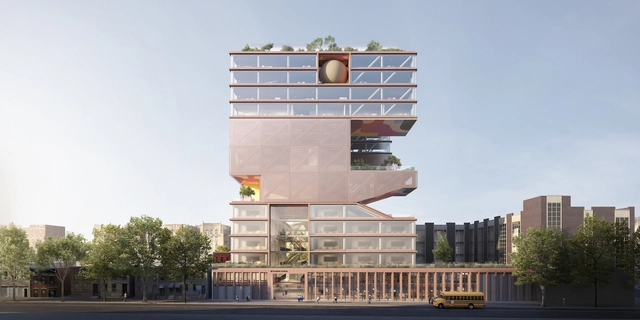
Robert De Niro’s Wildflower Development Group, with the architectural firm Bjarke Ingels Group (BIG), have revealed first images of their proposal for a 650,000 square foot film, television, and creative studio, in in the Astoria neighborhood of northwest Queens, New York.
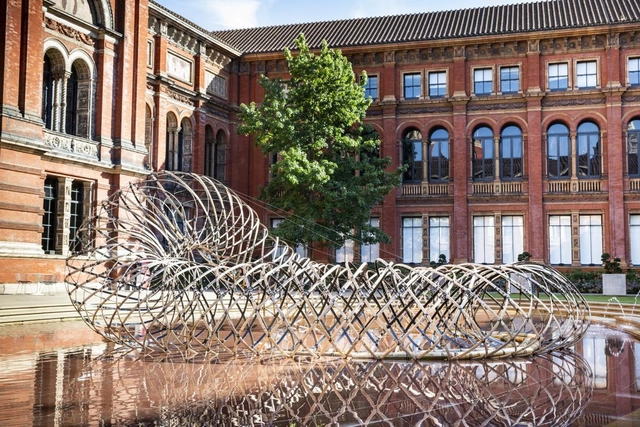
Global smart phone brand OPPO teamed up with Japanese architect Kengo Kuma to create a large outdoor installation at 2019 London Design Festival. Called ‘Bamboo (竹) Ring: Weaving into Lightness’, the project is installed in the John Madejski Garden at the V&A Museum for the duration of the festival. Inspired by the Garden and curated by Clare Farrow, the doughnut-shaped structure has been created by weaving rings of bamboo and carbon fiber together.
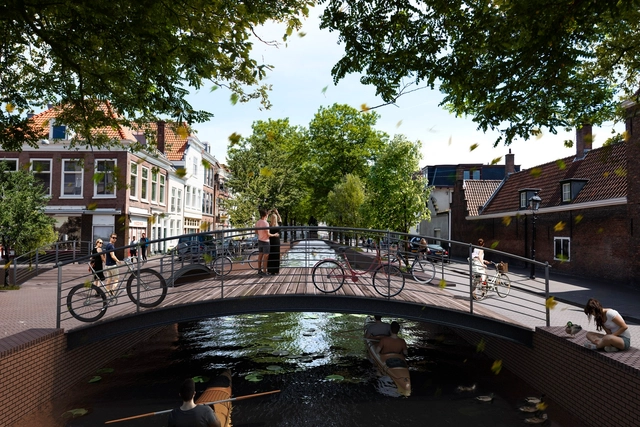
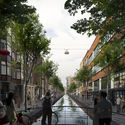
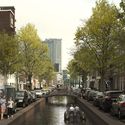
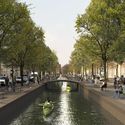
MVRDV has designed with local neighborhood organizations, a proposal to regenerate the canals of the city of The Hague, in the Netherlands. Filled-in during the 20th century, the canals will be reopened in order to revive the historic center and improve the city on the sustainable, economical and infrastructural levels.
The Pritzker Architecture Prize has appointed Deborah Berke and Barry Bergdoll as the newest members of the prize jury. Replacing Richard Rogers and Ratan N. Tata, the new appointments of Berke and Bergdoll mark the upcoming 2020 edition of the Pritzker Prize and the 42nd anniversary of the accolade. The Pritzker Prize is internationally known as architecture's highest honor.
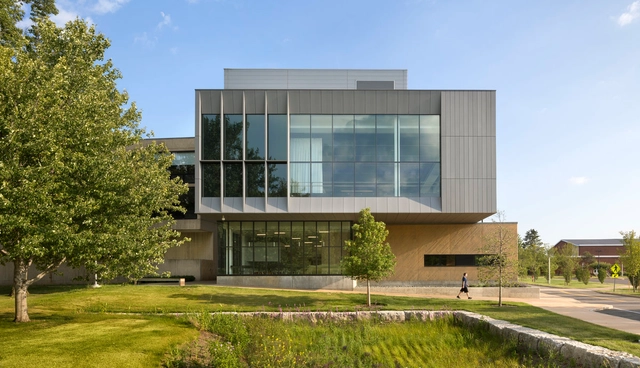
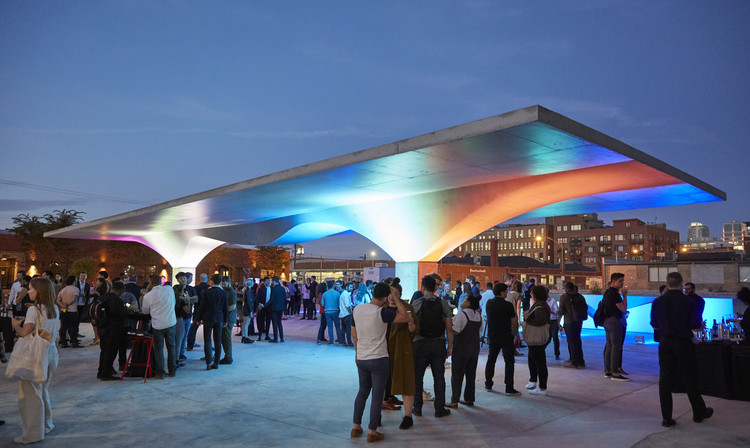
Architecture practice Skidmore, Owings & Merrill (SOM) have designed a concrete pavilion for the 2019 Chicago Architecture Biennial. Today, the practice is unveiling the work of its interdisciplinary practice with Stereoform Slab, a to-scale prototype of a future building system made using advanced robotic fabrication techniques. The project is simultaneously an activation and an exhibition that illustrates a design method that reduces the carbon footprint of concrete construction.
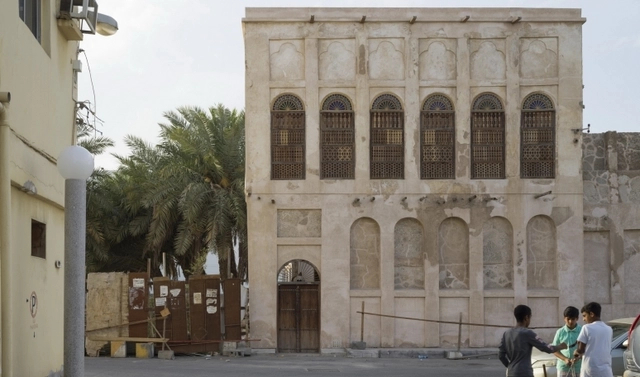
On the 13th of September 2019, the six winning projects of the 2019 Aga Khan Award for Architecture (AKAA) were honored at a ceremony held at the Kazan’s Musa Jalil State Academic Opera and Ballet Theatre. After the ceremony, ArchDaily managed to get exclusive comments from all the awarded teams and from the director of the Aga Khan Award for Architecture Farrokh Derakhshani. Read on to discover what they had to say about this cycle of prizes.
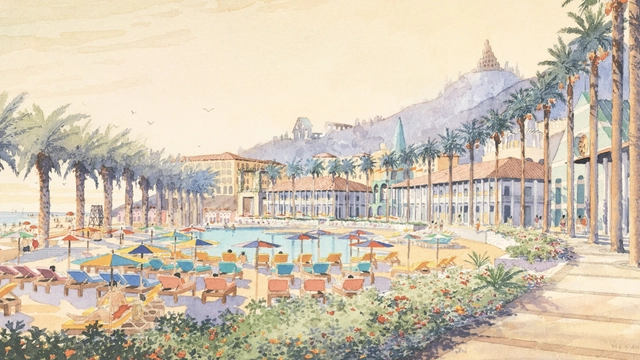
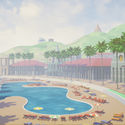
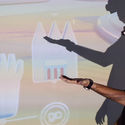
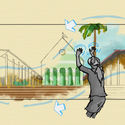
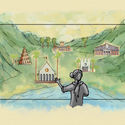
Design company Kilograph has announced the release of “Imagined Landscapes,” a new virtual reality experience exploring the unbuilt work of architect Michael Graves. Based on Graves’ personal paintings, “Imagined Landscapes” offers the first chance to add VR watercolors to an architectural project, turning a conceptual resort into an interactive experience for visitors.
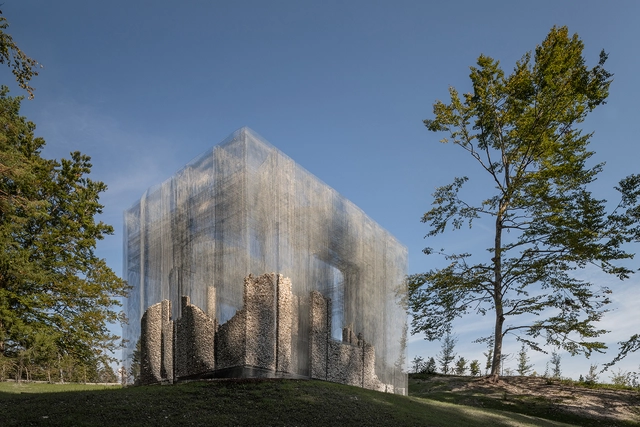
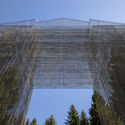
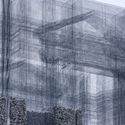
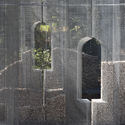
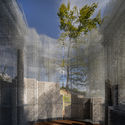
Simbiosi, an architectural installation investigating the relationship between humans and nature was just unveiled in the Arte Sella sculpture park in Italy’s Trentino Valley. Conceived by Edoardo Tresoldi, the site-specific artwork mixes the transparency of a wired mesh structure with the materiality of local stones.
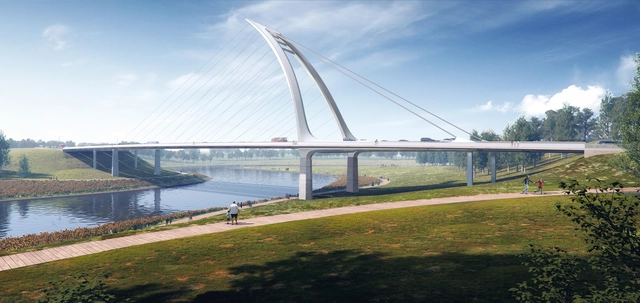
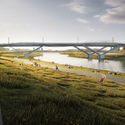
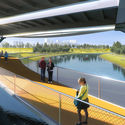
The Shanghai team of Schlaich Bergermann Partner has created two winning bridge designs as part of the Jiangxi River Bridge competition. The bridges are made for Tianfu Airport City, a high-tech industrial development zone in the south of Chengdu, China. Featuring elegant and futuristic forms, the bridges are made to be beacons for the city as they rise above the Jiangxi River.
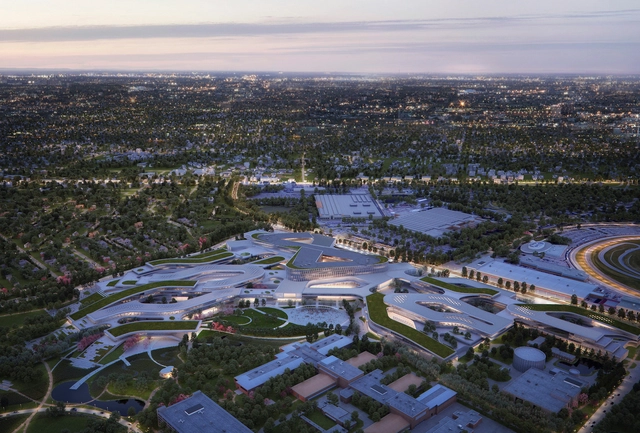
The Master Plan imagined by Snøhetta aims to transform Ford's Research & Engineering center in southeast Michigan. After a process that lasted 2 years, the architecture firm established a project that highlights the Dearborn campus as “Ford’s global epicenter”, ensuring an innovative and vibrant workplace for people.
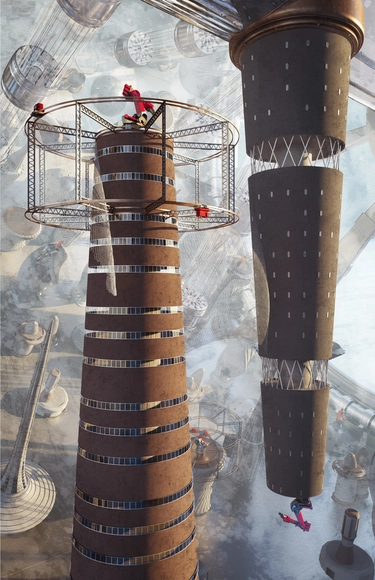
Blank Space has announced the winners of the first ‘Outer Space’ competition. With submissions from over 40 countries, the entries explore future possibilities and technical breakthroughs through detailed stories and artwork.
The winners were chosen by a jury of 15 leading architects, designers, and technologists, including Chris Hadfield, Eduardo Tresoldi, David Benjamin, Chris Precht, and Sabrina Thompson.
Keep reading to learn more about the three winning projects and 12 honorable mentions.
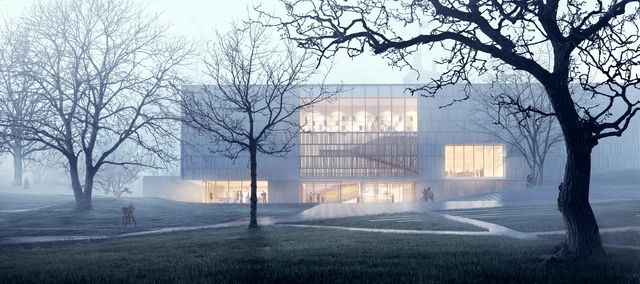
Christensen & Co Architects have designed with the participation of Kjaer & Richter Architects, the Nordøst Amager School, a school in Copenhagen that offers new types of spaces for an innovative learning experience. The facility also doubles as a center for after school activities for adults and children.
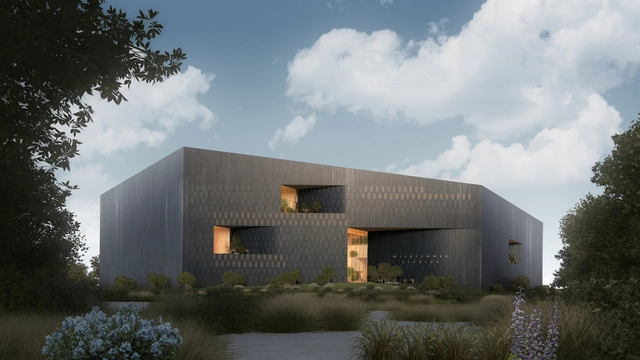
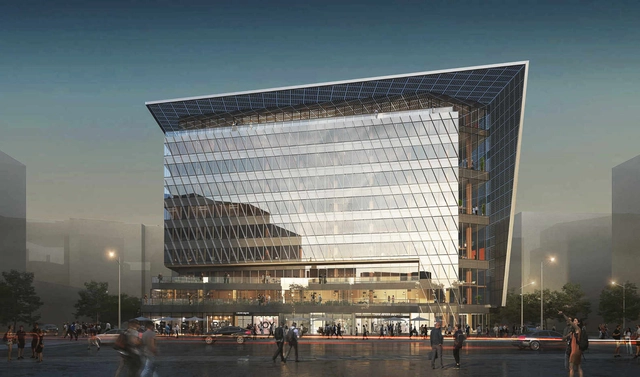
Perkins and Will propose an innovative and resilient office building in Southeast Washington, D.C, created to survive calamities and withstand natural disasters. The project reinvestigates the relationships between humans and nature.
This summer the federal government released an astonishing statistic: 87% of American homes are now equipped with air conditioning. Since the world is getting undeniably warmer, I suppose this isn’t all that surprising, but keep in mind that robust number of mechanically cooled homes include residences in some fairly temperate climates. So my question is a simple one: When did air conditioning in the U.S. became a requirement, rather than an add-on?
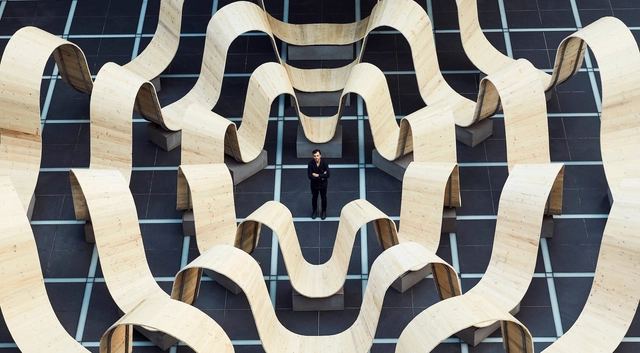
The 2019 London Design Festival opened this month and features a large-scale instillation called Please Be Seated by Paul Cocksedge. Returning for its 17th year, the festival celebrates design across London and aims to promote the city as a major design capital. Please Be Seated joins a series of art, design and performance-based projects by internationally-renowned designers across the city.
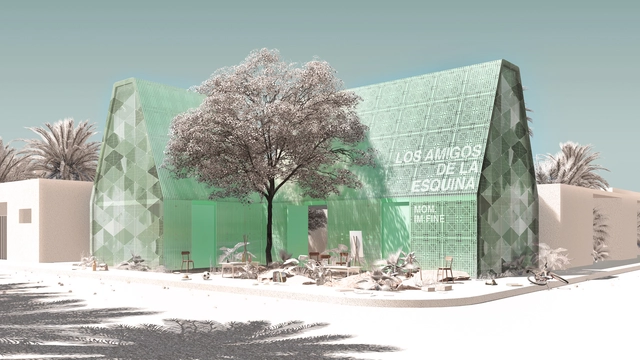
Archstorming, an architectural platform that organizes international competitions, has released the results for the TulumPlasticSchool contest. In fact, participants were challenged to design a school made of recycled plastic, tackling the current issue of pollution in Mexico.
The first phase of construction on the Bruce Museum in Greenwich, Connecticut has begun. The New Orleans based architecture, interiors and urban planning firm EskewDumezRipple (EDR) was selected to design the new addition and renovation for the community-based Museum.
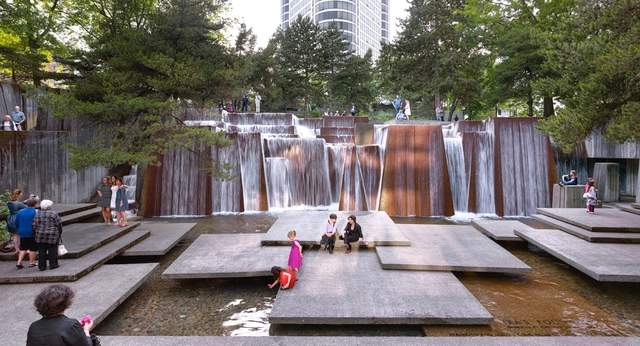
Washington, D.C.-based non-profit The Cultural Landscape Foundation (TCLF) has announced that it will establish an international landscape architecture prize to be conferred biennially. This is the first and only international landscape architecture prize that includes a US$100,000 monetary award. Landscape architects, artists, architects, planners, urban designers, and others who have designed a significant body of landscape architecture projects are eligible for the award.
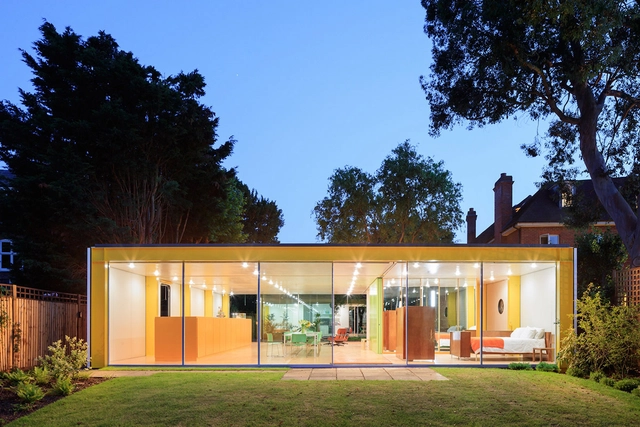
Harvard University Graduate School of Design has announced the 2020 Richard Rogers Fellowship cycle. Open to accomplished practitioners and scholars working in fields related to the built environment, the research-focused residency program is based in London at the Wimbledon House, designed by Lord Richard Rogers in the late 1960s. Fellows have researched a diverse series of topics, including examinations of public and affordable housing; how food and cooking transform cities; and citizen-driven urban regeneration initiatives, among others.
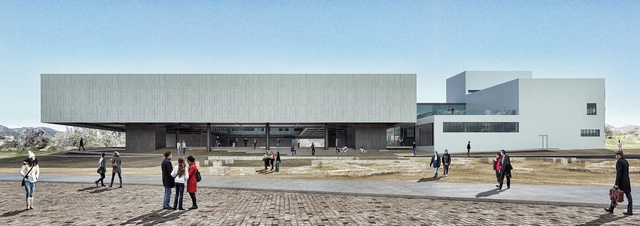
MOR-architects and EP Architects were awarded the first position in the competition for the new Archaeological Museum of Sparta. With an architectural concept based on creating an elevated space of exhibition on top of the archaeological site, the winning project generates a constant visual connection between the old and the new.
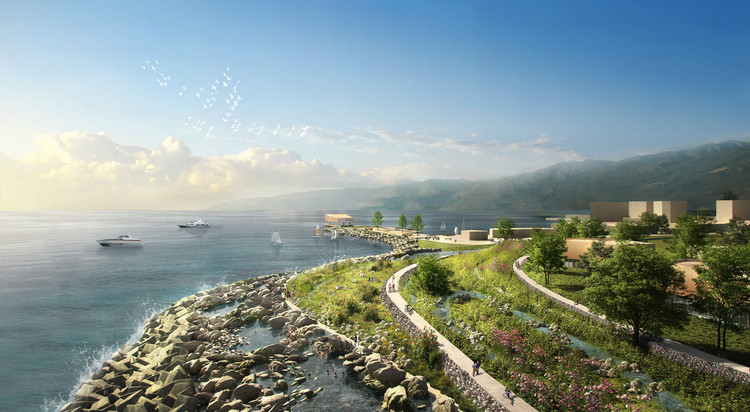
KCAP + Felixx have won the international competition for the revitalization of the coastline of Dapeng, severely damaged by the Mangkhut typhoon in September 2018. The winning proposal developed a logic of “Triple dike strategy”, a barrage system to ensure future resilience.
SLA and BIECHER ARCHITECTES, have won the international competition to develop the former location of the Ordener-Poissonniers’ railway into a socially sustainable urban development, in the heart of the 18th arrondissement of Paris, France. The 3,7-hectare site will include 1000 new residents, big public parks, offices, theater, public school, industrial design incubators, a graduate school of design, food courts and urban farming.
The winner was announced by ArchDaily Editor-in-Chief David Basulto at the Future Architect conference at Strelka Institute. The grand prize went to the Coffee Production Plant in Tbilisi, designed by Georgian architecture firm Khmaladze Architects.
In Brooklynn New York, ODA created new stacked functions for a school for girls in Crown Heights, in a highly dense urban fabric. Starting with a compact shaped cube, the design of the Beth Rivka School merges the benefits and the creative constraints of a vertical building.






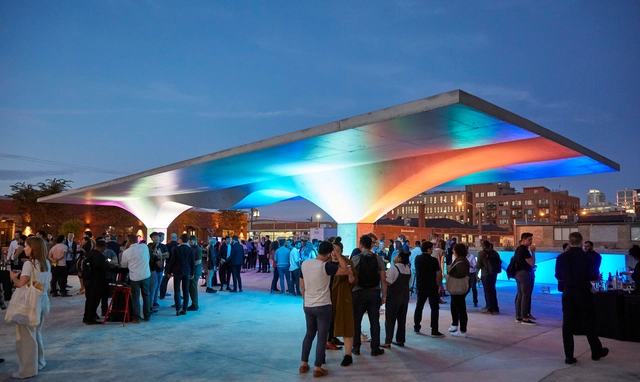
_Dave_Burk___SOM_(2).jpg?1568925232 "Courtesy of Dave Burk | SOM")
_Dave_Burk___SOM_(1).jpg?1568925214 "Courtesy of Dave Burk | SOM")
_Dave_Burk___SOM_(3).jpg?1568925283 "Courtesy of Dave Burk | SOM")
_Dave_Burk___SOM_(4).jpg?1568925324 "Courtesy of Dave Burk | SOM")








_redmhs_fase02.jpg?1568629244&format=webp&width=640&height=580)












.jpg?1568207918&format=webp&width=640&height=580)