AD Interview: Philip Freelon / The Freelon Group Architects

During the 2009 AIA Convention in San Francisco, I had the chance to see a very interesting group of architects, Emerging Voices. That group, in my opinion, represented the new generation of US architects who are advancing the profession with new ideas and innovative projects. Several of those architects have already been interviewed and featured on ArchDaily, but it took me a while to finally meet one of them: . We met during the 2011 AIA Convention in New Orleans, where I had the opportunity to interview him. I really liked this interview, where Philip shares valuable insights on running a firm and his views on the role of the architect.

Update: President Obama announced his appointment of Philip G. Freelon, FAIA to the US Commission of Fine Arts.

Founded in 1990 by Philip G. Freelon, FAIA, The Freelon Group has established a strong reputation for the innovative integration of technology and design excellence. The firm’s diverse portfolio has received nearly forty AIA design awards at the national, regional, state and local levels. Freelon is comprised of a forty-five person professional staff in Durham, .

Along with Vice President Timothy F. Winstead, Philip has become a nationally recognized expert in museum, higher education, and science/technology planning and design. Their work “focuses on research and education, health and well-being, the advancement of understanding between disparate cultures, and the creative expression of the arts.

Freelon has completed major intuitional projects all over the United States. They are currently designing three behavioral healthcare facilities for the North Carolina Department of Health and Human Services and the Durham County Health and Human Services Complex.

The Freelon Group projects at ArchDaily:


Architecture City Guide: Charlotte

With the help from a few of our readers, our Architecture City Guide headed to this week. By American standards is an old city, but it has undergone a huge transformation in the last few decades with the influx of banking headquarters. It is now the second largest banking center in the United State and this is partly reflected in its growing skyline. We, with the help of our readers, have put together a list of 12 buildings worth seeing. There are plenty more that could have made the list so please add your favorites to the comment section below.

The Architecture City Guide: Charlotte list and corresponding map after the break.

International Civil Rights Center and Museum Historic Preservation and Renovation / The Freelon Group Architects

© Mark Herboth

On February 1st, 1960, four young men from A&T State University entered the F.W. Woolworth department store in downtown , and sat at the lunch counter. What followed was a movement that has had a resounding impact across the decades and around the world. The Woolworth building and the lunch counter were the flashpoint for the “Sit-in” movement in the United States. These architectural elements – important historical artifacts – have been restored to form the framework and nucleus of the exhibits at the ICRCM.

Architects: The Freelon Group Architects
Location: Greensboro, North Carolina, USA
General Contractor: Weaver Cooke, Construction, Inc.
Structural/Civil Engineer: Stewart Engineering
MEP Engineer: Harrell, Saltrick & Hopper
Project Area: 45,000 sqf
Photographs: Mark Herboth

Harvey B Gantt Center for African-American Arts + Culture / The Freelon Group Architects

© Mark Herboth

The Gantt Center celebrates contributions of African Americans to our nation’s culture and serves as a vital resource in Charlotte for music, dance, theater, visual and film arts, arts education, literature and community outreach. The four-story facility is located in the heart of Charlotte’s downtown cultural district. Flanked by new mixed-use development and the Charlotte Convention Center, the Gantt building is also a close neighbor to the new Bechtler and Mint Museums and the NASCAR Hall of Fame. The facility includes highly flexible space for exhibitions, presentations, receptions/events and retail.

Architect: The Freelon Group Architects
Location: Charlotte, ,
Associate Architect: Neighboring Concepts
Project Area: 46,500 sqf
Photographs: Mark Herboth

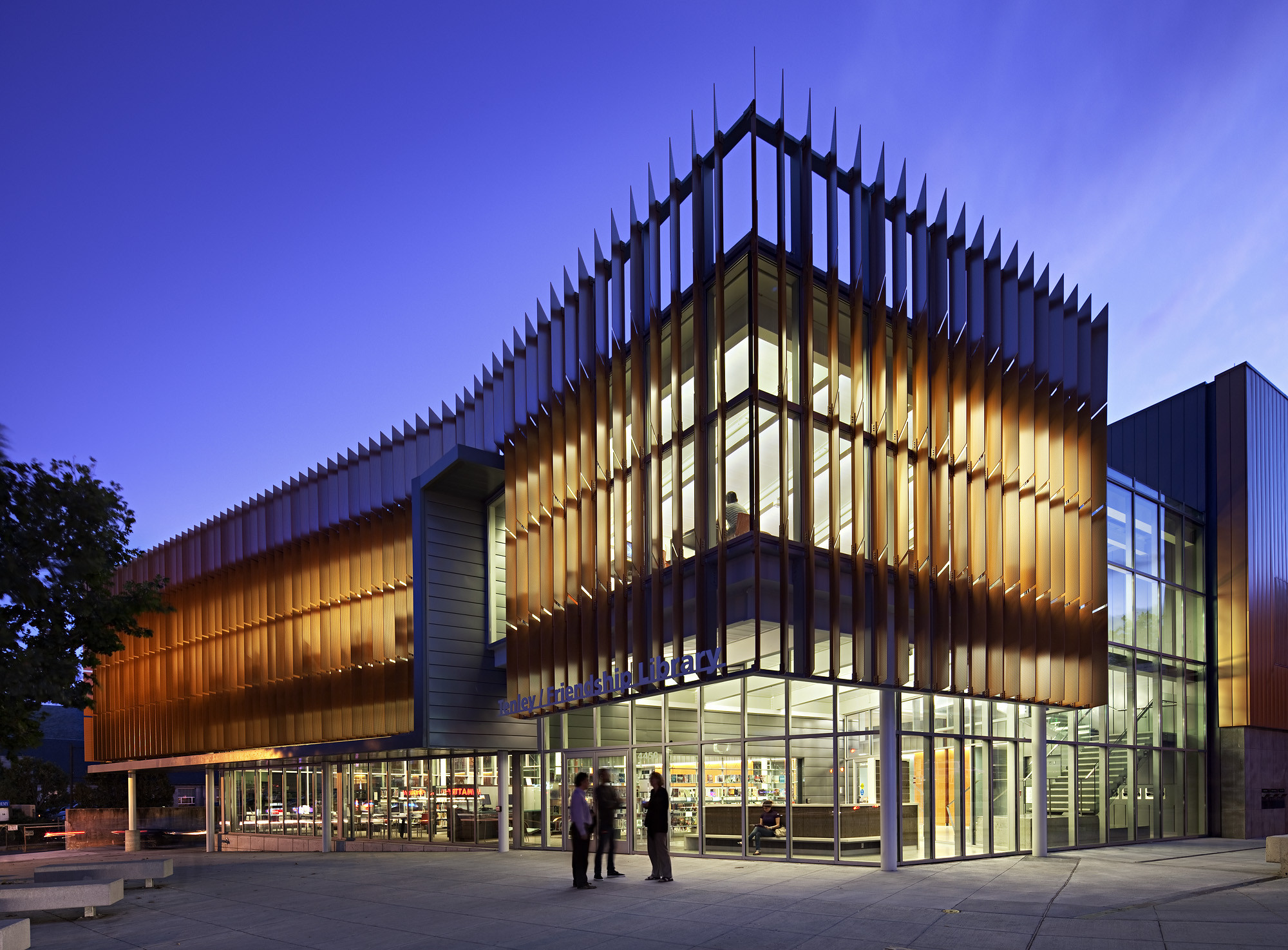
Anacostia Library / The Freelon Group Architects

© Mark Herboth

The Anacostia Library creates a civic building of which area residents can be proud. A variety of spaces to meet a wide range of community needs are in the new facility. Spaces include a large public meeting room (for approximately 100 people), two smaller meeting rooms, a children’s program room, as well as smaller rooms for group study and for tutoring. There are shelving areas for print and non-print materials for all ages. Multiple points of access to virtual spaces through the public PCs and wireless access are included.

Architect: The Freelon Group Architects
Location: Washington DC,
Project Area: 22,000 sqf
Photographs: Mark Herboth

Biomanufacturing Research Institute and Technology Enterprise (BRITE) Facility / The Freelon Group Architects

© James West

BRITE is a part of a statewide initiative to make North Carolina a premiere provider of skilled workers for the biotechnology industry. The facility houses laboratories and classrooms for faculty providing undergraduate and graduate level education in the areas of Process Development, Quality Control and Quality Assurance. The facility, representative of the development labs found in industry, allow students to get hands-on training as part of their collegiate experience.

Architect: The Freelon Group Architects
Location: Durham, North Carolina,
Project Area: 59,900 sqf
Photographs: James West

North Carolina A&T State University Proctor School of Education / The Freelon Group Architects

© James West

The 60,263 sqf program for the A&T State University Proctor School of Education is comprised primarily of classroom and office space. The desire to create an interactive social hub throughout the facility plays a key role in organizing student/faculty lounge spaces, conference, and the public circulation. Beyond the program need, the project has aspirations to recognize and express the history of the School of Education as well as its potential future role within the University. The program also takes an additional step in fulfilling the Master Plan goals of the University by further defining the central green space of the campus.

Architect: The Freelon Group Architects
Location: Greensboro, North Carolina,
General Contractor: New Atlantic Contracting, Co.
Structural/Civil Engineer: Stewart Engineering
MEP Engineer: RMF Engineering
Landscape Architect: Sasaki
Project Area: 60,263 sqf
Photographs: James West