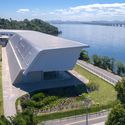
Rio Carnival 2012 kicks off in Oscar Niemeyer’s newly renovated Sambadrome

Brightly colored confetti and sequined samba queens covered the newly renovated Sambadrome in Rio de Janeiro, marking the beginning of the 2012 world-famous annual Carnival. Designed by Brazil’s legendary architect Oscar Niemeyer, the Sambadrome was originally constructed during the first government of Leonel Brizola (1983 – 1987) in an effort to provide Rio with an urban facility that would serve as the permanent location of the traditional spectacle of the samba school’s parade. Inaugurated in 1984, the Sambadrome is also known as the Catwalk Professor Darcy Ribeiro out of respect to the man who moved the parade to its current site. Continue for more.
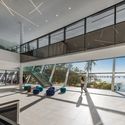
Rubem Braga Elevator Complex / JBMC Arquitetura & Urbanismo

Architects: JBMC Arquitetura & Urbanismo
Location: Rio de Janeiro, Brazil
Photographs: Celso Brando, JBMC
Cidade Nova Metro Station and Footbridge / JBMC Architecture

Architects: JBMC (João Batista Martinez Corrêa, Beatriz Pimenta Corrêa, Emiliano Homrich, Cecília de Souza Pires, Gabriela Assis Guerra Costa)
Location: Avenida Presidente Vargas, Gamboa, Río De Janeiro, Brazil
Structural Enginner: Noronha Engenharia
Structural Consultant: Paulo Ricardo de Barros Mendes
Collaborators: Estúdio MAAC, Estúdio Maya, RC arquitetos, Plantae Paisagismo, Tria Design
Photographs: Nelson Kon
Rocinha Urban Strategy / Kyle Beneventi

Right outside of Rio de Janeiro lies Rocinha, the largest slum in South America. This informal settlement, first occupied by a community of farmers, has quickly developed into one of the most dense living situations on the planet. About half the size of Central Park in New York City, this favela is home to an estimated 150,000 people. With the 2014 World Cup and 2016 Olympic Games both taking place in Rio de Janeiro, Rocinha will become a hot topic in the next few years. Due to its small size, this project by Kyle Beneventi proposes an urban strategy to make Rocinha a very walkable city, dealing principally with voids to break up the blanket of uniform building mass. More images and project description after the break.
Video: AECOM 2016 Olympic Park Masterplan Rio de Janeiro
We reported earlier this week that AECOM will be designing the Olympic Park Masterplan for the 2016 Olympics that will be held in Rio de Janeiro, Brazil. The international competition winning entry’s concept of operation, separate access for athletes and the audience, logistics for the transport system, the viability of implementation and unique access for parking, made it stand out amongst the other submissions.
Olympic Port Competition Entry / Machado and Silvetti Associates with Jorge Mario Jáuregui

Machado and Silvetti Associates shared with us their entry for the Olympic Port Competition that came in fourth place. This project proposal for the 2016 Olympic Media Village in Rio de Janeiro includes housing for 11,000 people, retail and office space, a 5-star hotel and a convention center. To accommodate post-Olympic marketing of the buildings the entire residential and office program has the capacity to be transformed from a hotel setting with individually accessed bedrooms and private baths to two- and three-bedroom apartments and leasable tenant space.
Olympic Port’s Competition Winner: João Pedro Backheuser with Ignasi Riera

The winning project of the Olympic Port, which aims at the revitalization and redevelopment of 850 square meters of the port city of Rio de Janeiro, was announced at the headquarters of the Brazilian Institute of Architects of Brazil (IAB-RJ) in Rio de Janeiro. The project includes the construction of facilities such as the media and referees villages, a five-star hotel, a convention center and business center that will be used during the 2016 Olympics Games and will be a legacy for the city. More over, this urban intervention leverages the entire project of Marvelous Port Recovery Center of Rio de Janeiro. The winning project was created by Brazilian architect and urban planner João Pedro Backheuser in collaboration with Catalan architect Ignasi Riera’s office. The second, third and fourth projects were coordinated by Brazilian architects Roberto Aflalo, Espadon Francisco and Jorge Jauregui, respectively. The first place guarantees that the project will be executed in, at least, 40% of the area. The city administration can alson use parts of the awarded projects.
Latest Developments for the Rio 2016 Olympic Park Competition
The deadline for submitting the projects for the International Competition for the Urban General Plan of the Rio 2016 Olympic Park has been expanded. Now, the projects can be delivered until July 28, 2011 and the results will be announced on August 15, 2011.
The extension is due to the great demand from domestic and foreign offices, and the interest of having the widest and most qualified participation worldwide. With longer term, there is more time to meet all the competition requirements with quality.
The IAB-RJ site – where the competition details are published – received over 25,000 hits from 126 countries. Documents have been received from China, Slovenia, England, Holland, Switzerland, Portugal, Spain and the United States as well as various Brazilian states.
More information about the competition can be found at their website.
Regeneration of the Favela de Rocinha Slum / Jan Kudlicka

The research presented here was conducted by Jan Kudlicka, who spent the last year studying slum dwellings, known as “favelas,” in Brazil. The breadth of the research delves into the living conditions that these urban and suburban developments create and the feasible ways in which their problems can be addressed through the regeneration of the spaces. Jan Kudlicka studied the “little farm” of Rocinha in Rio de Janeiro, which is one of the largest slums in the city.
To find out more about the research click through after the break.
Rio 2016 Olympic Park Competition

The Rio 2016 Olympic and Para-Olympic games, together with other large events scheduled for upcoming years, such as the 2014 World Cup and the 2011 Military Games, generate enormous opportunities for the development of Rio de Janeiro. The Rio 2016 Olympic and Para-Olympic Games represent a celebration of sports and will be a source of transformation for the city, promoting an environmental, architectural, cultural and sustainable economy legacy, benefiting the urban environment and the quality of life of citizens.
The Rio 2016 Olympic Park is located in one of the four Olympic centers scheduled for development of the 2016 Games, and concentrates the greatest number of sporting equipment and installations. It is a fundamental space for the development of the Olympic Games and for the vitality of Rio de Janeiro. During the Games, this center will concentrate the main sporting events and offer large meeting spaces for the public, sponsors and athletes. Built in Barra da Tijuca, the Olympic Park will be centrally located in relation to the other sporting arenas in Deodoro, Maracanã and Copacabana. It will also be the largest new development built exclusively for the Games.
The International Competition aims to reach a wide range of professionals and seeks creative solutions that unite quality, functionality, and sustainability, which should be joined by use, social, cultural and environmental values. The Competition should favor wide-ranging contributions and establish an integrated approach that ensures that the Project’s requirements are incorporated into the planning, development, and delivery of the Olympic Park installations, from concept to construction of all of its elements. It is expected that the Competition result in a high-quality Olympic Park not only for the sporting events, but also for the region and for the city, as expressions of contemporary culture.
For more information, and to download all the necessary documents, please refer to the competition’s official website.
Homeless World Cup Legacy Center / Lompreta Nolte Arquitetos, Nanda Eskes Arquitetura and Architecture For Humanity

The Homeless World Cup is an annual event, in which teams composed by homeless people from all over the world meet for a Football World Cup. In 2010 the tournament took place in Rio de Janeiro. For the first time, the organizing committee decided to build a Legacy Center, whose objective is to create continuity of the work with sport as a mean for social change.
An international design competition for the Legacy Center has been organized by Architecture for Humanity, together with Homeless World Cup, Bola Pra Frente and Nike Game Changers.
Lompreta Nolte Arquitetos and Nanda Eskes Arquitetura were the authors of the winning entry, and since January 2010 have developed the project for a Community Center in Santa Cruz (suburb of Rio de Janeiro) together with Daniel Feldman, design fellow of Architecture For Humanity. The project sponsored by Nike Game Changers had to work with an extremely limited budget and was divided in two construction phases, the first a public community facility, the second to host the Institute Bola Pra Frente.
Architects: Lompreta Nolte Arquitetos, Nanda Eskes Arquitetura, Architecture For Humanity
Location: Conjunto Liberdade, Santa Cruz, Rio de Janeiro, Brazil
Design Team: Thorsten Nolte, Nanda Eskes, Daniel Feldman
Project area: 310 sqm
Project year: 2010 (project and completion of first phase 2010)
Photographs: Lompreta Nolte Arquitetos, Nanda Eskes Arquitetura, Fabrício Pimentel
Columbia University GSAPP to Launch Studio-X Rio
Columbia University Graduate School of Architecture, Planning and Preservation (GSAPP) will launch Studio-X Rio this week with Dean Mark Wigley in attendance. Studio-X Rio is GSAPP’s global network of advanced research laboratories for exploring the future of cities. With locations in Amman, Beijing, Moscow, Mumbai, New York, and now Rio de Janeiro, it is the first truly global network for real-time exchange of projects, people, and ideas between regional leadership cities in which the best minds from Columbia University can think together with the best minds in Latin America, the Middle East, Africa, Eastern Europe, and Asia.
“Studio-X Rio is the first genuinely global network for thinking about the future of cities, incubating a whole new kind of conversation in which Rio de Janeiro will play a leadership role,” said Dean Wigley. “The most creative new ideas will be coming from Rio. Every urban problem is a fantastic opportunity for new thinking by a new generation.”
Studio-X Rio Opening Events:
March 16 — 18, 2011
Centro Carioca de Design
Praça Tiradentes 48
Centro, Rio de Janeiro
200060-070 Brazil
Free and Open to Public
For more information about Studio-X Rio click here.
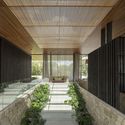
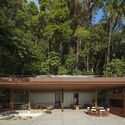
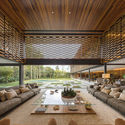
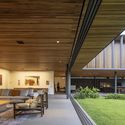
House In Barra da Tijuca / Progetto

Architects: Gisele Taranto e Izabela Lessa – Progetto Arquitetura e Interiores
Location: Rio de Janeiro, Brazil
Project year: 2010
Photographs: Courtesy of Progetto Arquitetura e Interiores
A House of the Artist as a Young Boy / Arquitetura da Vila

Architects: Arquitetura da Vila
Location: Rio de Janeiro, Brazil
Designer: Felipe Rio Branco + Fernanda Lima
Engineer: Saporito Engenharia
Project area: 150 sqm
Project year: 2008 – 2010
Photographs: Fabio Kotinda
BR House / Marcio Kogan

Architects: Marcio Kogan
Co-author: Bruno Gomes
Project architects: Beatriz Meyer, Carolina Castroviejo, Eduardo Chalabi, Eduardo Glycerio, Gabriel Kogan, Lair Reis, Luciana Antunes, Maria Cristina Motta, Mariana simas, Oswaldo Pessano, Renata Furlanetto, Samanta Cafardo, Suzana Glogowski
Interior design: Diana radomysler, Marcio kogan
Location: Rio de Janeiro, Brazil
Project area: 6,820 sqm
Project year: 2002 – 2004
Photographs: Nelson Kon
Video: Unsolicited Architecture
Here’s a video about Unsolicited Architecture, a collaborative workshop initiated by Studio-X Rio + NAI in Rio de Janeiro Brazil. In a 24 hour time period four teams were formed, four neighborhoods were explored (they each explored the neighborhood where the local architect’s office is located), held a brainstorming session, and then presented their ideas – zero clients, zero budget.
Happy 103rd Birthday Oscar Niemeyer

ArchDaily would like to wish Oscar Niemeyer a Happy 103rd Birthday today. In 1988, at age 81, Niemeyer was awarded the Pritzker Architecture Prize, together with American architect Gordon Bunshaft. Setting the pace for us all, Niemeyer continues to practice architect from his office in Rio de Janeiro, with ongoing projects in Brazil and Spain. He even recently composed the song Tranquilo com a Vida, download and listen here.
Tranquilo com a vida (composed by Oscar Niemeyer)
Richard Meier and Oscar Niemeyer met in October and here are some photos that Richard Meier & Partners shared with ArchDaily. We will soon be featuring an interview with Richard Meier, so be sure to keep a look out.
Follow the break for Richard Meier and Oscar Niemeyer.
Escola Nave / Atelier OFICINA de Arquitectos

Architects: Atelier OFICINA de Arquitectos
Location: Rio de Janeiro, Brazil
Architect in Charge: Marco Milazzo
Client: Oi Futuro
Project area: 8,600 sqm
Photographs: Fran Parente
“Encontro”, an Oscar Niemeyer exhibition by Patricia Parinejad

German-Persian photographer Patricia Parinejad will exhibit a selection of photographs at the Niteroi’s Museum of Contemporary Art, Rio de Janeiro composed in the context of a comprehensive photographic essay of Oscar Niemeyer’s buildings during the last five years.
Oscar Niemeyer is one of the most renowned architects of our time, whose remarkable lifework can be admired in different countries around the world. This exhibition “encontro “ (encounter) represents a very special occasion since it will actually be held in one of Niemeyer’s architectural masterpieces marking the celebration of his 103 rd anniversary.
The work is represented as Fine Art Prints with an water color structure which confers a special impression to the images. The exhibition will take place from December 12 to March 31, 2011.
Lompreta Nolte Arquitetos Proposal for the Environment Museum Annex Competition, Rio de Janeiro

Earlier this week we presented you an interesting proposal for the Environment Museum Annex Competition and now we received an honorable mention winner, from Lompreta Nolte Arquitetos - Daniel Feldman and Elizabeth Añaños.
The Botanical Garden, one of the oldest institutions in all Brazil, is a space of great relevance for the city of Rio de Janeiro. With around 600 thousand visitants each year, it is an important touristic spot, orientated to environmental and scientific education as well as leisure, and recently also cultural program.
Entry proposal for the Environment Museum Annex Competition, Rio de Janeiro

Antonio Pedro Coutinho shared with us the entry he designed with Estelle Dugachard, Fabiana Araújo, Nanda Eskes, Ricardo Caruana for the competition regarding the expansion of the Environment Museum in Rio de Janeiro, Brazil. The main challenge dealt in this competition was finding a way where the architecture would be inserted on the ecosystem where it was being planned; the magnificent Botanical Garden of the city of Rio de Janeiro.
More images and description after the break.