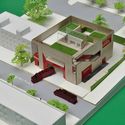
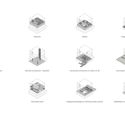
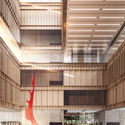
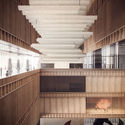
Design Excellence of U.S. Embassies: Openness and Security

U.S. in London / Architects

“The works of our artists, architects, and preservationists provide us with another language of diplomacy. A transcendent language that allows us to convey values that are at once uniquely American yet speak to all of humanity.  Increasingly in this world, art and architecture help us maintain our sense of openness and liberation.” — Former Secretary of State Hillary Rodham Clinton, April 12, 2010 

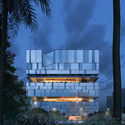
An embassy is much more than a building or a work of architecture; it functions as a symbolic representation of countries’ relationships to one another.  It represents the universal language of diplomacy – “communicating values and ideals, extending well beyond any moment in time”.  An embassy has the difficult task of representing two diametrically opposed concepts: security and openness.  The former typically overpowers the latter in importance, which is most probably why when we think of foreign embassies, it conjures up images of stately monolithic buildings surrounded by tall fences and menacing guards or “bunkers, bland cubes, lifeless compounds”, according to Tanya Ballard Brown of NPR’s All Things Considered.

More on the design excellence of embassies after the break…

Public Architecture’s 1% Program Provides Projects for Habitat for Humanity

Habitat for Humanity; el dorado architects

Public Architecture is an organization with a simple goal: to address public interest through architecture and solve problems of human interaction within the built environment.  The based non-profit was established in 2002 and in its past ten years it has served as a forum for public discourse, education and advocacy for the design of public spaces and amenities.  In 2005 it launched its 1% program, a now nationally recognized portfolio of pro-bono work by architects and firms ready to donate 1% of their year’s billable hours to provide work for nonprofit organizations requesting a variety of services that strengthen their architectural identity and community impact.  To date, there are 1100 firms registered with the 1% program.

ScrapHouse / Public Architecture

© Cesar Rubio

Designed by Public Architecture and other local design firms for World Environment Day 2005, this green demonstration home is built entirely of salvaged materials. Erected on the Civic Center Plaza adjacent to San Francisco City Hall, ScrapHouse showcases the creative use of previously discarded materials.

Project description and images after the break.

Architect: Public Architecture
Location: San Francisco, California,
Project Team: John Peterson (Peterson Architects), Zach Heineman (), Sean Ahlquist (Proces2) Tony Dominski (West Edge Metals), Andrew Dunbar (Interstice Architects), Jordan Geiger (Ga Ga), Mark Jensen and Chris Kalos (Jensen Architects), Jane Martin (Shift Design), Regan Martin
Contractor: Matarozzi Pelsinger Builders
Interior Architect: Jensen Architects/Jensen & Macy Architects
Structural and Civil Engineer: Patrick Buscovich & Associates
Lighting: AP Lighting and Melinda Morrison Lighting
Landscape Architect: CMG Landscape Architects
Graphic Design: Mende Design and Design at Noon
Project Area: 1,200 sqf
Project Year: 2005
Photographs: Cesar Rubio