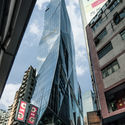
AD Classics: Bank of China Tower / I.M. Pei

Photo by Stephen Chipp - http://www.flickr.com/photos/stephenchipp/

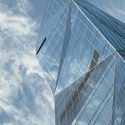
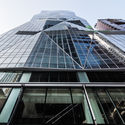
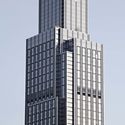
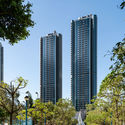
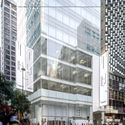
When commissioned to design the Bank of China Tower on an intricate inland site, was requested to create an unavoidably tall unique headquarters in a typhoon-prone region that would represent the aspirations of the Chinese people yet also symbolize good will toward the British Colony. The solution assimilates architecture and engineering simultaneously, involving an asymmetrical tower that informs both skyline and street. The Bank of China Tower stands 70 stories tall, reaching a height of 1,209 feet. At the time of its opening in May 1990, it was the tallest building in Asia and still remains one of the tallest in .

A. Eugene Kohn Watercolour Exhibition

Courtesy of (KPF)

International architecture firm, Kohn Pedersen Fox Associates (KPF) recently presented a selection of Chairman and Founder A. Eugene Kohn’s watercolours in this fall. The artists’ proceeds from the works sold were donated to the Memorial Sloan-Kettering Cancer Center and Cancer Research at the University of Michigan. The proceeds from a silent auction of several noteworthy pieces during the opening reception on October 3rd will also be donated to the Cancer Fund (HKCF). More images and a brief description of the exhibition after the break.

International Design Ideas Competition Entry / AETER Architects

daylight aerial view

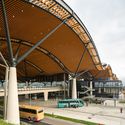
AETER Architects shared with us their entry, titled Eco-Land, for the International Design Ideas for Liantang/Heung Yuen Wai Boundary Control Point Passenger Terminal Building. Between Shenzhen and Hong Kong, the PTB (Passenger Terminal Building) is a transitional area interrupting the waterfront of the adjacent cities. The proposed PTB abandons its rights of the waterfront and becomes ‘in between’. More images and architects’ description after the break.

Hong Kong Alternative Car Park Tower Competition

Courtesy of AC-CA

The parking structure has captured the imagination of novelists, photographers and film-makers, and yet it remains peripheral to our culture – best understood as a forbidding fictional setting or often as an imposing silent building that we encounter along the way. Car parks are not very appreciated by users (too cold, too dark, too insecure etc.) and this hopes to offer a new take on this type of building that is far too quiet.

The aim of this international competition, hosted by [AC-CA], is to design an iconic and alternative car park tower in the heart of . The new tower will include several possibilities for events such as concerts, art exhibitions, fashion shows, ceremonies dinners, cinematic projections, etc. More competition information after the break.

AD Classics: Hong Kong and Shanghai Bank / Foster + Partners

Photo by WiNG1990 - http://www.flickr.com/photos/wing1990hk/

Envisioned during a perceptive period in the former colonies history, the brief for the Hong Kong and Shanghai Bank Headquarters was simple: to create the best bank building in the world. Through a meticulous process of questions and challenges, including the involvement of a feng shui geomancer, Foster + Partners addresses the temperament of banking in Hong Kong and how it should be expressed in built form. By doing so, it virtually reinvented the office tower. More information after the break.

LIA Passenger Terminal Building / Edit!

Courtesy of

The LIA Passenger Terminal Building for Hong Kong, by Edit! was developed to respond the surrounding urban structure, and to create a visually striking landmark that will act as a gate point for the city. It is designed with the intention to become an iconic character for the city while becoming an environmentally-efficient structure.

Read on for more on this project after the break.

International Design Ideas Competition for Liantang – Heung Yuen Wai Boundary Control Point Passenger Terminal Building / A.Lo Design

Courtesy of A.Lo Design

This submission for the Internation Design Ideas Competition for Liantang was designed by A.Lo Design for , on a site bridged between the urban fabric of Liantang and the natural site of Heung Yuen Wai.  Heung Yuen Wai Boundary Control Point Passenger Terminal Building sits within the boundary and balancing point between city and nature.  The design philosophy of the project is to redefine the nature of infrastructural facilities that embrace nature rather than destroying and replacing it.

Read on for more on this project after the break.

Honk Kong – Shenzhen Boundary Crossing Point and Passenger Terminal Competition: Vote for your favorite!

Proposal of one of the finalists

In September 2008, HKSARG and SMPG jointly announced the implementation of a new BCP at Liantang/Heung Yuen Wai in the north-eastern New Territories of and Luohu in Shenzhen to serve the cross-boundary goods vehicles and passengers travelling between (HK) and Shenzhen (SZ) East. The new BCP will connect with the Shenzhen Eastern Corridor and provide an efficient access across the boundary to the SZ East, Huizhou, various cities in Guangdong East, and the adjacent provinces such as Fujian and Jiangxi.

The Competition was launched and started registration since 21 December 2010, and the submission of entries was closed on 21 March 2011. A total of 159 valid entries from various countries and regions were received, comprising 86 Professional Group entries and 73 Open Group entries. To invite the public to express their preference among the finalist entries, the finalist entries are exhibited in the roving exhibition in Hong Kong and Shenzhen, and are displayed in the competition website from 1 June to 5 July 2011.

The Jury in the 2nd adjudication will consider the public opinion when selecting the awarded entries. Click here and vote for your favorite!

Courtyard Urbanism / Adrian Yee Cheung Lo, Ray Jiaheng Zhang, and Patricia Tung Yan Ng

Courtesy of , , and Patricia Tung Yan Ng

Courtyard Urbanism is a project by University of Hong Kong students Adrian Yee Cheung Lo, Ray Jiaheng Zhang, and Patricia Tung Yan Ng which was selected for the Gold prize at the IDesign Awards.  The project aims to reinvent the traditional Chinese courtyards in a contemporary setting where density and increased building heights affect the social dynamic of residential architecture.

Read on for more on this project after the break.

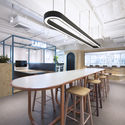
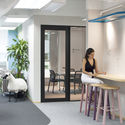
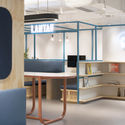
McKinsey & Company Hong Kong Office / OMA

Photos by Philippe Ruault courtesy

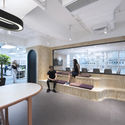
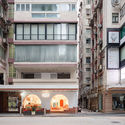
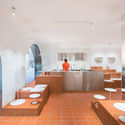
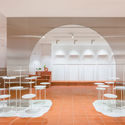
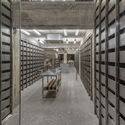
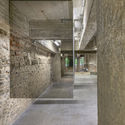
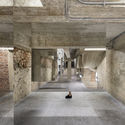
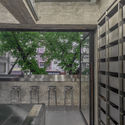
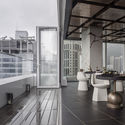
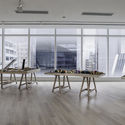
The design by OMA for the new McKinsey & Company Hong Kong office caters to the consulting firm’s need for a more intimate space that offers a greater sense of collaboration and community.  McKinsey confronted OMA with the following design question: How to rethink their work space in a way that is innovative and enhances the McKinsey experience?

Architects: OMA
Location: Hong Kong,
Client: McKinsey & Company
Project Year: May 2011
Photographs: Photos by Philippe Ruault courtesy OMA

Water Rhythm / Beige Design

© Ulso Tsang

Architects: Beige Design – Danny Chan
Location: , Hong Kong,
Project area: 40 sqm
Photographs: Ulso Tsang

Tregunter Residence / davidclovers

Courtesy of assisted by Ziyin Zhou

Nestled amongst a forest of towers on Old Peak Road above Central Hong Kong, the Tregunter tower holds unique layered views of Victoria Harbor. The abundance of bay windows, structural walls and beams that are common to residential towers would appear to constrain the possibilities of the apartment. However, by turning constraints into opportunities, davidclovers re-works the volumes of this apartment by using the ceiling and the floor. Subtly elongating, pressing upward, and sloping downward, the ceiling produces variable sensations of compression and expansion – making the apartment seem larger than it is, drawing delicate lines that separate dining from living. Skillfully dodging and maneuvering around air-conditioning units and structural beams, the ceiling integrates artificial light and various materials – re-orienting the apartment toward the exterior.

Architect: davidclovers
Location: The Peak, Hong Kong,
Project Team: David Erdman, Clover Lee, Jason Dembski, Mui Fuk Man, Kantrina Lee, Spencer Mak
Project Area: 2,400 sqf
Photographer: Courtesy of davidclovers assisted by Ziyin Zhou

The Hong Kong Federation of Women T.S. Kwok Service Centre / Barrie Ho

© Barrie Ho

Architects: Barrie Ho
Location: ,
Project area: 9,500 sqf
Photographs: Courtesy of Barrie Ho

House DE / davidclovers

© Almond Chu

House DE is an “infill” townhouse, spectacularly sited on a hillside above , Hong Kong. Combining two existing units into one, the design uses the volumes of three staircases to blend, burrow and interlock spaces vertically across four floors. Each “interaction” is materially monolithic, using stone, wood and a series of delicate aluminum fins. Defined by these fins, the texture and form of the lantern-volume subtly changes shape and depth, casting shadow and emitting light in different ways throughout the house.

Architect: davidclovers
Location: Clearwater Bay, Hong Kong, China
Project Team: David Erdman, Clover Lee, Fei Mui, Jason Dembski, Yvette Herrera, Rathi Subramanian, Lam Pui Wing, Spencer Mak
Project Area: 4,300 sqf
Photographs: Almond Chu

The Teaching Complex / Rocco Design Architects

©

Architects: Rocco Design Architects
Location: Hong Kong,
Design Team: Rocco Yim, Bernard Hui, Henry Ho, Dennis Chan, Boris Lo, Sophia Ip, Lai Wai Man, Mary Ching
Project area: 5,465 sqm
Project year: 2003 – 2008
Photographs: Rocco Design Architects

Barker Residence / davidclovers

© Almond Chu

At eye-level with the top of IFC, one of the tallest buildings in , the Barker Residence holds stunning views of Victoria Harbor. The project is the first of a series of projects designed by davidclovers for a developer of residential properties in Hong Kong. The basic approach is to hone in on the most potent areas of the existing layout, and enhance them. At Barker Residence, davidclovers reworks the unit horizontally and vertically using a series of subtly inflected walls and artificially-lit ceilings to bend space around corners and through floors.

Architect: davidclovers
Location: The Peak, Hong Kong,
Project Team: David Erdman, Clover Lee, Mul Fuk Man, Jason Dembski, Damlen Hannigan, Spencer Mak
Project Area: 4000 sqf
Photographs: Almond Chu

Waterfront Furniture / ALo Design

Courtesy Adrian Lo of

Adrian Lo of ALo Design has shared with us his winning entry for the Eastern Harborfront Street Furniture Design Competition. Images of the project as well as a brief summary of both Adrian’s project and the competition itself can be seen after the break.

West Kowloon Cultural District Selects City Park / Foster + Partners

© by Methanoia

Foster + Partners’ City Park proposal has recently been selected for the 40-hectare masterplan for West Kowloon Cultural District.  Since this past August, we have been sharing the three competing shortlisted projects – ’s  Three Villages, Rocco Design Architects’ Cultural Connect, and Foster’s City Park – and your comments have sparked great discussion concerning the advantages and disadvantages of each.   The selection process for the cultural district was quite unique as the three projects, that were selected from 12 proposals, then entered a public consultation exercise.  For three months, the people of the West Kowloon district had the opportunity to review and comment on the projects, which then had a strong impact on the panel’s final decision.

Foster’s proposal is organized around a 23 hectare public par, with cultural buildings scattered along the edges to become a natural extension of the local community.  Foster commented, “This is fantastic news. I have been travelling to Hong Kong for more than 32 years, since the Hongkong Bank first brought us here. This project offers an extraordinary opportunity – it is unprecedented in its scale, scope and vision. City Park will be the catalyst to transform the city locally and regionally, as well as on the world stage. Our design is rooted in Hong Kong’s urban DNA, the distinctive character that makes it such a dynamic city. There really is no other project like it!”

Be sure to read more about Foster’s proposal on AD here.

International Design Ideas Competition for Liantang/Heung Yuen Wai Boundary Control Point Passenger Terminal Building

Courtesy of The Civil Engineering and Development Department of

The Civil Engineering and Development Department of Hong Kong has recently launched a International Design Ideas Competition for Liantang/Heung Yuen Wai Boundary Control Point Passenger Terminal Building and has shared with us their press release for this important piece of infrastructure.

For the full press release and the website please follow us after the break.

OMA Developing a New Vision for Transit Authority in Hong Kong

© OMA - Chu Hai College in Hong Kong

Earlier today it was announced that OMA teamed with AMO have been commissioned to develop a new vision, Railway Vision 2020, for Hong Kong’s MTR, urban transit authority. Together they will produce new branding and identity, site analysis, sustainability research, and usage patterns studies. OMA will also be designing two prototype stations that will eventually span the entire transit network in Hong Kong. The prototype stations are expected to open before 2014.

The Railway Vision 2020 plan will be a collaborative effort between OMA (architecture) + (design and research) with Stanford University, the City University of Hong Kong, and the University of Hong Kong.

This recent commission is a continuation of OMA’s ongoing success in Hong Kong.  OMA unveiled their master plan design for the West Kowloon Cultural District in late August, and produced the winning design earlier last year for the new campus of Chu Hai College in Hong Kong.

For the complete press release click here.

Serial Architecture – Systems of Multiplicities / Rocker-Lange

Courtesy of

Rocker-Lange architects shared with us the release of their research project, Serial Architecture – Systems of Multiplicities, which was also part of the exhibit “Quotidian Architectures” in the Pavillion at the Venice Biennale 2010. The project, accompanied by a 400+ book, rethinks quotidian architecture in , a city with an average density of over 6,300 people per square kilometer. More images and architect’s description after the break.