The Indicator: The Next Architecture, Part 6

An informal poll of recent M.Arch graduates resulted in a very interesting statistic: approximately ½ are either unemployed, working for free, or “working for themselves” though many of these new “firms” have yet to win contracts or projects. Coincidentally, or perhaps not, this statistic mirrors the national unemployment rate in the profession. For those who are fortunate enough to gain paying projects, residential remodels seem to dominate.
More after the break.
Santa Teresa Retirement Home / BmesR29 Arquitectes

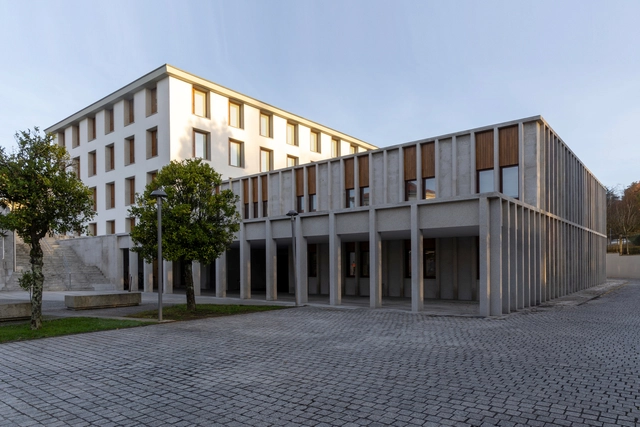
BmesR29 Arquitectes rehabilitated and added an addition onto the Santa Teresa retirement home. The existing building was an isolated three story volume that projected westward with a continuous facade in street Pica d’Estats. The addition almost doubled the size of the building due to functional needs of the retirement home.
Architect: BmésR29 Arquitectes
Location: C / Pica D’Estats, 4 – Lleida (25,006). Lleida (Segrià), Spain
Project Team: Xavier F. Rodríguez, Josep M ª Bourgeois
Collaborating Architects: Rosinach Ramon Garriga, Mariona Julià Fabrellas
Contributors: Cristina Gómez Cruz
Builder: Construccions Pallàs, SA
Project Area: 1107.31 sqm
Project Year: 2009
Photographs: Amaneceres Fotográficos / Joseph Ardiaca Rodríguez, Sofía Gómez Zucaro
An Imaginary House for Silence / Dellekamp Arquitectos

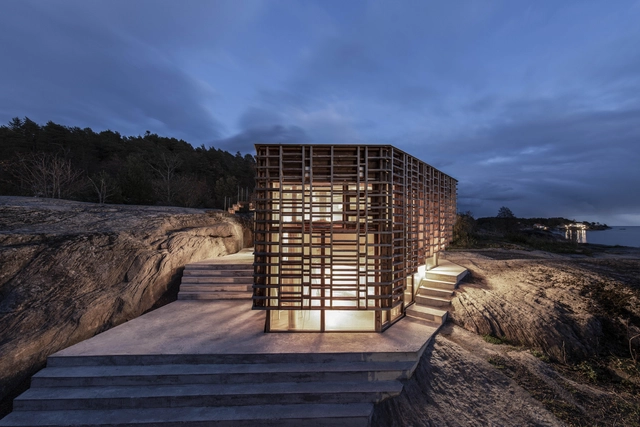
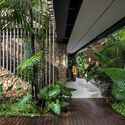
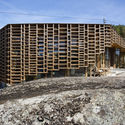
This project for An imaginary house for Silence, by Dellekamp Arquitectos, reflects an enduring interest in creating a space that is formed by a close relationship with nature, where one can live intimately in the natural world. The house emerges from the essence of the forest, where towering trees surround and protect the body, creating a magical environment of dappled light in the quiet solitude of nature. By our human weakness, we are moved to leave a contemplative and tranquil mark on the site. Like a cloister, characterized by its intimacy and purity, the structure thoughtfully concentrates the elements and the surrounding environment in an architectural space. More images and architects’ description after the break.
California College of the Arts Graduate Center / Jensen Architects/Jensen & Macy Architects

For the Graduate Studies Campus at the California College of the Arts Jensen Architects / Jensen & Macy Architects designed a fencing façade for the expansion of the campus. This project is connected to the previously completed Graduate Studios project and creates a combined 50,000 sqf Graduate Studies campus.
Architect: Jensen Architects/Jensen & Macy Architects
Location: 184 Hooper Street, San Francisco, California, USA
Project Team: Mark Jensen (Principal), Frank Merritt (Project Architect), Chris Kalos, Steven Huegli, Pantea Tehrani (project team)
Structural Engineer: Jeffrey Weber & Associates
Mechanical & Plumbing Engineer: Guttman & Blaevoet
Electrical Engineer: Silverman & Light
Civil Engineer: KCA Engineers
Geotechnical Engineer: Geotecnia
Environmental Consultant: URS Corporation
Acoustical Consultant: Charles M. Salter Associates
Contractor: Oliver & Company
Project Area: 29,640 sqf
Project Year: 2007
Photographers: Mark Luthringer
River Road House / Whitney Powers

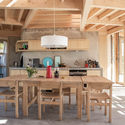
According to the architect, Whitney Powers, the clients wanted a very modern and very sustainable 5000-square-foot home/compound built on a long, narrow site that is positioned between an expansive coastal landscape and a deep, second growth maritime forest. The compound includes a four-bedroom “main” house with combination living/kitchen and dining/library areas, a master bedroom/home office suite, and a two-bedroom guest wing. Opportunities to expand life into the outdoors include a screen porch, second floor terraces, and a deck level pool.
Rear the architect´s statement and see more photos of this project after the break.
Bike Hanger / MANIFESTO

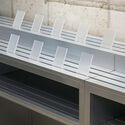
The Bike Hanger is an essential facility for the city of Seoul which aims to increase its bicycle-friendliness. The facility is not only low-maintenance and environmentally friendly, but by being installed in between buildings it takes advantage of many of the underutilized spaces that exist around the city. Each Hanger is able to store between 20-36 bicycles and it is easily attached to the sides of buildings, allowing minimal interference with the pedestrian traffic below.
Architects: MANIFESTO Architecture P.C.
Location: Between Buildings
Project Area: 60 sqf
Construction Budget: $100,000
Project Status: Shortlist for ‘Seoul International Design Competition: Design for All’ and Shortlist for ‘Seoul Cycle Design Competition 2010′
Renderings: MANIFESTO Architecture P.C.
Light Box / WE architecture

Copenhagen-based We architecture recieved third prize in the competition for the extension of an existing high school in Falkonergården. More images and architect’s description after the break.
Spirits Pavilion / Min | Day

The cocktail is a distinctly American tradition. Once the centerpiece of a thriving “cocktail culture,” it has faded since the 1950s but is now being embraced by a new generation of makers and mixologists who value quality and craft. The Spirits Pavilion, by Min | Day, presents this rejuvenation as part of Slow Food Nation 2008, an event in Fort Mason, San Francisco dedicated to creating a framework for deeper environmental connection to our food aiming to inspire and empower Americans to build a food system that is sustainable, healthy and delicious. More images and architects’ description after the break.
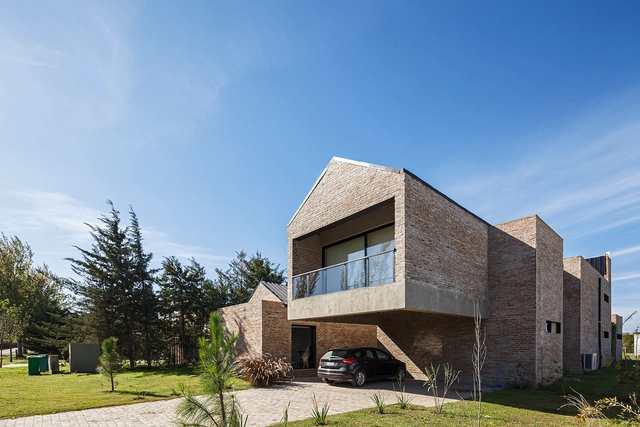
House D / Panorama + WMR

Architects: Panorama (Nicolás Valdés+Constanza Hagemann) and WMR (Felipe Wedeless+Jorge Manieu+Macarena Rabat )
Location: Matanzas, Chile
Project area: 92 sqm
Project year: 2009 – 2010
Photographs: Cristobal Valdés
Volume # 26: Architecture of Peace

A recent issue of Volume titled “Architecture of Peace” asks what role architects can play in promoting peace. This fearless issue makes the squabbling over Steven Holl’s extension to Rennie Mackintosh’s Glasgow School of Art seem rather trivial. Trying to promote peace in war torn areas like Israel, Palestine, Sudan, and South Eastern Europe takes far more courage or hubris than building onto an architectural treasure. The stakes are far higher and the critics far louder. That, however, did not prevent Volume from diving headlong into politically and emotionally charged issues. No single reader will agree with every article in this issue, but Volume’s willingness to openly discuss such volatile and critical topics is what makes this issue so intriguing and captivating to read. Failing to recognize the merit of this work because of disagreements would be an unfortunate error in judgment. At the same time, restraining personal dissent out of respect would be a disservice to this unshrinking issue. This issue begs for dialogue and respectful disagreement. I highly recommend our readers to pick up this issue and continue the dialogue on this very important topic. You might not agree with every article, but keep the dialogue going.
My personal challenge following the break.
Homeless World Cup Legacy Center / Lompreta Nolte Arquitetos, Nanda Eskes Arquitetura and Architecture For Humanity

The Homeless World Cup is an annual event, in which teams composed by homeless people from all over the world meet for a Football World Cup. In 2010 the tournament took place in Rio de Janeiro. For the first time, the organizing committee decided to build a Legacy Center, whose objective is to create continuity of the work with sport as a mean for social change.
An international design competition for the Legacy Center has been organized by Architecture for Humanity, together with Homeless World Cup, Bola Pra Frente and Nike Game Changers.
Lompreta Nolte Arquitetos and Nanda Eskes Arquitetura were the authors of the winning entry, and since January 2010 have developed the project for a Community Center in Santa Cruz (suburb of Rio de Janeiro) together with Daniel Feldman, design fellow of Architecture For Humanity. The project sponsored by Nike Game Changers had to work with an extremely limited budget and was divided in two construction phases, the first a public community facility, the second to host the Institute Bola Pra Frente.
Architects: Lompreta Nolte Arquitetos, Nanda Eskes Arquitetura, Architecture For Humanity
Location: Conjunto Liberdade, Santa Cruz, Rio de Janeiro, Brazil
Design Team: Thorsten Nolte, Nanda Eskes, Daniel Feldman
Project area: 310 sqm
Project year: 2010 (project and completion of first phase 2010)
Photographs: Lompreta Nolte Arquitetos, Nanda Eskes Arquitetura, Fabrício Pimentel
Ecosciences Precinct / Hassell

Architects: Hassell
Location: Brisbane, Australia
Project area: 50,000 sqm
Project year: 2010
Photographs: Christopher Frederick Jones
Brandon Firehall No.1 / Cibinel Architects

Architects: Cibinel Architects
Location: Brandon, Manitoba, Canada
Design Team: George Cibinel, Marty Kuilman, Jason Kun, Travis Cooke, Candace Wiersema, Markian Yereniuk, Brian Pearson, Mike Karakas, Joseph Orobia, Catherine White
Collaborators: Collins Design Service – Fire Station Consultant
Engineers: Crosier Kilgour & Partners Ltd, Epp Siepman Engineering Inc, Nova 3 Engineering Ltd, Williams Engineering Inc, M. Block & Associates Ltd Landscape Architects: Hilderman Thomas Frank Cram Landscape Architecture & Planning
Contractor: BIRD Construction
Project area: 30,000 sqf
Project year: 2010
Photographs: Mike Karakas
Sendai Update from Architecture for Humanity: Moving from Relief to Recovery
The most recent Architecture for Humanity Sendai relief update comes just in time to celebrate AFH’s 12th Birthday. We here at ArchDaily want to wish AFH a Happy Birthday and thank them for the 12 years of innovation and service they have provided our communities and the profession.
Design Open Mic, led by Cameron Sinclair and Chapters Coordinator Frederika Zipp, updated staff and attendees on their current relief efforts in response to the Sendai earthquake in Japan. Currently a Program Advisory Board has been assembled and Architecture for Humanity is continuing to focus their efforts on developing a rebuilding strategy and implementation process.
Stockholmsmässan AE-hall /Rosenbergs Arkitekter

Architects: Rosenbergs Arkitekter
Location: Stockholm International Fairs, Älvsjö, Sweden
Project Team: Alessandro Ripellino, Sara Ericsson, Henrik Nilzén, Benjamin Mandre, Jonas Haga, Johan Nylind
Structure: ELU Consult / Stefan Engberg
Lighting planner: Leif Igelström
Landscape architect: Nivå / Göran Lindberg, Jake Ford
Landscape engineer: Structor / Anders Metzén
Electrical: Miab / Mikael Lemón
Pond technical consultant: Anleka / Jacque de Villiers, Anders Soergel
Project area: 10,000 sqm
Project year: 2010
Photographs: Petter Karlberg, Rosenbergs Arkitekter
SLANT Competition
The international competition for the SLANT AWARDS is being held this year for the first time and on this occasion is aimed exclusively at students of Landscape Architecture and Landscape Design.
The central idea behind this challenge is that the project in question is a “virtual project”, one that has been created specifically for this competition.
What you are being invited to do is to create a concept design for a public park, one which will not only serve the needs of the citizens of this city (not a real city, but one designed for this competition), but which will also aim to achieve iconic status and in so doing will enhance the international reputation of the city. For more information go to the competition’s official website.
Brussels Courthouse: Imagine the Future Competition Winners

The Belgian Buildings Agency and the Department of Justice recently announced the winners of their Brussels Courthouse: Imagine the Future International Ideas Competition. To make the issues of architecture and urban design more widely known, BOZAR Architecture has backed this initiative by hosting the awards ceremony and staging an exhibition of the entries at the Centre for Fine Arts in Brussels until May 15th. More images and description of winning entries after the break.