AA Mexico City Visiting School
[ June 26, 2013 0:00 to July 5, 2013 0:00. ] Taking place June 26 – July 5, the AA Mexico City Visiting School will engage with the most crucial and imposing challenges that Mexico City faces and the ways in which architecture and urbanism can shape the metropolis at different…
Can Architecture Make Us More Creative? Part II: Work Environments

Jane Jacobs revered the West Village. It was a bustling neighborhood enlivened by its social, spatial, and functional diversity. It had different building types and functions, which meant that people were always in places for different purposes; it had short blocks, which have the greatest variety of foot traffic. It had plenty of old buildings with low rent which “permit individualized and creative uses;” and, most importantly, it had all different kinds of people. As a result, West Villagers could establish casual and informal relationships with people that they might not have had the opportunity to otherwise.
Without these necessary characteristics, Jacobs felt “there is no public acquaintanceship, no foundation of public trust, no cross-connections with the necessary people – and no practice or ease in applying the most ordinary techniques of city public life at lowly levels.”
By simply changing a few words, it’s not hard to imagine Jacobs’ writing describing offices instead of cities. Buildings are different internal spaces, like individual offices or gathering spaces; desks are homes; sidewalks are hallways or circulation space; etc.
If the office is a small microcosmic city, then suburbia is the cubicle-strewn office, and Google might be the West Village. And ‘people analytics,’ the statistical and spatial analysis of interpersonal interaction, is the office’s urban planning.
To find out what creative work environments can learn from the composition of cities, keep reading after the break…
Campbell Sports Center / Steven Holl Architects

Architects: Steven Holl Architects
Location: Columbia University, New York, NY, USA
Design Architects: Steven Holl, Chris McVoy
Partner In Charge: Chris McVoy
Associate In Charge: Olaf Schmidt
Project Team: Marcus Carter, Christiane Deptolla, Peter Englaender, Runar Halldorsson, Jackie Luk, Filipe Taboada, Dimitra Tsachrelia, Ebbie Wisecarver
Area: 4,459 sqm
Year: 2013
Photographs: Iwan Baan, Chris McVoy
Victoria University – Exercise Science and Sport Precinct and Learning Commons / John Wardle Architects

Architects: John Wardle Architects
Location: Footscray, Victoria, Australia
Architects: John Wardle, Stefan Mee
Project Architect: Ben Beaumont
Area: 14,600 sqm
Year: 2010
Photographs: Trevor Mein

Custore Pavilion / Anna Dobek + Mateusz Wojcicki
Custore, an experimental project, is a pavilion that explores the areas of parametric architecture used for the commercial market. Designed by Anna Dobek + Mateusz Wojcicki…, they had to deal not only with the aesthetic issues of computer-generated sculptural
Logistic Building in Corporate Campus Apeldoorn / ADP Architects

Architects: ADP Architects
Location: Apeldoorn, The Netherlands
Collaborating Architects: Ex Interiors (interior co-architects)
Area: 5,300 sqm
Year: 2012
Photographs: Gerard van Beek, Courtesy of ADP Architects, J Musch
‘The Slabs’ – Italian Pavilion Expo 2015 Proposal / MenoMenoPiu Architects + BE.ST Architect
MenoMenoPiu Architects + BE.ST Architect shared with us their proposal for the Italian Pavilion Expo 2015. Titled ‘The Slabs’, their design consists of a light cage where the technical innovation is embedded within the structure: revolutionary glass columns sustain traditional slabs clad in marble. Simple and elegant in its structural system, marble and glass are intertwined to express the Italian architectural tradition of proportion and elegance. More images and architects’ description after the break.
San Juan Cliffside / Prentiss Architects

Architects: Prentiss Architects
Location: San Juan Island, WA, USA
Area: 2500.0 ft2
Year: 2010
Photographs: Jay Goodrich
Two Islands Wins Inaugural Flat Lot Competition in Flint

Update: Our friends at Two Islands have launched a Kickstarter campaing so you could also be part of the project. By pledging £5, you can have your own photo used in the ceiling of Mark’s House (or £20 for a bigger one). You can send a photo, a sign, a collage or even a QR code, so get creative! Click here for all the information.
Occupying no more than eight parking spaces on Flint, Michigan’s central downtown parking lot, this temporary summer pavilion designed as an abstract, reflective and floating representation of a Michigander, Tudor-style home has been chosen as the winning scheme in the inaugural Flat Lot competition presented by Flint Public Art Project and the Flint Chapter of the American Institute of Architects.
More information on the winning scheme after the break…
Addis Abeba Chamber of Commerce Headquarters Winning Proposal / BC Architects

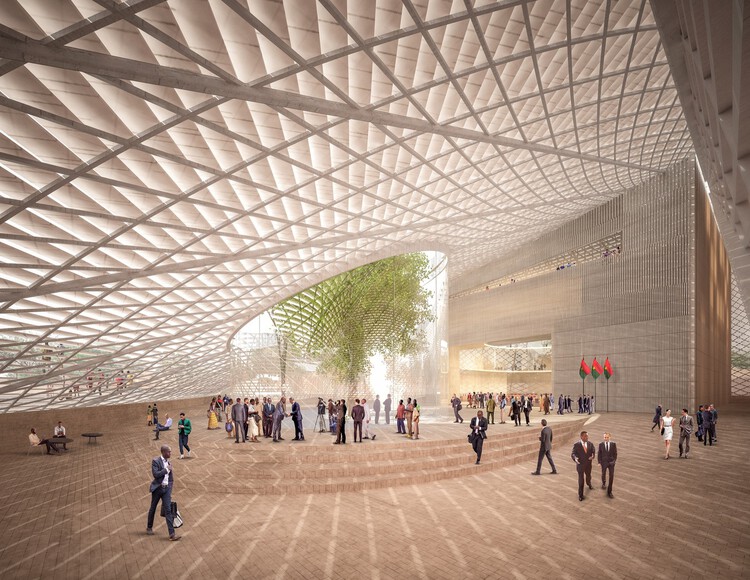
BC Architects, in collaboration with ABBA architects and Adey Tadesse, won the competition for the Addis Abeba Chamber of Commerce Headquarters in Ethiopia with their approach towards a “glocaldesign”. With the goal of sensibly involving local materials in this mid-high-rise building, this resulted in a local nature stone façade system inspired by a ‘Netela’ (threaded Ethiopian textile which so nicely shows the threads of cotton and which has a character of both shadow and transparency). More images and architects’ description after the break.
Kemuri Shanghai Restaurant / Prism Design
Architects: Prism Design
Location: Shanghai, China
Design Team: Tomohiro Katsuki, Masanori Kobayashi, Reiji Kobayashi
Area: 200.0 sqm
Year: 2012
Photographs: PRISM DESIGN, Nacasa & Partners Inc.”(Eiichi Kano)
Artis Headquarters / Roswag Architekten

Architects: Roswag Architekten
Location: Berlin, Germany
Architect In Charge: Eike Roswag
Project Leader: Jan Schreiber
Planning: Maria Scheicher, Oriol Domínguez Martínez
Area: 1,978 sqm
Year: 2010
Photographs: Courtesy of Roswag Architekten
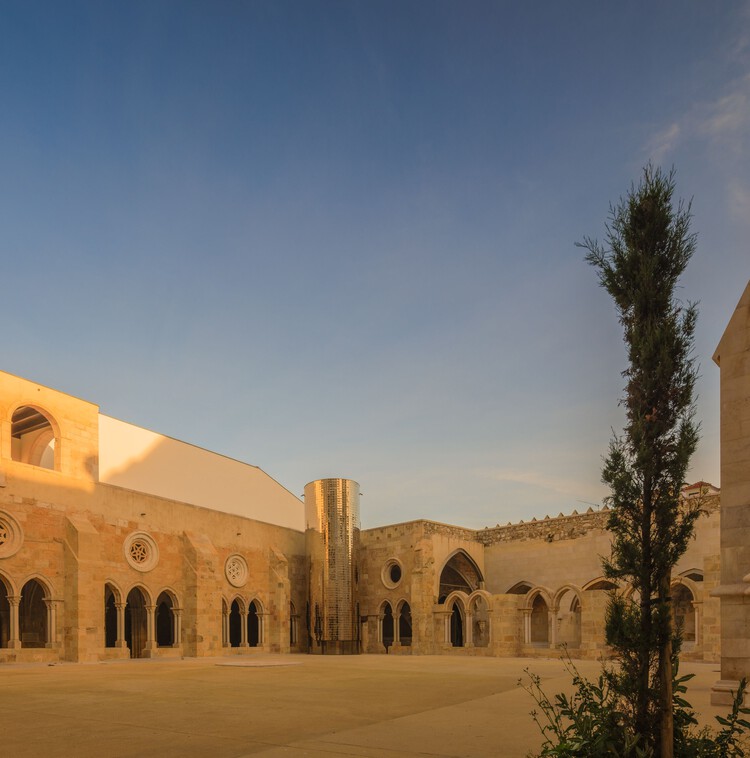
Casas Reais / Concheiro de Montard

Architects: Concheiro de Montard
Location: Santiago de Compostela, Spain
Architect In Charge: Isabel Concheiro, Raphaël de Montard
Area: 89 sqm
Year: 2012
Photographs: Luis Díaz Díaz
MoMA Selects Diller Scofidio + Renfro as Architect of the Folk Art Museum

The Museum of Modern Art has commissioned Diller Scofidio + Renfro (DS+R) to design its controversial expansion that will overtake the former American Folk Art Museum in New York. This news comes after an intense backlash from prominent architects, preservationists and critics worldwide pressured MoMA to reconsider its decision to raze the iconic, Tod Williams and Billie Tsien-design museum in order to make way for its new expansion.
In response, DS+R has requested that MoMA gives them the “time and latitude to carefully consider the entirety of the site, including the former American Folk Art Museum building, in devising an architectural solution to the inherent challenges of the project,” as stated by Glenn D. Lowry, MoMA’s director, in a memo sent on Thursday to his trustees and staff. He added, “We readily agreed to consider a range of options, and look forward to seeing their results.”
More on the DS+R’s commission and the fate of the Folk Museum after the break…
Nowhere but Sajima / Yasutaka Yoshimura Architects

Architects: Yasutaka Yoshimura Architects
Location: Yokosuka Kanagawa, Japan
Client: Nowhere Resort
Structural Engineer: Akira Suzuki/ASA
General Contractor: Heisei Construction
Area: 176.65 sqm
Year: 2009
Photographs: Yasutaka Yoshimura, Chiaki Yasukawa
Council Approves Cornell’s Net-Zero Tech Campus on Roosevelt Island

City Council has approved Cornell’s two-million-square-foot tech campus planned to break ground in 2014 on New York’s Roosevelt Island. Masterplanned by Skidmore, Owings and Merrill (SOM), the ambitious carbon positive campus will offer housing for 2,000 full-time graduate students, world-class education facilities, a hotel, a corporate co-location building, and more than an acre of public open space. Construction will commence with the first, state-of-the-art academic building that will be designed by Thom Mayne, founder of Morphosis, who will incorporate the latest environmental advances, such as geothermal and solar power, to achieve net-zero energy for the landmark structure.
Media Library Drachten / ADP Archtitects
Architects: ADP Archtitects
Location: Drachten, The Netherlands
Architect In Charge: ADP Archtitects
Collaborators: SH Studio
Area: 650.0 sqm
Year: 2012
Photographs: Gerard van Beek
A Clearer Definition for Smarter Smart Growth

As cities become more conscious of their environmental and social impact, smart growth has become a ubiquitous umbrella term for a slew of principles to which designers and planners are encouraged to adhere. NewUrbanism.org has distributed 10 points that serve as guides to development that are similar to both AIA’s Local Leaders: Healthier Communities through Design and New York City’s Active Design Guidelines: Promoting Physical Activity and Health in Design. Planners all appear to be on the same page in regards to the nature of future development. But as Brittany Leigh Foster of Renew Lehigh Valley points out, these points tend to be vague; they tell us “what” but they do not tell us “how”. 10 Rules for Smarter Smart Growth by Bill Adams of UrbDeZine San Diego enumerates how to achieve the various design goals and principles that these various guides encourage.
Origo Coffee Shop / Lama Arhitectura

Architects: Lama Arhitectura
Location: Bucharest, Romania
Architects In Charge: Dan Enache,Calin Radu, Radu Nenita
Area: 65 sqm
Year: 2013
Photographs: Radu Malasincu