
-
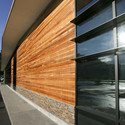
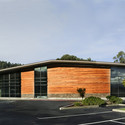
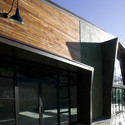
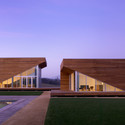
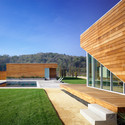
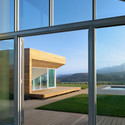
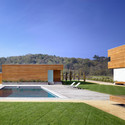
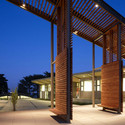
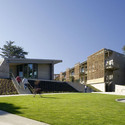
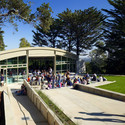
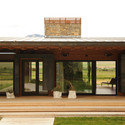
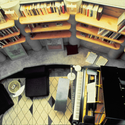
Architects: Bart Prince
- Year: 1984





Pratt Institute School of Architecture fall lecture series will feature several large names in architecture along with their continuing exhibition of Latin American architecture and with strong emphasis on disaster architecture. All lectures to take place on the Brooklyn Campus will begin at 6 pm in the Higgins Hall Auditorium at 61 St. James Place, unless otherwise noted.
All Manhattan Campus lectures will begin at 6:30 pm and will take place at 144 West 14th Street, Room 213. All lectures are free and open to the public.
The dates of the lectures after the break:

Architecture often attempts to play with several spatial and formal concepts but the extent of this experimentation is often limited by budgetary and engineering constraints. Sculpture is a medium with which formal and spatial tests can be performed to an aesthetic extent without architectural limitation. There are several modern sculptors whose products can be seen as architecture. Here we will look at the works of Robert Smithson, Richard Serra and Anish Kapoor.

The greenway is a modern twist on an outdated concept. Ancient cities sprung up around trade routes. Many modern US cities were originally formed according to access to a local train station or navigable river. Today’s metropolises were brought to success by an advanced highway system. All of these circumstances were brought about by two prevailing factors, location and traffic. In a post-modern world however, when the infrastructure has been laid and a consumer society comes to live for a variety of new reasons how can these concepts be applied. The answer lies, partially at least, within the recent push for a developed greenway system.

At the peak of the modern era, a meshing of car culture and the Space Age brought about the gaudy and garnished Googie architecture. The signatures Googie style lie in sweeping arches and hard angles, cantilevered roofs and bold colors, and, its most relative homage to the Space Age, the starburst. The first of the Googie style, and its namesake, was a coffee shop designed by architect John Lautner by the name of “Googies”. With its place on Sunset Boulevard in Los Angeles the new style caught the eye of many passersby who began to associate the style with the glamour of Hollywood. The spread of this movement from Southern California went most notably north and south along the shore to become a symbol of west coast futurism.