




-
Architects: Arjen Reas
- Area: 744 m²
- Year: 2010
-
Photographs:Kees Hageman
Text description provided by the architects. This project is a private assignment for an entrepreneur from the city center, and the question was posed, how could the family find peace on the edge of that same city. The site located where the city and open planes meet, and therefore has an obvious recognition that cannot be ignored.
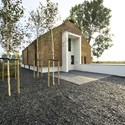
In the earlier times people here used to work with shapes for houses that were pure and plain, haystacks were used as a cover for the roofs and the walls where made out of stones and a clay plaster.

The architect was challenged to fuse together traditional ideals with a contemporary house design, a cubistic shape placed in a desolate landscape, where all urban feeling is gone when you look at the surroundings.
Contemporary rural living was chosen as a project to mix the two in pure form.
New Dutch Design
When working with pure forms it’s also important to look at simplicity, durability and expression.
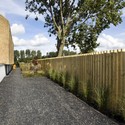
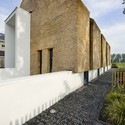
The mix of two very different but recognizable materials in the Dutch landscape results in a both a modern and traditional structure. The fine texture of the haystacks in combination with the smooth white plaster surfaces a house is formed that is very modern and traditional at the same time. The compactness of the haystacks gives optimal protection against the elements.

The interior successfully combines natural materials creating something unique. By designing a natural interior certain tranquility arises throughout each room and now there is also room left for the residents to restyle their space continuously.
One of the priorities while designing this house was to provide the residents with a magnificent view of the scenic landscape. This was successfully done within each room in the house. Daylight falls deep into the house and lights up the space within and gives it a dynamic character during the day, while by night the house radiates its light to its surroundings and thereby marking its position in the landscape.

Lay-out
Via the slope residents can park their car in the basement, where there are also two extra storage rooms and an entrance to go up by stairs and enter the main living space with a beautiful open kitchen where all the modern comforts are integrated in.
When walking through this open space towards the large transparent slide doors, you immediately get pulled to go into the garden. Here you can sit and relax or walk on the plateau to oversee the whole landscape.

The main entrance is surprisingly spacious and with its transparent separation with the kitchen a lot of light is coming in. Here you can enter the scullery, toilet, wardrobe or walk straight up the stairs to the second level.
On this level you can go to the main bedroom, the second bathroom and three other bedrooms. In the master bedroom the residents can choose to go and have a spacious shower or to go and take a bath before or after going to bed. When sitting in bath or lying in bed, you still have a great open view at the landscape.


