



- Year: 2007
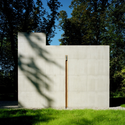
Text description provided by the architects. Standing isolated in a clearing in the middle of the park of the old Kolbermoor spinning mill is the Chapel of St. Benedict.
Visitors enter the sacred space by passing through a tall entrance portal that contains the chapel`s small bell: the classic image of the church with its bell tower is not abandoned, but rather reinterpreted with a modern spirit.
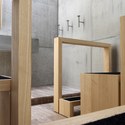
The materials that give form to the project are concrete and wood. The rainwater that flows visibly inside a wooden gutters fitted onto the external walls reminds us of the passing of the seasons of life.

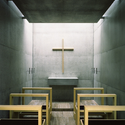
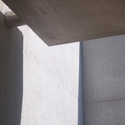
The great wooden door, which in its simplicity represents the façade of the chapel, marks the passage between outside and inside. Light shapes the sacred space: no window interrupts the continuity of the walls that envelop the visitors; light pours down from above uninterrupted. The gaze is focused first on the cross, before moving slowly towards the sky. Thanks to the light that filters along the whole internal perimeter, the surfaces are dissolved and the ceiling is as though suspended.

The passage between interior and exterior, between sky and earth, is fluid. The light that filters inside, ever different depending on the time of day and the season, is the only true ornament. The materials are used in their purest form in order to bring out their original characteristics.
The chapel is essentially forged by the interplay of light and shade, by the passage between the broad external clearing and the reduced dimensions of the sacred space, by the contrast between the austere concrete volume and the luxuriant nature surrounding it.


