


-
Architects: kadawittfeldarchitektur
- Area: 2110 m²
- Year: 2007
-
Photographs:Angelo Kaunat
Text description provided by the architects. Extension of a school by four classrooms and a gymnasium on a very small plot of land within a typical village structure.

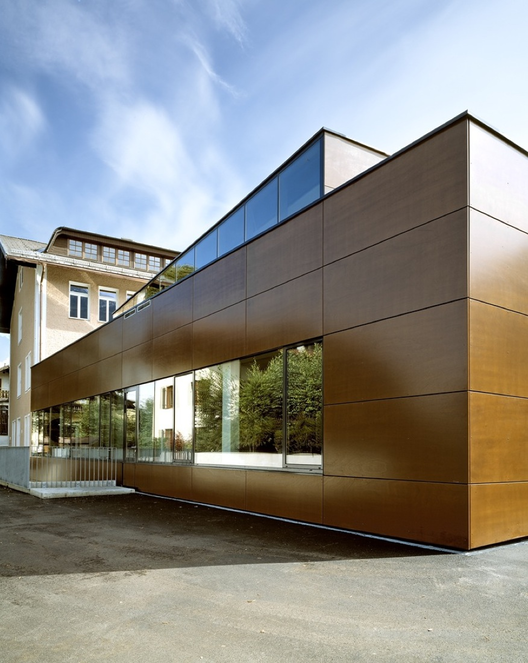
The school is not extended, but rather connected via an adapting passageway to the new building. The passageway functions as a weather-protected alleyway, which reorganizes the access to the building ensemble, providing it with a clear address and likewise eliminating the deficit of the useful outside surface area. The definition of old and new building as a solitary building volume corresponds to the context of the residential settlement, whereas, the incompatible gymnasium volume is sunken into the ground with a natural light exposure coming from the glazed atrium.
The extension of the school building was developed within the context of an unusually narrow building site. Shape and alignment of the new building create a maximum of daylight for the classrooms as well as for the neighboring dwellings. The old and new buildings are connected by a glazed lobby that functions as common space and provides wheelchair access. The sunny “recess” deck and a green courtyard function as children’s playgrounds. The basement consists of a gymnasium/event space, provided with a natural light source coming from the courtyard. A foyer-gallery serves as a multi-purpose space. The select interior materials and the marine plywood cladding turn it into a veritable “house for children.”


