Learning from the slums (2/2): the rediscovery

By — Filed under: AD Round Up ,Architecture News ,Healthcare Architecture ,Housing ,Politics ,Refurbishment ,Sustainability ,Theory and History ,Urban Design ,Urban Planning , , , , , , ,
 

The model #1: Napoli, quartieri Spagnoli (image: flickr)

If the mainstream view on the slums describes them as places to escape from and as to destroy as soon as possible, more and more people look at slums in a different way.

The first glances at slums were from some of the architects involved in urban renewal projects, who started to integrate in their projects some elements of the slums. Some of the recurrent features are:

  • narrow courtyards and alleys
  • division of the building into small blocks
  • use of different colors and materials within the same building.

(part 1/2)

The model #2: Atrani (image: flickr)

Mario Fiorentino, Corviale, Rome. interior courtyard. (image: flickr)

Moshe Safdie, Habitat 67, Montreal (image: wikipedia)

Frank Gehry, MIT Stata Center (image: wikipedia)

NL Architects, Taipei Performing Arts Center proposal.

Akihisa Hirata, Commercial building in Daikanyama, Tokyo.

The results of this approach may be interesting from the esthetically point of view, and are for sure between the most interesting developments, but seem to have missed the point. While slums are usually made without the help of any technological devices, their imitations cannot exist without the most advanced designing tools and lots of structural analysis, yet they still lack the qualities that make slums so interesting.

A more radical approach has come with Jane Jacobs and her books “The Life and Death of Great American Cities” and “Cities and the Wealth of Nations“: If slums look dirty and chaotic, they are also one of the most efficient urban settlements: people can live close to each other, and possibilities to randomly meet are maximized. Social organization emerges naturally, and the overall system uses the available resources in the most efficient way.

But slums, despite all these good qualities, keep on being dirty and unhealthy places, lacking both sanitary and social services. How can we turn them in a place that could be healthy both for body an mind?

A significant contribution has come from Robert Neuwirth, who spent two years in slums in order to better know their internal dynamics. The results of his inquiry can be see in the video here below.

http://video.google.com/videoplay?docid=-8779859103646494132 (Slides from Neuwirth’s speech are available here)

According to Neuwirth, the main problem of slums is neither density nor the lack of sanitary infrastructure. The main problem is the lack of reconnaissance between slum dwellers and local authorities, that blocks all long-term investment: a precarious relationship, that leads to precarious dwellings. With a new agreement between public authorities and slum dwellers, slum can improve their condition, and even become attractive places, just like medieval cities did. A detailed explanation of the process can be found here.

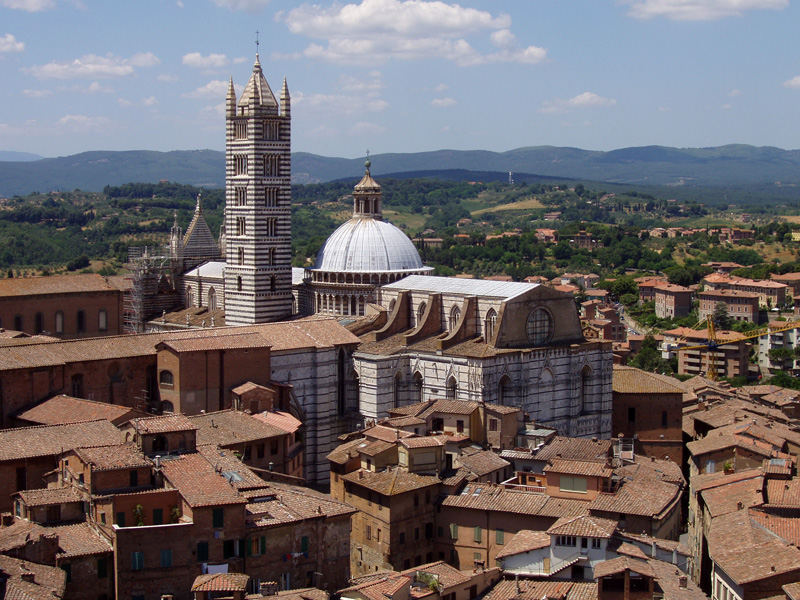
Siena (image: flickr)

An example of project that follows this rule is Quinta Monroy, by the Chilean firm Elemental. Instead of providing a ready-made solution, it provided just a basic shell of the building, that can be completed little by little by its inhabitants.

Quinta Monroy, Elemental.

For further reading:


Thumb up Thumb down 0
arch critic says:

Jane Jacobs is a woman. Dont get it twisted.

 
# April 2, 2009 at 08:16
    Thumb up Thumb down 0
    Travis says:

    Arch Daily, is there a way to vote down or vote up comments so that instead of comments being at the top based on their time stamp (like this one) the can be voted down and buried at the bottom (like this one needs to be). That way this kind of bigotry can be suppressed socially by the visitors of the website.

     
    # May 5, 2010 at 16:39
Thumb up Thumb down 0
freddy wolf says:

The layout of the volumes of the MIT Stata Center by Frank Gehry is actually amongst other things designed from the social behaviour of gorillas.All curves, twists and dead-ends are designed to increase social interaction in an attempt to clone some kind of street life, an urban disorder.
Nowadays with all these urbanistic restrictions about how to implement the building, how high it has to be, what angle the roof needs to bend under, history gets lost and so do the messy vitalities. The historical growth of medieval cities has made way for clearly geometrical divided building lots, to compensate every individual’s aesthetic needs. A consequence of modernism and politics.

 
# April 2, 2009 at 09:10
Thumb up Thumb down 0
LargoJax says:

The entire arument summed up in the first 2 minutes. A very important subject for all parts of the world. When we could focus on this issue, so many other societal issues come to the fore. The harsh reality of everyday life for many people…

 
# April 2, 2009 at 17:48
Thumb up Thumb down 0
LargoJax says:

I also think Neuwirth should go to South Africa for more research…

 
# April 2, 2009 at 17:54
Thumb up Thumb down 0
Heidi REITEL says:

Die Ermittler mögen sich bitte bemühen um Internet-
seiten unter:
MOSHE SAFDIE “HABITAT 67″ als
“KANADISCHE KUNST”.
Heidi REITEL

 
# November 13, 2010 at 04:29
Thumb up Thumb down 0

1:25 AM Aug 9th

Learning from the slums (2/2): the rediscovery http://t.co/CHyd8Vq vía @archdaily

Leave a Reply »


Latest Comments »

Has archdaily started a new...[+]
I’ll add one, based on these comments: Architects are easily offended.[+]
Just something he learned from Rem Koolhaas, again and again...[+]
Why not try and improve the existing...[+]
What even is that lake room oval thing!!?? I still don’t know…[+]

Upcoming Architecture Events »

got events? invite us! click here

Architecture Books & Magazines »

MARK Magazine #35

MARK Magazine #35

As you well know already we love MARK Magazine, and this issue fails to disappoint. It has projects from many of the architects we have featured here on ArchDaily such as, StudioGreenBlue, Heri&Salli, Clavel Arquitectos, Kengo Kuma, Colboc Franzen, Studio Velocity, Takeshi Hosaka, Fuhrimann Hachler, Toyo Ito, Nieto Sobejano, L3P…


Building Community / Eskew+Dumez+Ripple

Building Community / Eskew+Dumez+Ripple

If you have enjoyed the Eskew+Dumez+Ripple (EDR) projects we have featured then this is the book for you. With stunning photography and informative text, this book examines not only an architect’s physical impact on the built landscape, but also…


Made to Measure: The Architecture of Leers Weinzapfel Associates

Made to Measure: The Architecture of Leers Weinzapfel Associates

Made to Measure is a monograph showcasing the work of Leers Weinzapfel Associates, an architecture firm based out of Boston, Massachusetts. Leers Weinzapfel Associates first gained prominence by taking on infrastructure projects that are often left to engineers. Where…


Our partners »

AD on iPad via Pulse

Browse by date »

Browse by category »

Friends »